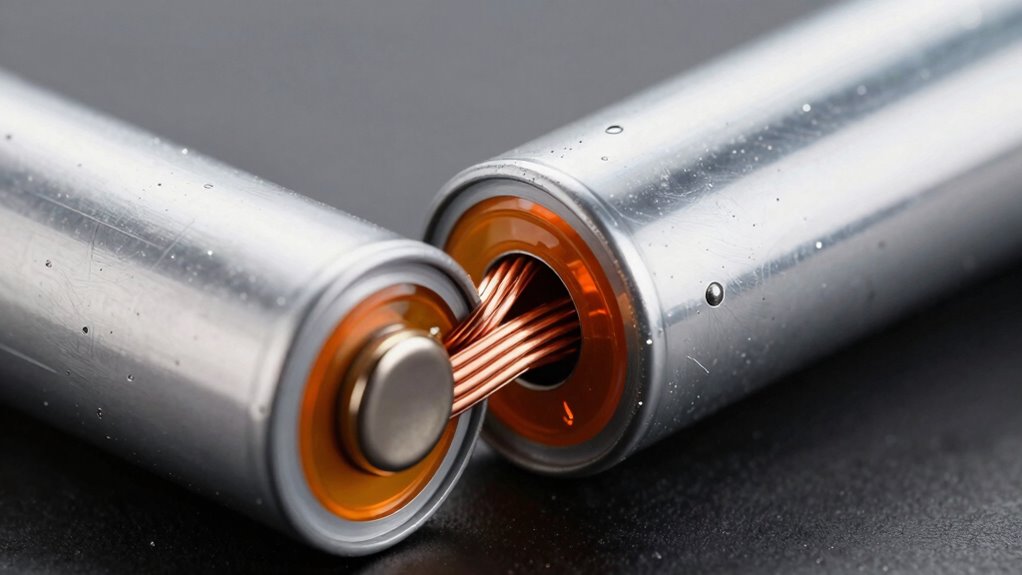

Solid-state batteries are tough to perfect because developing electrolytes that are stable, highly conductive, and mechanically strong is challenging. You face issues with materials like ceramics cracking, sulfides reacting with moisture, and balancing chemistry with durability. Manufacturing at scale adds barriers, requiring new equipment and processes. Infrastructure and design standards also need overhauling. If you want to understand how scientists are tackling these hurdles and what’s next, keep exploring further.

Get the latest gadgets delivered free with Prime
- Fast, free delivery on millions of items
- Prime Video, Amazon Music and more included
- Member-only deals all year
Key Takeaways
- Achieving long-term chemical and mechanical stability of solid electrolytes under various conditions is challenging.
- Developing materials that balance high ionic conductivity with robustness and chemical stability remains difficult.
- Manufacturing solid electrolytes at scale requires new, precise, and cost-effective techniques.
- Integrating solid electrolytes into existing battery architectures involves infrastructural and design overhauls.
- Overcoming material brittleness, moisture sensitivity, and scalability hurdles is essential for commercial viability.
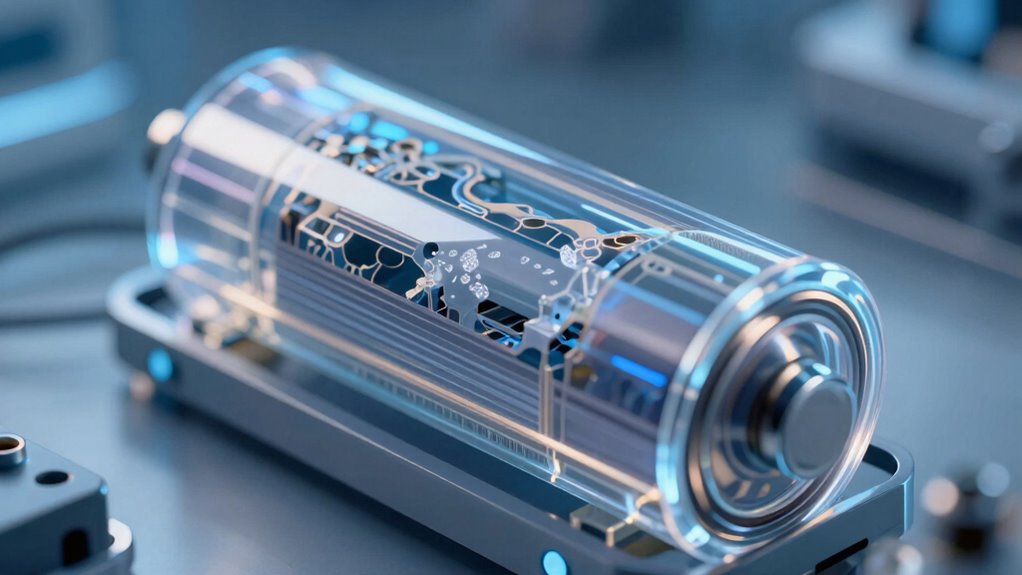
Solid-state batteries promise safer, more efficient energy storage, but turning that promise into reality remains a significant challenge. One of the biggest hurdles is achieving electrolyte stability. Unlike traditional liquid electrolytes found in most batteries, solid electrolytes must maintain their structural integrity over many charge and discharge cycles. If they degrade or develop cracks, the battery risks short circuits, which can lead to failure or even fires. Guaranteeing these solid electrolytes stay stable across a range of temperatures and operational conditions requires advanced materials that haven’t yet been perfected. Researchers are experimenting with ceramics, sulfides, and polymers, but each comes with its own set of limitations. Ceramics, for instance, can be brittle and prone to cracking, while sulfides tend to be sensitive to moisture, complicating manufacturing processes. Achieving a reliable, long-lasting electrolyte is critical, but it’s a complex balancing act involving chemical stability, ionic conductivity, and mechanical robustness. Additionally, the interplay of material properties influences the overall performance and durability of solid electrolytes, highlighting the need for further research. To overcome these issues, ongoing innovations in material chemistry are essential for advancing solid electrolytes. Developing new composite materials may help address some of these stability concerns by combining the strengths of different substances. Advances in nano-engineering could also play a pivotal role in enhancing electrolyte performance and stability at the microscopic level. Furthermore, manufacturing techniques for solid electrolytes need significant advancements to make large-scale production feasible and cost-effective. Beyond material challenges, manufacturing scalability presents another significant obstacle. Even if you develop a solid electrolyte that’s stable and high-performing in the lab, producing it on a commercial scale introduces a different set of problems. The processes need to be precise and consistent to assure quality across millions of units. Many current manufacturing techniques are too slow or too costly for mass production, which hampers the widespread adoption of solid-state batteries. Scaling up requires new fabrication methods that can handle delicate materials without damaging them, all while maintaining tight quality control. Additionally, integrating solid electrolytes into existing battery architectures demands rethinking design standards and assembly lines, further complicating the shift from prototype to mass-market product. You also have to factor in that current manufacturing infrastructure is mostly geared toward liquid electrolyte batteries. Shifting to solid electrolytes involves significant investment in new equipment, training, and quality assurance protocols. This infrastructural overhaul can slow down the deployment of solid-state batteries, despite their potential benefits. The challenge isn’t just about making a better battery; it’s about making it at a scale that makes economic sense. Until researchers and manufacturers solve these stability and scalability issues, solid-state batteries will remain an exciting but elusive goal. The journey from lab to market demands breakthroughs in electrolyte chemistry and innovative manufacturing techniques, and until those are achieved, the promise of safer, more efficient energy storage will stay just out of reach.
Products Worth Considering

Apple iPad Air (2025) 13‑inch Wi‑Fi 256 GB – Space Gray (M3 chip)

Samsung 27-inch Odyssey OLED G6 QD-OLED QHD Gaming Monitor

Sony WH-1000XM6 Wireless Noise-Canceling Over-Ear Headphones, Blue, Bundle
As an affiliate, we earn on qualifying purchases.
Frequently Asked Questions
How Long Will It Take for Solid-State Batteries to Reach Commercial Viability?
Solid-state batteries could reach commercial viability within the next 5 to 10 years, but manufacturing challenges and cost reduction are key hurdles. You’ll see improvements as researchers and companies develop scalable manufacturing processes, lowering production costs. As these challenges are addressed, expect more affordable and reliable solid-state batteries hitting the market, revolutionizing electric vehicles and portable electronics. Patience is necessary, but progress is steadily accelerating toward widespread adoption.
Are There Any Health Risks Associated With Solid-State Battery Materials?
You might think solid-state batteries pose no health risks, but that’s not entirely true. The materials used, like certain electrolytes, could potentially cause health concerns if mishandled or leaked. While overall toxicity levels are generally low, improper disposal or exposure could lead to material toxicity issues. So, yes, there are some health risks associated with solid-state battery materials, and safety precautions are essential to prevent any harmful effects.
How Do Solid-State Batteries Perform in Extreme Temperatures?
You’ll find that solid-state batteries generally perform well in extreme temperatures because of their superior thermal stability and material resilience. Unlike traditional lithium-ion batteries, they resist overheating and freezing, making them safer and more reliable under harsh conditions. However, some challenges remain, like maintaining consistent performance at very high or low temperatures, but ongoing advancements are improving their resilience, ensuring they function better across diverse environments.
What Are the Environmental Impacts of Manufacturing Solid-State Batteries?
Manufacturing solid-state batteries raises environmental concerns due to the use of rare, potentially toxic materials and energy-intensive processes. You might find that manufacturing challenges include sourcing sustainable materials and minimizing waste. These batteries require precise production techniques, which can lead to higher emissions and resource consumption. To reduce environmental impacts, you should focus on developing greener extraction methods, recycling strategies, and more efficient manufacturing practices for these advanced energy storage solutions.
Can Solid-State Batteries Be Easily Recycled Compared to Traditional Batteries?
Like untangling a complex web, recycling solid-state batteries isn’t easy. You face recycling challenges because material separation is tricky—differing components resist easy division. Unlike traditional batteries, their layered, fragile materials require delicate handling, making recycling a formidable puzzle. While innovative methods are emerging, current processes still struggle to efficiently reclaim valuable materials, leaving you to navigate this intricate landscape of recycling challenges with hope for a brighter, more sustainable future.
Conclusion
So, while solid-state batteries hold promise like a shining beacon in the storm, they’re still a tough nut to crack. The challenges are complex, like weaving through a tangled knot, making widespread adoption slow. But with continued innovation, those hurdles will eventually fall away, revealing a future where your devices charge faster and last longer. Until then, you can appreciate the effort behind the scenes, shaping tomorrow’s power sources.