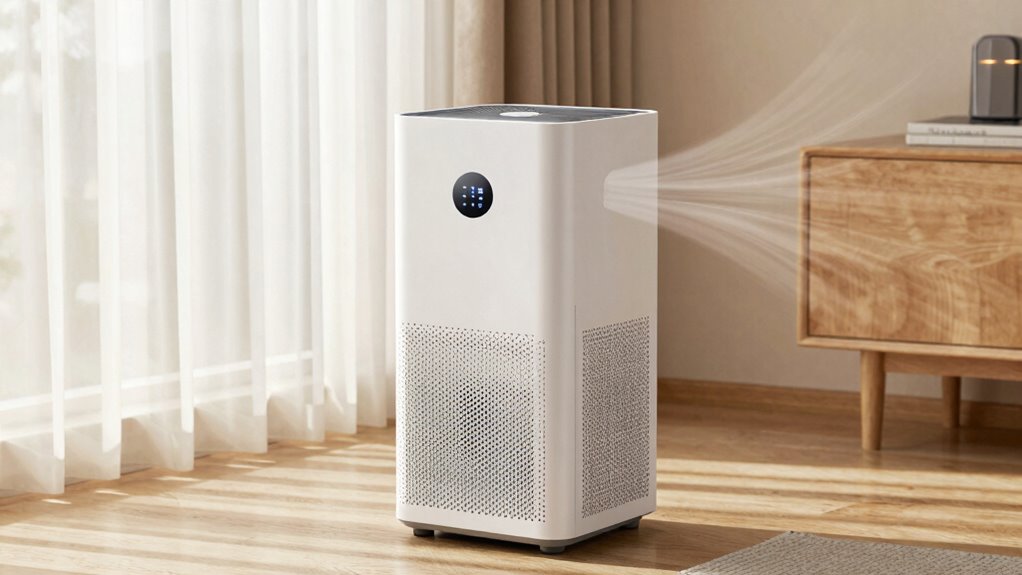

Understanding air purifier numbers helps you pick the right device for your needs. CADR measures how quickly the purifier cleans specific pollutants like dust or smoke—higher numbers mean faster cleaning. HEPA indicates the filter’s ability to trap tiny particles, while carbon filters absorb odors and gases. By knowing these details, you can choose a purifier that’s efficient and suited to your space. Keep exploring to learn more about these important indicators for cleaner air.

Get the latest gadgets delivered free — and shop member deals
- Fast, free delivery on millions of items
- Access to Prime Big Deal Days deals on October 6–7
- Prime Video, Amazon Music and more included
Key Takeaways
- CADR measures how quickly an air purifier filters specific pollutants like dust, smoke, and pollen.
- HEPA filters capture 99.97% of particles as small as 0.3 microns, enhancing air purification.
- Carbon filters adsorb odors and gases, improving air quality in environments with strong smells.
- Higher CADR ratings indicate faster, more effective cleaning for larger spaces.
- Understanding these numbers helps select the right purifier based on room size and air quality needs.
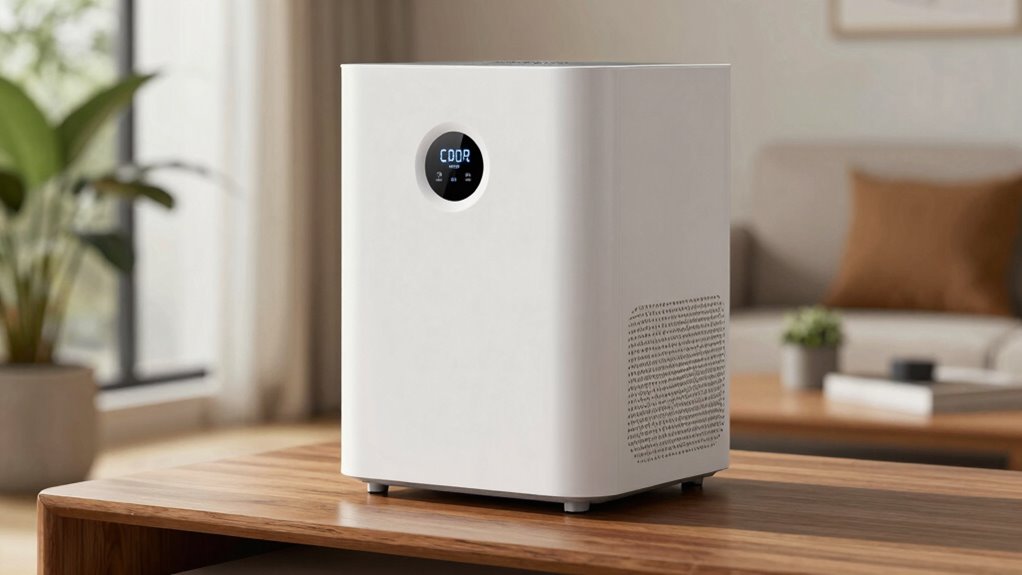
Understanding the significance of air purifier numbers can help you choose the right device for your space. These numbers, such as CADR, HEPA ratings, and carbon filter indicators, are fundamental for evaluating how effectively an air purifier cleans the air and how long its components will last. When you see air purifier numbers, you’re getting a snapshot of its performance, which directly influences your indoor air quality. Knowing what these numbers mean allows you to select a device suited to your needs and avoid wasting money on a purifier that’s either too powerful or insufficient.
Understanding air purifier numbers helps you choose the right device for optimal indoor air quality.
The Clean Air Delivery Rate (CADR) is one of the most essential numbers to consider. It measures how much filtered air the purifier produces per minute, indicating its efficiency in removing pollutants like dust, smoke, and pollen. A higher CADR means faster and more effective air cleaning, especially in larger rooms. For example, if your room is big or if you have allergies, you’ll want a device with a high CADR to guarantee the air feels fresher sooner. Conversely, a lower CADR might suffice for smaller spaces or less sensitive environments. Remember that CADR doesn’t just reflect how well the purifier filters air but also how quickly it can do so. Additionally, CADR ratings are often standardized, making it easier to compare different models objectively. Properly understanding performance metrics like CADR helps ensure you pick an air purifier that meets your specific needs.
Next, understanding the role of filter lifespan is indispensable. Every air purifier has filters that need to be replaced or cleaned periodically. Over time, these filters become less effective, which can decrease the device’s overall performance. The filter lifespan is often indicated in the product specifications and can range from a few months to a year or more, depending on usage and air quality. If you neglect to replace filters on time, you might notice a decline in air quality and overall purifier efficiency. Paying attention to filter efficiency ratings helps you plan maintenance and ensures your purifier continues to operate at peak performance, maintaining clean air in your space. Additionally, filter lifespan can vary based on environmental factors, making it important to select a purifier that matches your specific needs for maintenance frequency. Regularly checking these ratings can also help you select a purifier that balances cost and longevity effectively. This knowledge can prevent unnecessary expenses and ensure consistent air quality.
As an affiliate, we earn on qualifying purchases.
Frequently Asked Questions
How Do I Convert CADR to Real-World Air Cleaning Performance?
To convert CADR into real-world air cleaning performance, start by matching the CADR rating to your room size. Typically, a CADR value should be at least two-thirds of your room’s square footage (in cubic feet). This guarantees your air purifier maintains high efficiency, providing effective air cleaning. Keep in mind, higher CADR means better air purifier efficiency and improved room size compatibility for cleaner, healthier air.
Are Higher HEPA Ratings Always Better for Allergy Sufferers?
Higher HEPA ratings generally improve air quality, but they’re not always better for allergy sufferers. Some air quality myths suggest that the highest rating is best, but filtration technology varies. Focus on a true HEPA filter, which captures 99.97% of particles, rather than just the rating number. Find an air purifier suited to your specific allergies, and remember that proper maintenance is key for maximum performance.
What Is the Lifespan of Carbon Filters in Air Purifiers?
Carbon filters typically last 3 to 6 months, but this depends on your filter material types and air quality. You should monitor carbon filter maintenance closely, especially in high-pollution environments. While the filter’s lifespan may seem short, replacing it regularly guarantees peak odor and pollutant removal. Juxtaposing the filter’s durability with its effectiveness underscores the importance of timely replacements for your air purifier’s performance and your health.
How Often Should I Replace HEPA Filters?
You should replace your HEPA filter every 6 to 12 months, depending on usage and air quality indicators. Regular filter maintenance is key to keeping your air purifier effective. Pay attention to signs like reduced airflow or increased odors, which indicate it’s time for a change. Consistently replacing filters guarantees peak air quality, preventing allergens and pollutants from circulating and maintaining a healthier environment in your space.
Do Air Purifier Numbers Indicate Noise Levels?
Yes, air purifier numbers can indicate noise levels through noise level comparison charts, often measured in decibels. These charts help you understand how loud the purifier will be during operation. Most models follow decibel standards, with quieter units typically operating under 50 dB. Verifying these numbers before buying guarantees you select a purifier that suits your comfort level, especially if you need it in bedrooms or quiet spaces.
Conclusion
Now that you know what CADR, HEPA, and carbon mean, you’re better equipped to choose the perfect purifier. By understanding these numbers and features, you can confidently combat contaminants, clear the air, and create a clean, cozy space. Remember, the right purifier doesn’t just filter; it transforms your environment. So, seize the science, spot the specs, and breathe easier—because a healthier home is just a choice away!
Fall Picks
fall essentials
As an affiliate, we earn on qualifying purchases.