
TL;DR
Google is adding a way for Android users with compatible smart locks to store a home key in Google Wallet and unlock by tapping or, on supported hardware, without taking out the phone. Other updates cover camera sound descriptions, faster Gemini for Home commands, thermostat savings estimates and temperature-sensor support.
Google is adding digital home keys to Google Wallet for Android users with compatible smart locks, offering a way to unlock a front door with a phone instead of a physical key. The update is part of a wider set of Google Home changes that also add sound details to some camera event descriptions, speed up routine commands from Gemini for Home and expand Nest thermostat features.

Get the latest gadgets delivered free with Prime
- Fast, free delivery on millions of items
- Prime Video, Amazon Music and more included
- Member-only deals all year
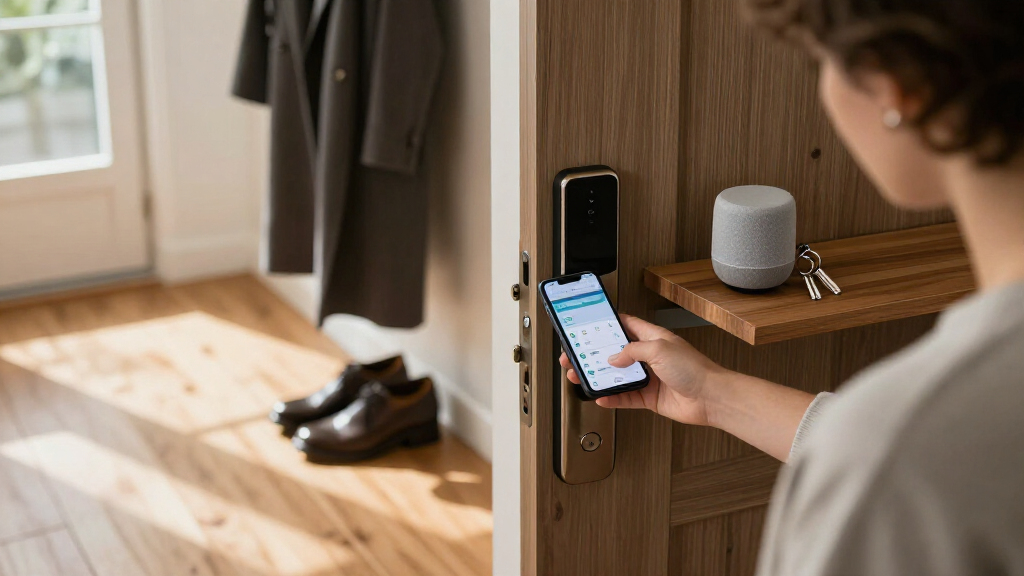
The digital key feature is limited to Android users and compatible smart locks. Depending on the supported lock, a person may be able to tap their phone against it or unlock without taking the phone out of a pocket. The announcement does not identify specific lock models or describe the exact setup and availability process, so the feature should not be assumed to work with every smart lock or Android device.
For cameras and video doorbells, Google Home Premium Advanced subscribers will get relevant sound information in descriptions of motion-triggered events. A description could, for example, indicate that a dog barked or glass broke during the event, alongside the detected movement. The added detail may help users decide whether to open a recording, but it does not replace reviewing footage.
Google says Gemini for Home routine commands can now respond up to 20% faster. The company is also bringing the assistant to six more markets, including India and Brazil. Separately, Nest thermostat owners in the United States and Canada are expected to see estimates of their accumulated energy-cost savings in the app starting in December. The fourth-generation Nest Learning Thermostat is also gaining support for compatible third-party temperature sensors.
Could Google Home Replace Your House Keys?
Google Wallet home keys may let some Android users unlock compatible smart locks with a phone. Device support and rollout details are still unclear.
When a phone can replace a key
The digital key could make door access easier for people whose phones and locks support it.
- Store a home key in Google Wallet on Android.
- Tap the phone to a supported lock, or unlock without taking it out on some hardware.
- Not every smart lock or Android phone is confirmed compatible.
- Google has not detailed setup, availability, key sharing or recovery if a phone is lost or unavailable.
More context for daily tasks
The other changes target alerts, voice control and home heating.
Hear what happened
Google Home Premium Advanced descriptions may mention sounds such as a dog barking or glass breaking. Reviewing footage is still needed.
See estimated savings
Owners in the US and Canada are expected to see accumulated energy-cost savings in the app starting in December. Estimates are not a guarantee of future savings.
More temperature input
The fourth-generation Nest Learning Thermostat is gaining support for compatible third-party temperature sensors; supported models were not listed.
Who can use the updates?
Access varies by hardware, subscription and location.
| Feature | Stated eligibility | Open detail |
|---|---|---|
| Google Wallet home key | Android phone and compatible smart lock | Device list and rollout |
| Camera sound details | Google Home Premium Advanced | Rollout date |
| Thermostat savings estimate | Owners in the US and Canada | Calculation method |
| Gemini routine speed | Gemini for Home users | Benchmark details |
When a Phone Can Replace a Key
A phone-based key could reduce the need to carry a separate house key for people whose devices and locks support the feature. The potential convenience is especially relevant when someone is carrying bags or does not want to search for keys at the door. However, this is an additional access option, not evidence that physical keys are obsolete: compatibility is required, and the announcement gives no details about what happens if a phone is lost, discharged or unavailable.
The other changes target everyday smart-home tasks rather than introducing a new system. More informative camera descriptions could help subscribers triage alerts, while faster routine responses may make voice control feel less delayed. Thermostat savings estimates and additional room sensors could give users more information and control over heating, although the reported estimate is not a guarantee of future savings.
Products Worth Considering

Samsung Odyssey OLED G8 34-Inch Curved Ultra WQHD Gaming Monitor

Jackery Explorer 2000 v2 Portable Power Station, 2042Wh, 2200W

Sonos Era 100 SL Compact Microphone-Free Speaker, Black
As an affiliate, we earn on qualifying purchases.
A Broader Google Home Refresh
The digital key is one element in a broader update to Google’s connected-home products. The changes span home access, security alerts, voice control and energy management, linking features that may affect different users and devices. Some are restricted by subscription, region or hardware compatibility, rather than applying to every Google Home customer.
The announcement describes the key as similar in convenience to digital car keys and contactless payments, but that comparison does not establish identical technology or coverage. For the camera descriptions, the stated eligibility is Google Home Premium Advanced; for the thermostat savings estimate, the stated markets are the United States and Canada, with a December start. These distinctions matter when judging what users can access now and what requires waiting.
“Gemini for Home can respond to routine commands up to 20% faster.”
Compatibility and Rollout Details
Several practical details are not specified, including which smart locks and Android phones qualify, where the digital key is available, and whether users can share keys with household members. The announcement also does not explain the security and recovery procedures for a lost or unavailable phone. Those details will affect whether the feature can serve as a dependable alternative to carrying a physical key.
For the remaining updates, Google has not supplied the camera-description rollout date or explained how sound detection is handled in all conditions. The “up to 20% faster” figure for Gemini is a company claim with no benchmark details in the announcement. The thermostat savings feature is described as an estimate; its calculation method and the comparison period are not stated. The specific third-party sensors supported are also not listed.
Rollout and Device Support
The clearest upcoming milestone is December, when Nest thermostat savings estimates are due to appear in the app for owners in the United States and Canada. Users considering a Google Wallet home key will need to check whether their Android phone and smart lock are supported as rollout information becomes available. Google’s stated expansion of Gemini for Home also means availability will depend on the relevant market and service rollout.
Further details on device lists, setup, regional access and security arrangements would clarify how broadly the key feature can be used. Until those are established, the update offers a potential way to leave house keys behind for some users, not a universal replacement.
Source: rss
Key Questions
Can Google Home’s update let me stop carrying house keys?
Possibly, if you use an Android phone and a compatible smart lock. The announced Google Wallet digital key can unlock supported locks by tapping the phone, or without taking it out on some hardware. It is not described as universal.
Will the digital home key work with every smart lock?
No. The feature requires compatible lock hardware, and Google’s announcement does not list supported models. Check device compatibility before relying on it.
Who gets the new camera sound descriptions?
The feature is for Google Home Premium Advanced subscribers. Descriptions of motion-triggered events may include relevant sounds, such as a dog barking or glass breaking.
When will Nest thermostat owners see estimated savings?
The estimates are scheduled to start appearing in the app in December for owners in the United States and Canada. Google has not explained the calculation method in the announcement.
What does the Gemini for Home speed improvement mean?
Google says routine commands can receive responses up to 20% faster. The announcement does not provide benchmark details or say that every request will be faster by that amount.
Source: digitaltrends.com