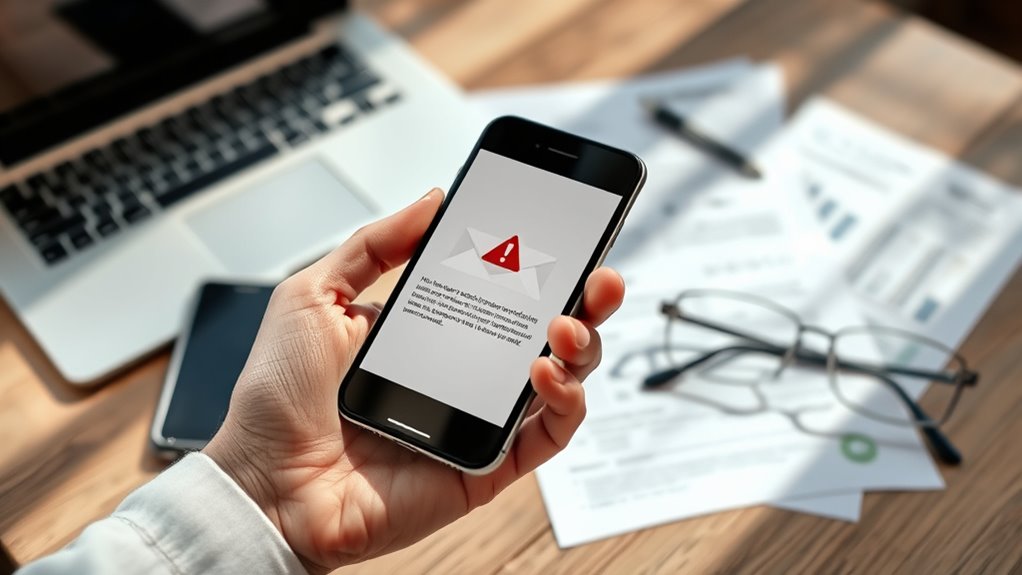

To avoid and detect financial scams, stay alert to impersonation attempts through emails, texts, or calls that ask for personal or banking info, especially if they pressure you for urgent action. Always verify the sender and use official websites to access accounts. Be skeptical of promises for quick gains and look for signs like misspellings or untrusted payment methods. Stay informed about scam tactics—if you want to learn more, there are simple steps to keep your money safe.
Key Takeaways
- Verify sender identities and avoid clicking links or sharing info from unsolicited messages.
- Watch for signs of scams like urgent requests, misspellings, and untrusted email addresses.
- Research investment opportunities thoroughly and be cautious of promises of high returns with low risk.
- Use official websites and secure channels to access financial accounts, avoiding unverified links.
- Stay informed about common scam tactics, enable two-factor authentication, and never share sensitive info unnecessarily.

Have you ever wondered how to spot and avoid financial scams before it’s too late? Recognizing early warning signs can save you from devastating losses. One common type of scam is phishing scams, where con artists impersonate legitimate organizations to steal your personal information. These scams often come through emails, text messages, or phone calls that seem authentic. They may ask for your login details, Social Security number, or bank account information under false pretenses. To protect yourself, always verify the sender’s identity before clicking any links or sharing sensitive data. Look for signs like misspellings, unusual sender addresses, or urgent requests that pressure you to act immediately. Remember, reputable companies never ask for confidential information via email or phone unexpectedly. Being cautious and questioning suspicious communications can prevent potential breaches of your financial security.
Fake investment schemes are another prevalent scam. These schemes promise high returns with little risk, often luring you through social media, emails, or even in-person pitches. They may sound convincing, citing fake success stories or testimonials. However, if an offer sounds too good to be true, it probably is. Always scrutinize the legitimacy of the investment opportunity. Research the company thoroughly, check for licensing or registration with financial authorities, and seek advice from trusted financial advisors. Avoid investments that require you to send money quickly or through untraceable means. Scammers often create fake websites or use sophisticated branding to appear credible. If you feel pressured to make a decision on the spot, step back and take your time to evaluate the opportunity. Remember, genuine investments require due diligence, and if something feels off, trust your instincts and walk away.
Beyond recognizing these scams, staying informed is your best defense. Regularly update your knowledge about common fraud tactics and warning signs. Use strong, unique passwords for your financial accounts, and enable two-factor authentication whenever possible. Never share your banking details or passwords with anyone, and always access financial platforms through official websites or apps. Be wary of unsolicited contact—if someone claims to be from your bank or investment firm and asks for personal information, hang up and call the official number. Protecting yourself requires vigilance and skepticism of overly enticing offers or urgent requests. The more aware you are of common scams like phishing and fake investment schemes, the better equipped you’ll be to detect and avoid them before they cause harm. Staying cautious and informed makes a significant difference in maintaining your financial safety.
Frequently Asked Questions
What Are Common Signs of a Financial Scam?
You should watch out for red flags like promises of quick riches, pressure to act immediately, and requests for personal or financial info. Common indicators include suspicious email addresses, unprofessional communication, and offers that seem too good to be true. If someone pushes you to make decisions fast or asks for payments upfront, these are warning signs. Stay alert and verify credentials to protect yourself from falling for scams.
How Can I Verify Legitimate Investment Opportunities?
Imagine you’re considering a new investment opportunity. To verify its legitimacy, use investment tips like checking for proper licensing and researching the company’s background. Conduct a thorough risk assessment by reviewing financial statements and seeking independent advice. For example, a friend invested in a startup that turned out to be a scam after diligent verification. Always verify credentials, scrutinize details, and avoid high-pressure sales to protect yourself from fraudulent schemes.
What Should I Do if I Suspect a Scam?
If you suspect a scam, stop all communication immediately. Don’t click on links or share personal information. Check for fake websites and phishing emails by inspecting URLs carefully and verifying the sender’s email address. Report the scam to your bank or relevant authorities. Trust your instincts, and remember, legitimate organizations won’t pressure you or ask for sensitive info through insecure channels. Stay vigilant and protect yourself.
Are There Legal Protections Against Financial Scams?
Your best bet is to know that legal protections and consumer remedies are in place to shield you from scams. Laws like the Federal Trade Commission Act and the Fair Credit Billing Act help safeguard your rights. If you fall victim, you can take legal remedies to recover losses. Remember, a stitch in time saves nine—acting quickly is vital to enforce these protections and prevent further damage.
How Does Technology Help Detect Scam Activities?
Technology plays a vital role in scam prevention by analyzing patterns of financial fraud and flagging suspicious activities. You benefit from advanced algorithms that monitor your accounts in real-time, alerting you to potential scams before they cause harm. Automated tools also help detect signs of identity theft or fraudulent transactions, empowering you to act quickly. By leveraging these technological advancements, you stay one step ahead of scammers and protect your finances effectively.
Conclusion
Staying vigilant against financial scams often feels like a matter of luck, but in reality, it’s about paying attention to the signs that seem to appear just when you least expect them. By trusting your instincts and double-checking suspicious offers, you might avoid falling victim to a scam—almost as if the universe nudges you in the right direction. Remember, a little caution at the right moment can be the coincidence that keeps your finances safe.