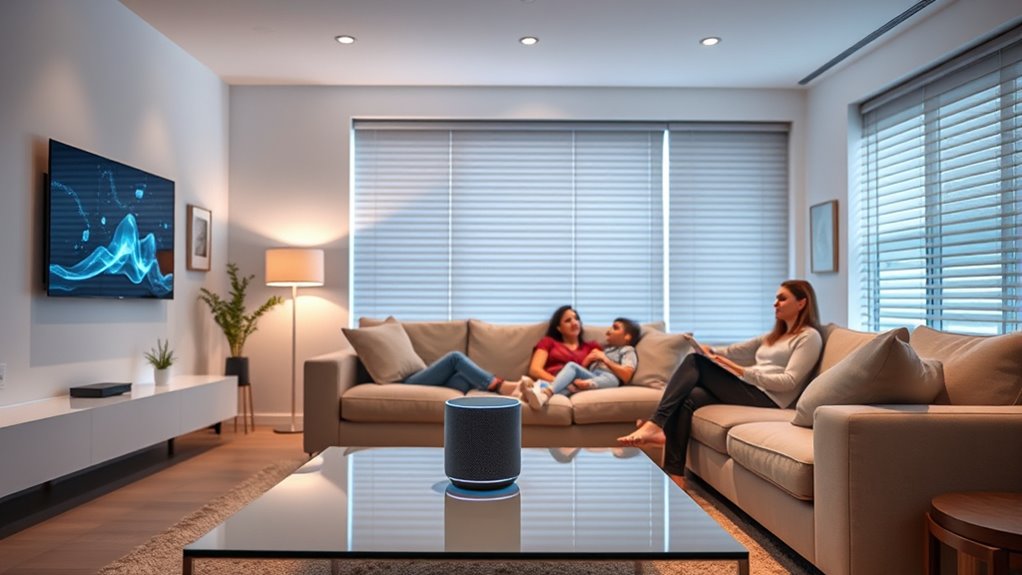

Smart home devices make daily life easier by letting you control lights, thermostats, and appliances remotely, saving time and energy. However, they also pose privacy and security risks, like data leaks and hacking threats that could compromise your safety. While automation offers convenience and environmental benefits, you should be aware of hidden costs and privacy concerns. To find out how to enjoy smart homes safely and responsibly, explore what’s next.
Key Takeaways
- Smart homes increase convenience through automation and remote control but pose privacy and security risks from data breaches and hacking threats.
- Integration of devices may lead to unintended data sharing, tracking behaviors, and potential invasion of personal privacy.
- Managing privacy settings and understanding data policies are essential to balance convenience with personal security.
- Cybersecurity vulnerabilities in connected devices can compromise safety, security, and lead to long-term resource management issues.
- Users must weigh the benefits of automation against potential costs related to data privacy, security risks, and ongoing privacy management.
smart home security camera
As an affiliate, we earn on qualifying purchases.
As an affiliate, we earn on qualifying purchases.
The Growing Popularity of Smart Home Devices

The popularity of smart home devices is rapidly increasing as more households adopt these technologies for convenience and connectivity. The global market is projected to surpass $167 billion by 2025, up from $58.5 billion in 2020.
By 2024, over 400 million homes worldwide are expected to have smart systems, with nearly one in five US households using six or more devices. Voice-controlled assistants like Alexa and Google Assistant drive this growth, making daily tasks easier. Emerging innovations in device AI and user interfaces are contributing to this expansion, making smart home technology more intuitive and accessible for users of all ages.
Advances in IoT, AI, and 5G internet are boosting device capabilities and integration. As technology becomes more accessible and user-friendly, more people are embracing smart devices to enhance their living spaces, making smart homes a mainstream feature of modern life. Leading tech companies are continuously innovating to improve the functionality and interoperability of these devices, further fueling consumer adoption. Additionally, the integration of home security systems with smart home technology is increasing, providing users with enhanced safety and control over their property. The increasing interoperability of devices allows for seamless operation across different brands and platforms, improving user experience. Furthermore, smart device compatibility is evolving to support a broader range of products, promoting a unified smart home ecosystem. Development in user interfaces also plays a crucial role in making these devices more accessible and easier to operate for all users.

Blackview Smart Glasses, Polarized Bluetooth Sunglasses with Speaker, Voice Control, UV Protection, Anti Blue Light Lens
BLUETOOTH 5.3 TECHNOLOGY: Blackview Bluetooth smart glasses utilize a Bluetooth 5.3 chipset for faster, more stable signal transmission,…
As an affiliate, we earn on qualifying purchases.
As an affiliate, we earn on qualifying purchases.
How Smart Homes Enhance Daily Convenience
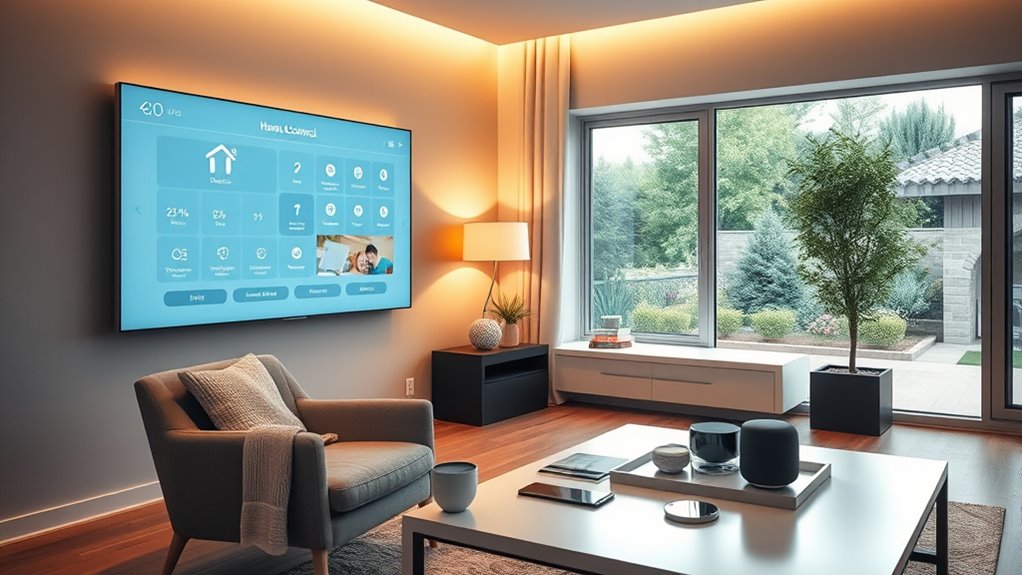
Smart homes simplify daily life by allowing you to control various devices—like lights, thermostats, and appliances—remotely through your smartphone or voice commands. You can pre-set routines, such as adjusting the temperature or lighting before you arrive home, making your environment always comfortable. Integrated systems that connect technology seamlessly within the home enable these controls to work smoothly together. Voice-activated commands reduce manual effort, letting you manage systems hands-free. The centralized apps unify control, so you don’t need multiple interfaces, streamlining management. Automation schedules handle repetitive tasks like turning lights on/off or adjusting climate settings, saving you time and mental effort. Scenario programming can trigger multiple actions simultaneously—think “leaving home” mode locking doors and turning off lights. Understanding device compatibility can help ensure your smart home functions effectively and avoids frustration. Recognizing user interface design principles can further enhance ease of use and overall experience, especially when considering the hours of operation of related services or support. Incorporating space optimization strategies can also improve the functionality and efficiency of your smart home setup.
smart thermostat with privacy features
As an affiliate, we earn on qualifying purchases.
As an affiliate, we earn on qualifying purchases.
The Economic and Environmental Benefits of Automation
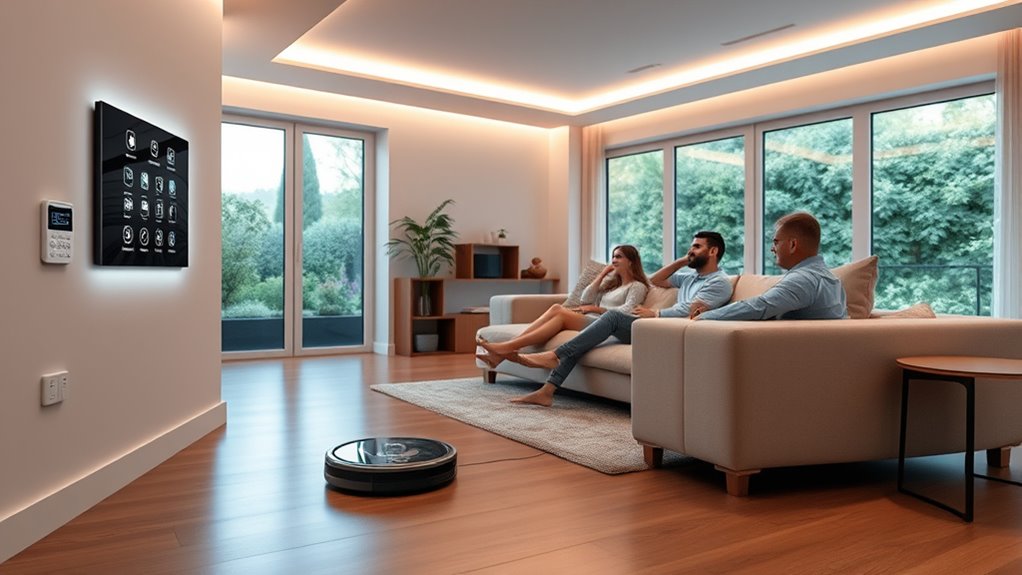
Automation in homes offers significant economic and environmental advantages that can transform how you manage your energy use and expenses. By optimizing energy efficiency, you’ll see lower utility bills, and your home’s value may increase as a result of smart upgrades. Smart home technology focuses on energy efficiency to combat climate change and promote sustainability. Automated systems enhance security and streamline appliance maintenance, saving you time and money. Environmentally, smart thermostats and lighting cut energy consumption, reducing your carbon footprint. Energy-efficient devices contribute to long-term savings and a more sustainable lifestyle. Remote control features help minimize waste and better resource management. Additionally, advances in automated systems are making these technologies more accessible and effective for homeowners. Implementing these innovations can also help you meet sustainability goals and contribute positively to environmental conservation. Utilizing heat pump technology can further improve the efficiency of your climate control systems, reducing overall energy use and emissions. While initial costs can be high, long-term savings and environmental benefits make automation worthwhile. Integrating renewable energy systems becomes easier, supporting sustainable living.
IoT device security kit
As an affiliate, we earn on qualifying purchases.
As an affiliate, we earn on qualifying purchases.
Potential Risks and Hidden Costs of Smart Living
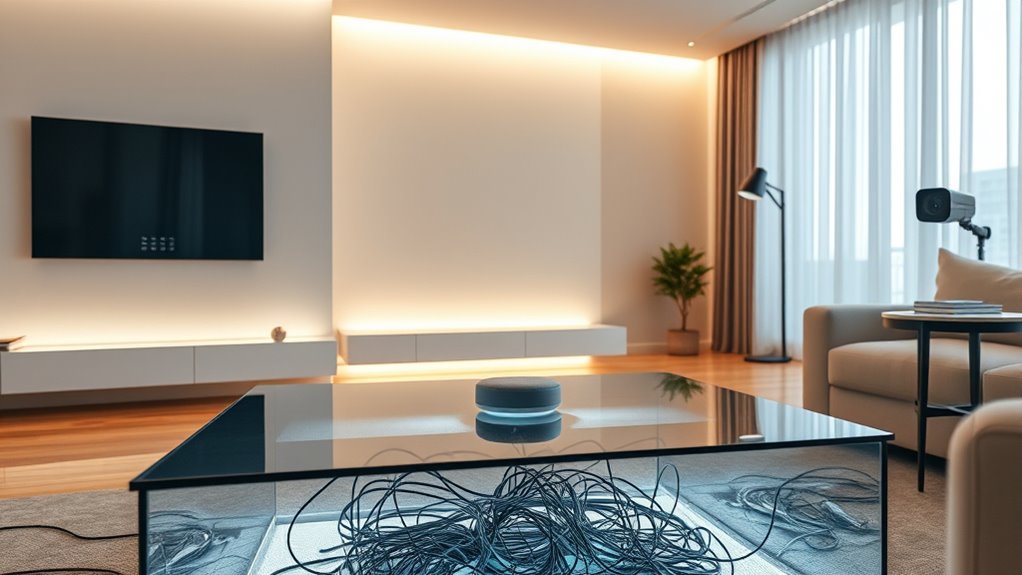
While automation can boost your home’s efficiency and reduce costs, it also introduces notable risks that shouldn’t be overlooked. Cybersecurity vulnerabilities are widespread, with weak authentication and unencrypted protocols exposing your devices to hacking and botnet attacks—home networks face an average of 10 daily threats. Research shows that IoT devices can inadvertently leak sensitive data, and vulnerabilities in device security protocols are often exploited by malicious actors exploiting local network vulnerabilities. Smart TVs and routers are common targets, and malware or DDoS attacks can hijack your devices, creating safety hazards. Privacy invasion is another concern, as voice assistants record excess data and behavioral tracking creates detailed household profiles. Data sharing often occurs without your consent, increasing breach risks. Additionally, compromised smart locks or cameras can threaten your physical safety, enabling unauthorized access or spying. These risks highlight that convenience can come with significant hidden costs and vulnerabilities.
Striking a Balance Between Comfort and Privacy
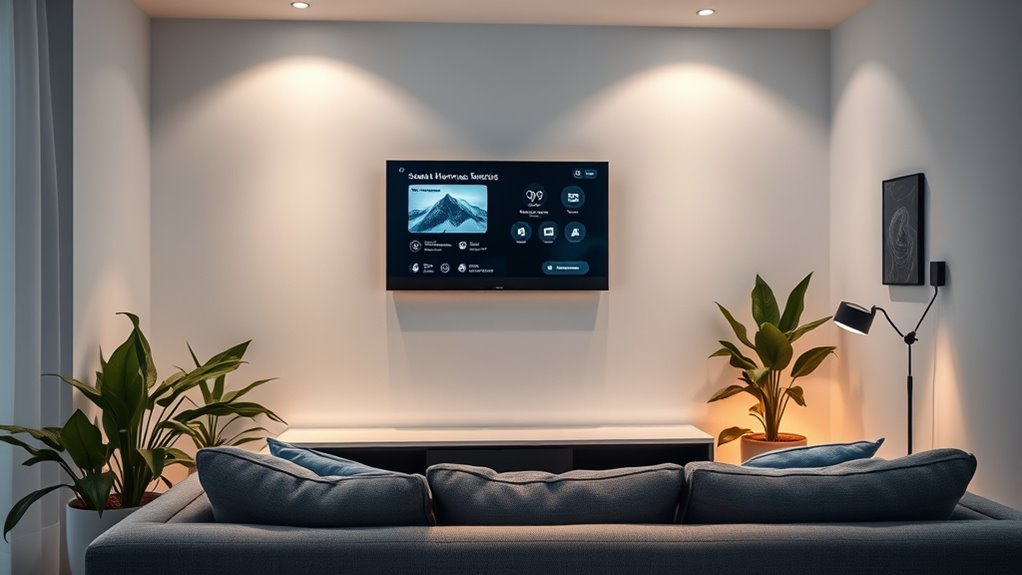
Balancing comfort and privacy in smart homes requires careful consideration, as the convenience of connected devices often comes at the expense of personal data security. You must implement strong security measures like encryption and access controls to protect sensitive information. Proper security protocols are essential to prevent unauthorized access and data breaches. Transparent data privacy policies ensure you’re aware of how your data is used and give you control over it. Be mindful that smart devices collect sensitive data, including audio, video, and usage patterns, which can be vulnerable to cyber threats and misuse. Raising awareness about privacy implications helps you make informed choices. Using frameworks like PRASH can identify and mitigate risks early. Additionally, understanding regional flavors and traditions can help tailor your privacy settings to better suit your lifestyle. Incorporating mindful data management practices can further enhance your privacy protections. Regularly reviewing your cookie preferences allows you to maintain control over your data sharing. It’s also important to understand the banking hours when accessing financial services to ensure timely transactions. Moreover, being aware of privacy policies and how they are communicated can help you make better decisions about your smart home environment. Ultimately, you should set clear preferences and controls, ensuring your comfort doesn’t compromise your privacy or trust in your smart home environment.
Frequently Asked Questions
How Secure Are Smart Home Devices Against Hacking and Data Breaches?
Smart home devices face significant security risks. You’re vulnerable to hacking due to widespread vulnerabilities, like weak passwords, outdated firmware, and unencrypted data.
Attackers can exploit these flaws through methods like man-in-the-middle attacks or privilege escalations.
To protect yourself, regularly update firmware, use strong unique passwords, and segment your network.
Staying vigilant helps reduce the chances of breaches, but no system is entirely immune.
What Are the Initial Costs to Set up a Fully Automated Smart Home?
You’re curious about the initial costs to set up a fully automated smart home. Depending on your needs, expect to spend between $2,000 and $7,000 for a standard setup, which covers devices, controllers, and installation.
More extensive systems with custom features can easily reach $10,000 or higher. Keep in mind, professional installation and device costs vary, so plan accordingly to create a smart home that fits your budget.
Do Smart Devices Require Frequent Updates or Maintenance?
You’ll find that smart devices do require frequent updates and maintenance. Regular updates patch security vulnerabilities, add features, and improve compatibility.
Maintenance includes cleaning sensors, checking batteries, and inspecting devices for wear. Staying on top of these tasks guarantees your devices work smoothly, stay secure, and last longer.
Neglecting updates or maintenance can cause malfunctions, security risks, or reduced efficiency, so it’s essential to keep up with both.
How Do Smart Homes Impact Long-Term Energy Savings?
You might think smart homes only make life easier, but their real magic is in long-term energy savings that seem almost miraculous. With smart thermostats, lighting, and appliances working together, you can slash your energy bills by up to 40%.
These systems optimize usage, reduce waste, and even lower your household carbon footprint dramatically. Over time, you’ll see savings pile up so quickly, it’s like your home pays you back for being smarter.
Are There Health Concerns Related to Continuous Wireless Device Use?
You might wonder if continuous wireless device use poses health risks. Scientific studies mostly find no clear evidence that RF exposure harms you, and international safety limits are well below levels that could cause tissue heating.
Although some biological effects are reported, large-scale research hasn’t confirmed a link to diseases like cancer.
To stay cautious, use hands-free options and avoid prolonged close contact, but overall, current evidence suggests your wireless devices are safe.
Conclusion
As you embrace smart home technology, remember it’s a double-edged sword—like a knife that can cut both ways. While these devices make your life easier and greener, they also come with hidden costs to your privacy and security. Stay vigilant and find a balance; don’t let convenience blind you to the risks. After all, a smart home should be your sanctuary, not a trap waiting to spring.