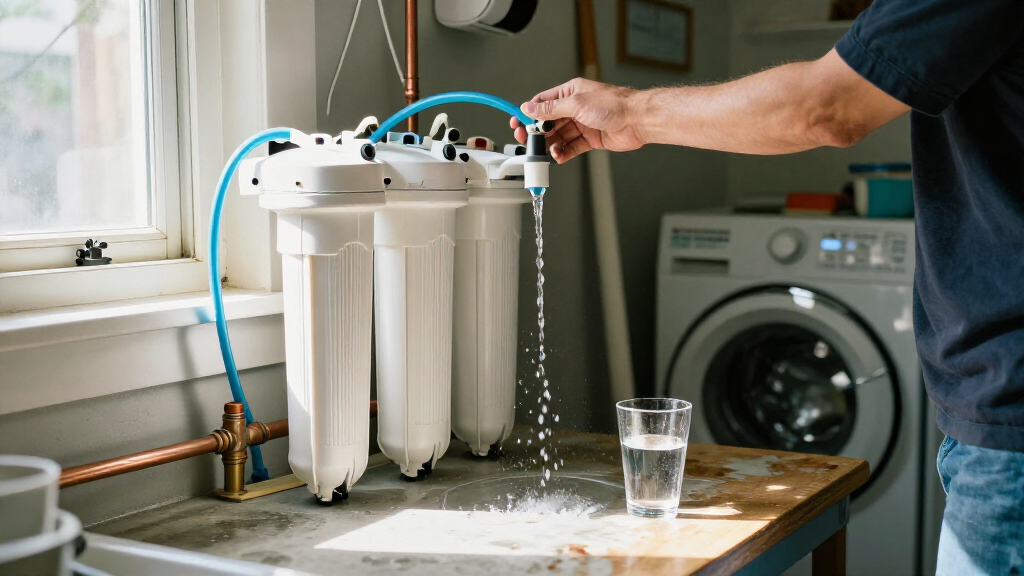
The Express Water 3-Stage Whole House Water Filter is a freestanding system designed to treat water as it enters a home, using activated carbon, KDF, and polyphosphate media. Its strongest case is the combination of chlorine and heavy-metal reduction with scale control and practical monitoring gauges. The tradeoff is ongoing filter replacement, roughly every six months, plus a substantial 63-pound unit that needs suitable space and setup. It is worth considering for homeowners who want several treatment functions at the point of entry and can maintain the system; households seeking sediment-only filtration or drinking-water purification should look elsewhere.

Get the latest gadgets delivered free with Prime
- Fast, free delivery on millions of items
- Prime Video, Amazon Music and more included
- Member-only deals all year

Express Water 3-Stage Whole House Water Filter System
- ✔ Model: WH300SCKP
- ✔ Filtration stages: 3
- ✔ Purification methods: Activated carbon, KDF, polyphosphate
Why This Product Stands Out
The WH300SCKP stands out in the whole-house category because it combines three treatment media aimed at different household concerns. Activated carbon targets chlorine, KDF is included for heavy-metal reduction, and polyphosphate is intended to help limit scale. That makes it a more multi-purpose proposition than a basic sediment filter, which is principally intended to catch particles rather than address chlorine or scale.
Its monitoring details also suit the realities of a point-of-entry system. Pressure gauges give owners a way to observe system pressure, and filter pressure-release buttons are meant to make maintenance more manageable. These details do not remove the need for replacements or guarantee a particular result for a given water supply, but they offer more visibility than a setup with no built-in pressure readings. The 17-gpm maximum flow rating is also positioned for whole-house service, though actual suitability depends on household demand and plumbing conditions.
This is not a universal water-treatment answer. The listed media and claims make it relevant to chlorine, selected metals, and scale management, while the Waterdrop G3P600 reverse-osmosis system represents a different choice for people prioritizing drinking-water treatment at a dedicated tap. For simpler sediment concerns, the Culligan WH-S200-C or GE GXWH20T may be a better match. The Express Water earns its place when the buyer wants its combination of treatment goals.
Key Features and What They Mean
Three-stage media gives the system a broader purpose than sediment capture alone. Activated carbon is associated with chlorine reduction, which may matter to households bothered by chlorine taste or odor in tap water. KDF is included to help reduce several heavy metals, including lead and arsenic. Those stated goals make the system relevant to buyers who want incoming water treated before it reaches multiple fixtures. The results depend on source-water conditions and proper upkeep; this should not be read as a substitute for checking a specific contaminant concern against appropriate water testing and treatment guidance.
Polyphosphate treatment is intended to help limit scale buildup. In practice, that can be useful to households trying to reduce mineral deposits around plumbing fixtures and appliances. It is a preventive treatment feature rather than a promise that existing scale will disappear or that every hardness issue will be solved. Buyers whose main concern is hard water should confirm that this approach matches their needs before choosing it.
The stated 17-gpm maximum flow rate is meant to support whole-house use rather than a single drinking-water outlet. It is relevant when several fixtures may be used around the same time, although the rating alone cannot predict performance in every home. Household demand, incoming pressure, and the plumbing layout all shape the experience. The system’s listed operating range is 20–80 psi, so the home’s water pressure should fall within that range.
Pressure gauges and release buttons make routine servicing easier to approach. Gauges help owners keep an eye on pressure readings, which can provide a clue that the system needs attention. Release buttons are included to help release pressure during filter maintenance. These are practical conveniences for a system with a roughly six-month filter cycle, but they do not eliminate replacement work or the need to follow the maintenance instructions.
The system is rated for a 100,000-gallon capacity, while its filter life cycle is listed at about six months. The time-based interval is the more direct planning cue for a typical owner, though actual replacement needs can depend on water quality and usage. The stainless steel stand supports a sizeable 63-pound assembly; its freestanding design can help with placement, but the 29-by-8.5-by-30-inch footprint and required connections still call for a suitable installation area.
Performance and Real-World Use
In daily household use, the chief appeal is treating water at the point where it enters the home, so the system’s intended benefits apply across connected fixtures rather than only one faucet. That suits buyers focused on chlorine reduction and scale management throughout the house. The 17-gpm maximum flow figure suggests whole-house ambitions, but it is not a guarantee that every home will maintain the same flow under peak demand. Plumbing size, source pressure, and simultaneous use remain relevant.
Ownership involves recurring service. Filters are expected to be changed about every six months, so the system is best for someone who will track the interval and keep replacement parts available. The pressure gauges offer a way to monitor the system, and release buttons may simplify service, but the owner still needs access around the unit. Its weight and dimensions mean installation should be planned around a stable location with enough room to connect and maintain it.
There is no basis here to treat the product as a solution for every contaminant or as a drinking-water purifier. Its listed filtration methods identify particular treatment aims, not a universal guarantee. Buyers with a specific water-quality concern should compare that concern with the product’s stated capabilities and seek appropriate testing or treatment advice. The one-year warranty is also a factor for people weighing long-term support.
Who Should Buy This
This system makes the most sense for a homeowner who wants a single point-of-entry unit aimed at reducing chlorine and selected heavy metals while also helping limit scale buildup. It is a stronger fit for households with a permanent installation location, water pressure within the stated 20–80 psi range, and someone prepared to replace filters around twice a year. Buyers who value built-in pressure monitoring and want more than a sediment-only filter will find its combination of features more relevant than a basic cartridge housing.
Who Should Skip This
Skip the Express Water system if you rent, lack a stable and accessible installation space, or do not want recurring filter service. A household focused only on sediment may find the Culligan WH-S200-C or GE GXWH20T a more direct fit. If the priority is purified drinking water or broader dissolved-contaminant reduction at the kitchen tap, a dedicated reverse-osmosis option such as the Waterdrop G3P600 is a more suitable comparison. Those choices address different needs, so match the system to the water concern rather than treating whole-house filtration and drinking-water purification as interchangeable.
Value for Money
The value case is strongest when a buyer will use all three treatment aims: chlorine reduction, selected heavy-metal reduction, and help limiting scale. Gauges and release buttons add useful maintenance visibility, and the 17-gpm rating positions it for whole-house service. Those benefits make it more compelling than a sediment-only setup for households seeking broader point-of-entry treatment. The tradeoff is the regular filter cycle, physical installation demands, and limited one-year warranty. Without a need for its broader media mix, buyers may get better value from a simpler sediment system. When the main goal is drinking-water purification, the Waterdrop reverse-osmosis route is more directly aligned. In short, this is a worthwhile mid-range choice when its whole-house treatment mix matches the home and the owner accepts the maintenance commitment.
Express Water 3-Stage Whole House Water Filter System
The WH300SCKP stands out in the whole-house category because it combines three treatment media aimed at different household concerns. Activated carbon targets chlorine, KDF is included for heavy-metal reduction, and polyphosphate is intended to help limit scale.
Pros:
- Activated carbon and KDF are intended to reduce chlorine and several heavy metals, including lead and arsenic, giving the system broader goals than a sediment-only prefilter.
- Polyphosphate treatment helps limit scale buildup, which may appeal to households concerned about mineral deposits on fixtures and appliances.
- A stated maximum flow rate of 17 gallons per minute is suited to whole-house use, where treatment needs to keep pace with simultaneous taps and showers.
- Pressure gauges make changes in system pressure easier to monitor, while release buttons help with filter servicing.
- The freestanding stainless steel stand provides a defined support structure for a system that weighs 63 pounds.
Cons:
- Filters need replacement about every six months, so buyers must plan for recurring maintenance rather than treating installation as a one-time task.
- At 63 pounds and about 29 by 8.5 by 30 inches, the unit needs a stable, accessible location and may be awkward to move or position.
- Its stated treatment approach is not equivalent to reverse osmosis; buyers seeking broad dissolved-contaminant reduction or purified drinking water may need another solution.
- A one-year manufacturer warranty offers a limited coverage period for a substantial home water system.
Best for: Homeowners seeking whole-house chlorine and heavy-metal reduction alongside help limiting scale buildup, with room and willingness to maintain a freestanding system.
Not ideal for: Renters, homes without a suitable installation area, or buyers who need reverse-osmosis drinking-water treatment or only basic sediment filtration.
Bottom line: The Express Water 3-Stage Whole House Water Filter is worth buying for homeowners who want chlorine and selected heavy-metal reduction plus scale management at the point of entry, and who have room to install and service a sizeable unit.
Frequently Asked Questions
Does the Express Water 3-Stage system provide reverse-osmosis purification?
No. It uses activated carbon, KDF, and polyphosphate media for its stated whole-house treatment aims. Buyers seeking reverse-osmosis treatment for drinking water should compare it with a dedicated RO system such as the Waterdrop G3P600.
How often do the filters need to be replaced?
The listed filter life cycle is about six months. The system also lists a 100,000-gallon capacity, but replacement timing can vary with water quality and household use, so owners should follow the product’s maintenance guidance.
Will it fit a home with high water demand?
Its maximum flow rate is listed as 17 gallons per minute, and the system is intended for whole-house use. Actual flow depends on incoming pressure, plumbing, and how many fixtures run at once. The listed operating range is 20–80 psi.
Is it a good choice if I only need sediment filtration?
Probably not. Its broader treatment mix may be unnecessary if sediment is the only concern. A simpler option such as the Culligan WH-S200-C or GE GXWH20T may be a more direct fit for that use case.
How much installation space should I plan for?
The unit measures about 29 by 8.5 by 30 inches and weighs 63 pounds. Plan for a stable freestanding location with room to connect the system, read its gauges, and access it for filter changes.
Final Thoughts
The Express Water 3-Stage Whole House Water Filter is worth buying for homeowners who want chlorine and selected heavy-metal reduction plus scale management at the point of entry, and who have room to install and service a sizeable unit. Its three media types, pressure gauges, release buttons, and whole-house flow rating form a practical package for that use case. The six-month filter cycle and 63-pound weight are meaningful ownership considerations, not minor details. Choose a simpler Culligan or GE option for sediment alone, or a reverse-osmosis system for drinking-water treatment. If the Express Water’s combined goals match your water concerns and you can maintain it, it is a sensible category choice.
Columbus Day / Indigenous Peoples' Day Picks
long weekend sales
As an affiliate, we earn on qualifying purchases.