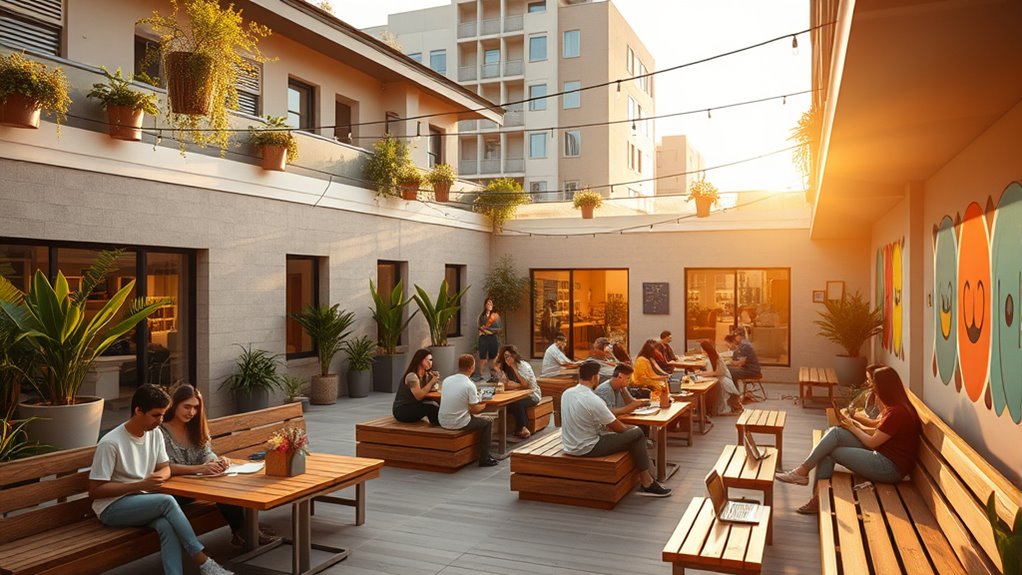

The rise of co-living spaces is reshaping how you experience housing by emphasizing shared amenities, social connections, and flexibility. These environments encourage spontaneous interactions, foster community, and balance privacy with social engagement. Designed for diverse lifestyles, they offer cost-effective and resource-efficient solutions that make daily life more engaging. If you’re curious about how these innovative living models are changing the way people connect and build communities, there’s much more to explore ahead.
Key Takeaways
- Co-living spaces emphasize shared amenities and social environments, fostering community and reducing living costs.
- They promote social interaction through communal activities, group dinners, and casual conversations, strengthening social bonds.
- Balancing privacy and community allows residents to enjoy personal retreats while engaging in shared experiences.
- These spaces cater to diverse residents like professionals and digital nomads with flexible, resource-efficient living options.
- The rise of co-living reflects a shift toward connected, socially engaging housing models addressing affordability and community needs.
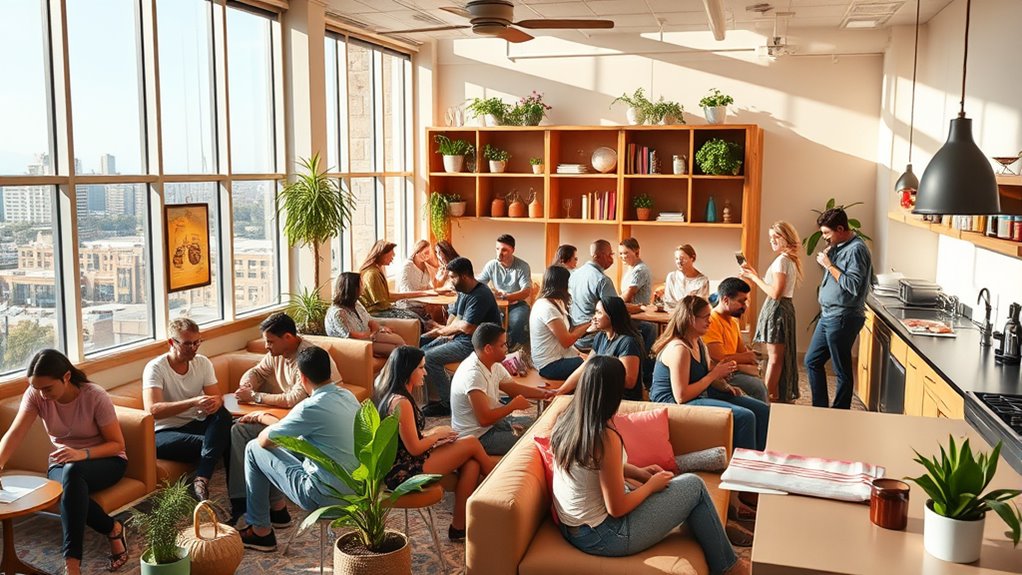
In recent years, co-living spaces have gained popularity as an innovative approach to housing that fosters community and connection. You find yourself drawn to these environments because they offer more than just a place to stay—they create a sense of belonging. One of the key features that distinguish co-living setups from traditional apartments is the emphasis on shared amenities. Instead of having to own or maintain individual appliances, furniture, or even spaces, you share kitchens, lounges, gyms, and work areas with others. These shared amenities not only reduce costs but also encourage spontaneous interactions, making it easier to meet new people and build relationships naturally.
Shared amenities in co-living foster community, reduce costs, and make meeting new people effortless.
As you settle into a co-living space, you’ll notice how social dynamics play an essential role in shaping your experience. The environment is intentionally designed to promote interaction, whether it’s through communal dinners, group activities, or casual conversations in shared common areas. You might find that the social dynamics foster a sense of camaraderie that’s often missing in traditional living arrangements. Instead of living in isolation, you’re encouraged to engage with your housemates, share experiences, and even collaborate on projects or social events. This interconnectedness can boost your mental well-being and create a support system within your community.
Living in a co-living space also means steering through the balance between independence and community. You have your private room, offering a personal retreat where you can unwind and focus. Yet, the shared spaces and amenities invite you to interact and participate in community life. This setup allows you to enjoy the benefits of privacy while still being part of a vibrant social fabric. Over time, you develop a deeper understanding of your housemates’ routines and personalities, which can lead to meaningful friendships. The social dynamics in these environments sometimes foster a sense of collective responsibility, where everyone pitches in to keep shared areas clean and organized, further strengthening community bonds.
Moreover, the flexibility of co-living arrangements appeals to a diverse range of people, from young professionals to digital nomads. You can enjoy the convenience of amenities designed to support your lifestyle, such as high-speed Wi-Fi, communal workspaces, and fitness centers. The shared amenities also promote sustainability by reducing individual resource consumption—less energy, fewer appliances, and less waste. Additionally, some co-living spaces are exploring cost-effective solutions to make housing more accessible, which benefits residents financially. Overall, co-living spaces are reshaping the way you experience housing, emphasizing connection, shared resources, and community-driven social dynamics that make everyday life more engaging and fulfilling.
Frequently Asked Questions
How Do Co-Living Spaces Ensure Privacy for Residents?
Co-living spaces guarantee your privacy through well-designed privacy measures and respect for personal boundaries. Private bedrooms are often soundproofed or separate, giving you a personal retreat. Shared areas are clearly designated, and rules are put in place to maintain boundaries and respect. Many spaces also offer individual storage solutions, so your belongings stay secure. These measures help create a balanced environment where you feel both connected and private.
What Are the Average Costs Associated With Co-Living Accommodations?
You’ll find that the average costs for co-living accommodations vary depending on location, but rent affordability is generally lower than traditional apartments. Expect to pay between $500 and $1,200 per month, often including utilities and amenities. To manage expenses effectively, budget planning is essential—consider shared costs and additional fees for features like private rooms or extra services. This way, you can enjoy community living without overspending.
How Do Co-Living Spaces Handle Conflicts Among Residents?
You’re encouraged to participate in conflict resolution through open communication and resident engagement initiatives. Co-living spaces typically have designated staff or community managers to mediate disputes, ensuring everyone feels heard. They promote respectful dialogue and organize community-building activities to foster harmony. When conflicts arise, you’re expected to address issues promptly, using these structured approaches to maintain a positive, collaborative environment for all residents.
Are Co-Living Arrangements Suitable for Families or Only Singles?
You might think co-living is just for singles, but it can truly be a family’s haven too. These spaces often promote family integration and offer child-friendly amenities, making it easier for kids to thrive. While not all co-living arrangements suit families, many are designed with safety and community in mind. It’s worth exploring options that cater to family needs, proving that sometimes, the best things come in small, connected packages.
What Amenities Are Typically Included in Community Living Setups?
In community living setups, you typically get amenities like a shared kitchen, where you can cook and socialize, and fitness facilities to stay active. These arrangements often include common areas such as lounges or outdoor spaces. Sometimes, you might also find laundry services, coworking spaces, and scheduled social events. These amenities encourage interaction and convenience, making community living a great option if you enjoy a connected, active lifestyle.
Conclusion
As you explore co-living spaces, you’ll find that they’re more than just a place to stay—they’re a thriving community. By sharing spaces and experiences, you build bonds that turn neighbors into friends. It’s like planting seeds that grow into a lush garden, full of support and connection. Embracing this lifestyle means you’re not just living somewhere; you’re creating a home where everyone’s presence makes the whole picture brighter.