To safeguard your home from water damage, start by placing leak detectors near plumbing connections, under sinks, around toilets, and by appliances like washing machines. Don’t forget to put them in hidden areas like basements and attics where leaks are hard to spot. Regularly maintain and test the detectors to guarantee they work properly. If you want to discover more tips on ideal placement and maintenance, keep exploring these essential strategies.
Key Takeaways
- Place detectors under sinks, near plumbing connections, and around appliances prone to leaks.
- Position detectors on the floor beneath washing machines, water heaters, and drain pans.
- Install detectors near toilets, especially behind and around the base.
- Use detectors in basements, attics, and hidden wall areas where leaks are hard to see.
- Regularly check and maintain detectors to ensure early alerting in all vulnerable spots.
Why Early Leak Detection Is Critical for Homeowners

Early leak detection is essential because even small leaks can quickly cause extensive water damage and costly repairs. Detecting leaks early helps you conserve water, reducing waste and lowering your utility bills. It also minimizes the risk of mold growth and structural damage, which can be hard to repair. Prompt detection is especially important when dealing with insurance claims, as timely reporting can prevent claim denials or delays. By catching leaks early, you protect your home’s integrity and avoid the larger expenses associated with unchecked water issues. Leak detectors help you stay proactive, giving you peace of mind and control over potential water problems. Additionally, understanding vetted leak detection methods ensures you choose reliable solutions that effectively safeguard your property. Using proper installation techniques further enhances the effectiveness of your leak detection system. Incorporating smart home integration can also provide real-time alerts and remote monitoring, increasing your chances of early leak detection. Employing advanced sensors can detect even the smallest leaks, offering an extra layer of security for your home. When combined with routine maintenance checks, these systems work more effectively to protect your investment and promote responsible water use. Ultimately, early detection safeguards your investment and promotes responsible water use.
How to Find the Most Leak-Prone Spots in Your Home

To find the spots most at risk for leaks, start by checking common leak areas like under sinks, around toilets, and near appliances. Look for hidden signs such as water stains, mold, or musty odors that might indicate a leak behind walls or under floors. Identifying these indicators helps you target your inspections effectively and prevent costly damage.
Common Leak Locations
Knowing where leaks commonly occur can help you catch problems early and prevent costly damage. Focus on areas prone to moisture buildup, especially near garden irrigation systems and roof drainage points. These spots often develop leaks unnoticed until significant damage occurs. Check under sinks, around toilets, and near appliances regularly. Pay attention to basement walls and floors for signs of water intrusion. Being aware of water intrusion signs is essential for early detection and effective maintenance. Additionally, understanding pool leak detection techniques can help identify hidden leaks before they cause extensive harm. Learning about leak-prone areas can further improve your ability to monitor and maintain your home, especially in vulnerable spots that are often overlooked. Recognizing humidity issues can also prevent mold growth and further deterioration.
Hidden Leak Indicators
Hidden leak indicators are often subtle signs that you might not notice right away. Unrelated leak signs, like sudden increases in water bills or musty odors, can point to hidden issues. Obscure leak clues, such as warped flooring or paint bubbling, aren’t always obvious but signal potential trouble. Check under sinks, behind appliances, and around toilets regularly for dampness or stains. Look for small, unexplained water spots on walls or ceilings. Pay attention to areas where mold or mildew appears without a clear cause. These clues often hide behind walls or beneath floors, making them easy to overlook. Recognizing these obscure leak clues helps you catch leaks early, preventing costly damage and keeping your home safe and dry. Regular home inspections can help identify these hidden issues before they become major problems. Incorporating leak detection devices, like sensors or detectors, can further enhance your ability to identify issues early on for optimal results. Additionally, understanding the signs of water damage can assist you in spotting potential leaks before they escalate.
Where to Place Leak Detectors Near Plumbing and Appliances

You should place leak detectors under sinks and around washing machines to catch leaks early. These areas are common sources of water damage and can leak without warning. Proper placement guarantees you’re alerted before serious problems develop.
Under Sink Placement
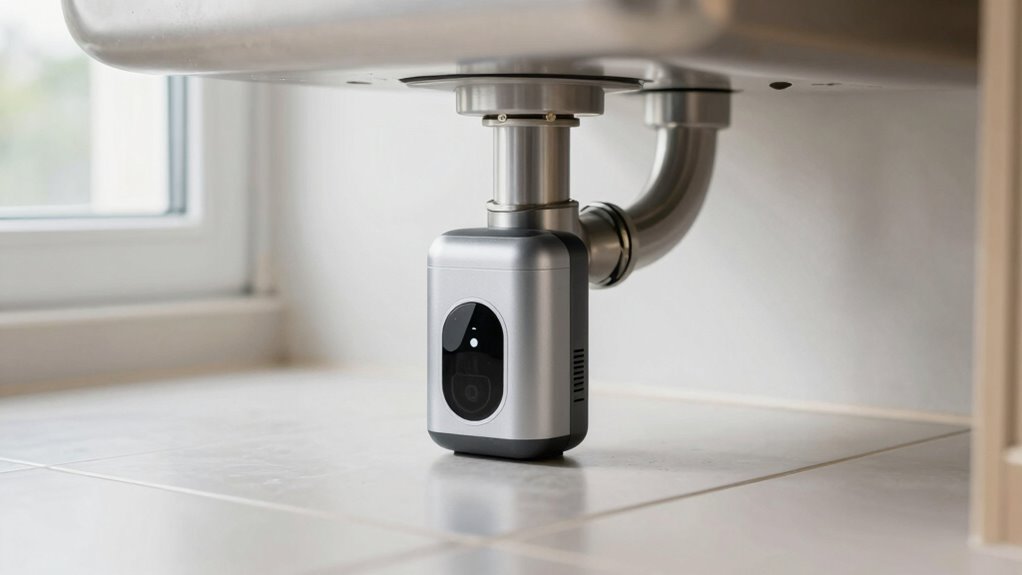
Placing leak detectors under the sink is a crucial step in early leak detection, especially near plumbing connections and appliances like dishwashers and garbage disposals. Position the detector close to plumbing joints where leaks are most likely to occur. These areas often have small, slow leaks that can cause significant damage over time. Make sure the detector is on the floor or mounted slightly above the base of the cabinet, where water would naturally pool. Avoid obstructing airflow or access. Regularly check the placement to ensure it stays in the ideal spot. For added protection, consider integrating smart leak detection systems that can alert you remotely when a leak is detected. Proper placement is essential for effective leak monitoring, ensuring early detection and minimizing water damage. By placing leak detectors in these strategic under sink locations, you’ll catch leaks early and prevent costly water damage to your cabinets and flooring. Additionally, correct placement enhances the longevity and reliability of your leak detection setup. Regularly inspecting and maintaining your detectors can further improve their performance and accuracy, especially if you choose detectors with self-testing features to ensure they remain functional over time.
Near Washing Machines
Where should you position leak detectors near your washing machine to catch leaks early? Place them on the floor beneath the water supply hoses and drain pan. These areas are prone to leaks caused by worn hoses, faulty connections, or increased water pressure. By positioning detectors here, you can be alerted immediately, preventing water damage. Proper placement also helps with mold prevention, as standing water fosters mold growth. Keep the detectors close enough to detect even small leaks while avoiding false alarms from humidity or dampness elsewhere. Regularly check and maintain both your washing machine and leak detectors to ensure they function effectively. Using reliable measurement tools can further enhance your leak detection system for early alerts. Additionally, ensuring your wiring practices are up to code can prevent electrical hazards associated with water leaks and improve overall home safety. Implementing proper installation techniques is crucial for maximizing detection accuracy and safety.
Detecting Leaks in Hidden Areas Like Basements and Attics

Detecting leaks in hidden areas like basements and attics can be challenging because these spaces often lack obvious signs of water intrusion. You should look for signs of basement moisture, such as musty odors, mold, or damp walls. In attics, check for sagging or stained ceiling materials, which may indicate a leak. Pay close attention to attic insulation, as moisture can accumulate there without immediate visible damage. Using a leak detector near these areas can help identify hidden leaks early before they cause significant damage. Regular inspections, combined with the proper placement of detectors, allow you to catch small leaks before they escalate. Staying vigilant in these less obvious spaces is critical to protecting your home from extensive water damage.
How to Test and Maintain Your Leak Detectors for Reliable Protection
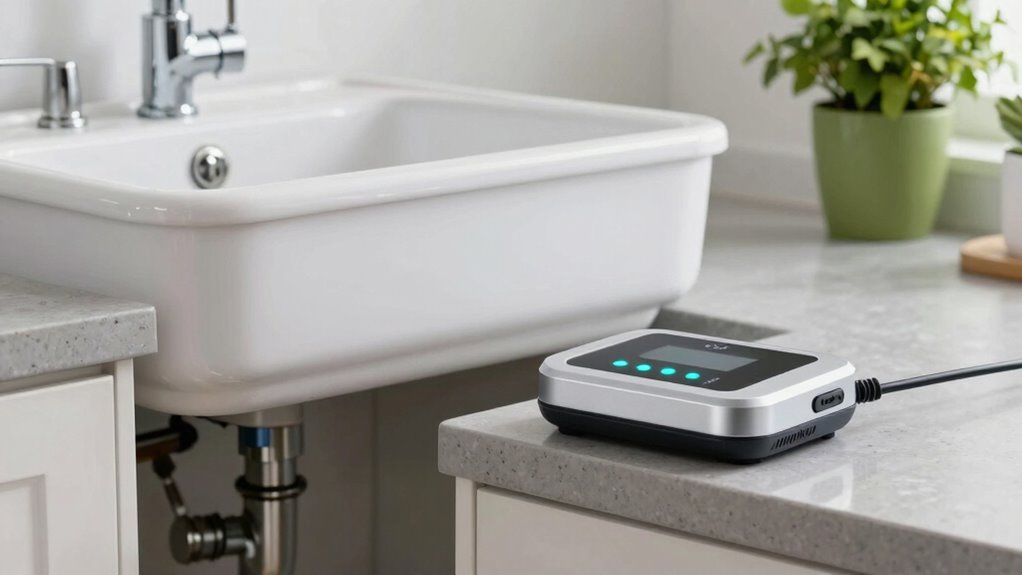
To guarantee your leak detectors provide reliable protection, it’s essential to regularly test and maintain them. Begin by performing sensor calibration, ensuring the sensor responds accurately to leaks. Follow the manufacturer’s instructions for calibration procedures, which often involve exposing the sensor to a known leak source. Additionally, check your detector’s batteries frequently; dead or weak batteries can compromise detection. Practice battery maintenance by replacing batteries at recommended intervals or when you notice a decline in performance. Regular testing with a small amount of test gas or vapor confirms the detector’s functionality. Keep your detectors clean and free of dust or debris, which can interfere with sensor accuracy. Consistent testing and maintenance help guarantee your leak detectors alert you promptly, protecting your home from costly water damage.
Tips to Maximize Leak Detection and Save Your Home
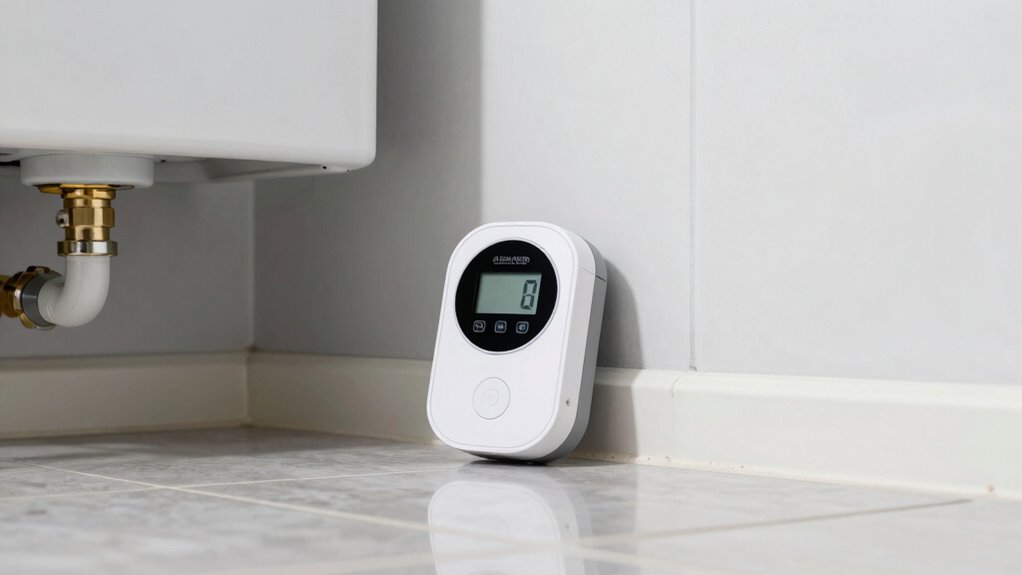
Maximizing leak detection begins with strategic placement of your detectors in the most vulnerable areas of your home. Position detectors near appliances, sinks, and along pipes that are prone to leaks. This approach helps you catch issues early, preventing water waste and costly damage. To further enhance protection, consider plumbing upgrades that improve pipe integrity and reduce leak risks. These upgrades support water conservation by minimizing unnecessary water flow and potential leaks. Regularly check and maintain your detectors to ensure they’re functioning properly. Keep an eye on areas where pipes are older or exposed, as they’re more susceptible to leaks. By combining strategic placement with proactive plumbing improvements, you’ll maximize leak detection and better safeguard your home from water damage.
Common Mistakes to Avoid When Installing Leak Detectors
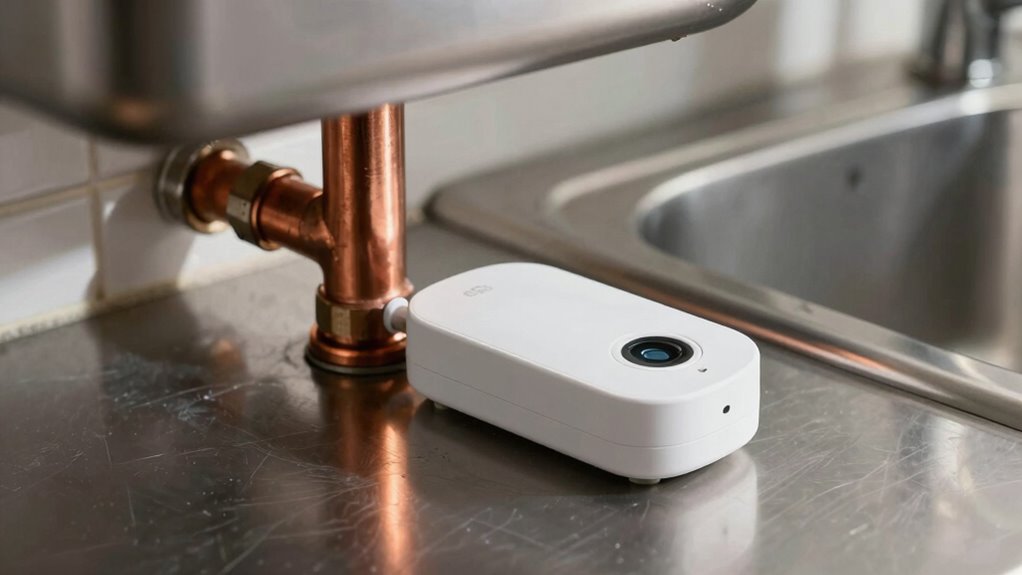
Installing leak detectors correctly is key to guaranteeing they work when you need them most. One common mistake is neglecting proper sensor calibration, which can cause false alarms or missed leaks. Another is poor detector placement, such as installing them too high or too far from potential leak sources. To avoid these errors, consider these points:
- Ensure sensors are calibrated regularly for accurate detection.
- Place detectors close to common leak sources, like under sinks or near water heaters.
- Avoid placing detectors in areas with high humidity or airflow, which can interfere with sensor sensitivity.
Frequently Asked Questions
What Types of Leak Detectors Are Most Effective for Different Areas?
You should choose leak detectors based on the area’s needs. For water pressure-sensitive zones like bathrooms and kitchens, opt for models with quick alerts and reliable water detection. Battery life is vital for continuous protection, so pick detectors with long-lasting batteries. Place water pressure sensors near appliances, pipes, and under sinks, while zone-specific detectors work best where water damage risks are highest. This guarantees effective, proactive leak detection.
How Often Should I Replace or Update My Leak Detection Devices?
Did you know that most leak detectors have a device lifespan of about 3 to 5 years? You should replace or update your leak detection devices according to your maintenance schedule, typically every 3 to 4 years. Regularly checking and maintaining them ensures peak performance, preventing costly water damage. Staying proactive helps you catch leaks early, saving you money and peace of mind over the long term.
Can Smart Leak Detectors Integrate With Home Automation Systems?
Yes, smart leak detectors can integrate with your home automation system, enhancing automation compatibility. You can connect them to platforms like Alexa, Google Home, or smart hubs, allowing you to receive alerts and control devices remotely. This seamless integration helps you monitor leaks in real-time, automate responses, and improve overall home safety. Make sure to choose detectors compatible with your existing smart home setup for a smooth and effective integration.
Are There Specific Leak Detectors Recommended for Rental Properties?
Did you know that water damage costs landlords over $10,000 on average per incident? For rental property maintenance and tenant safety, consider investing in leak detectors designed for such environments. Look for models with reliable alerts and easy installation. Brands like Honeywell or Fibaro offer options tailored for rentals, helping you catch leaks early and prevent costly damage while ensuring your tenants stay safe.
What Signs Indicate a Leak Before the Detector Alerts?
You can spot early warning signs of a leak through common leak indicators like musty odors, unexplained water bills, or damp spots on walls and floors. Listen for dripping sounds or hissing noises, and check for mold or mildew growth. These signs often appear before your leak detector alerts you, so stay vigilant and act quickly when you notice any of these indicators to prevent further damage.
Conclusion
While it might seem tempting to rely solely on high-tech leak detectors, remember—they’re only as good as where you place them. Ironically, neglecting simple spots or skipping regular tests can turn your smart system into just expensive decoration. So, don’t wait for a flood to realize the importance of proper placement and maintenance. Stay proactive, stay protected—your home’s safety depends on it. After all, a leak detected early beats water damage any day.