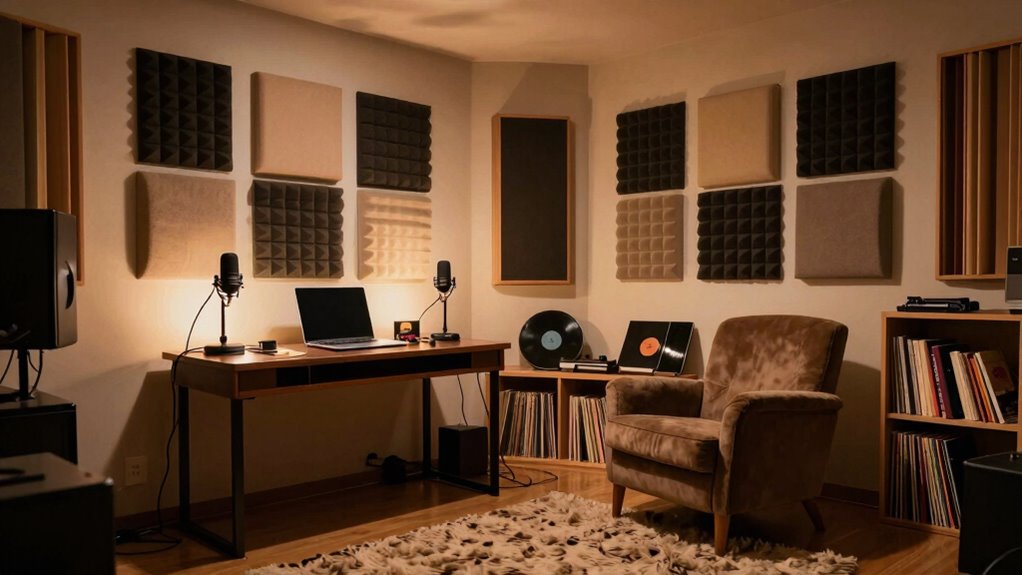

To improve your room’s sound quality without spending much, start by adding thick curtains and rugs to absorb sound and reduce echo. Rearrange furniture like bookshelves to help diffuse sound waves and break up reflections. Avoid placing speakers close to corners or reflective surfaces, and position them for a balanced sound. Small tweaks like these can make a big difference—and if you keep exploring, you’ll find even more simple, budget-friendly tips to enhance your space.

Get the latest gadgets delivered free with Prime
- Fast, free delivery on millions of items
- Prime Video, Amazon Music and more included
- Member-only deals all year
Key Takeaways
- Use thick curtains and rugs to absorb sound and reduce echo without expensive treatments.
- Place bookshelves strategically to diffuse and absorb sound, improving overall room acoustics.
- Avoid positioning speakers in corners or near reflective surfaces to prevent exaggerated bass and harsh reflections.
- Rearrange furniture and soft furnishings to balance sound reflection and absorption.
- Experiment with different surface placements to control echo and dead spots for a clearer listening environment.
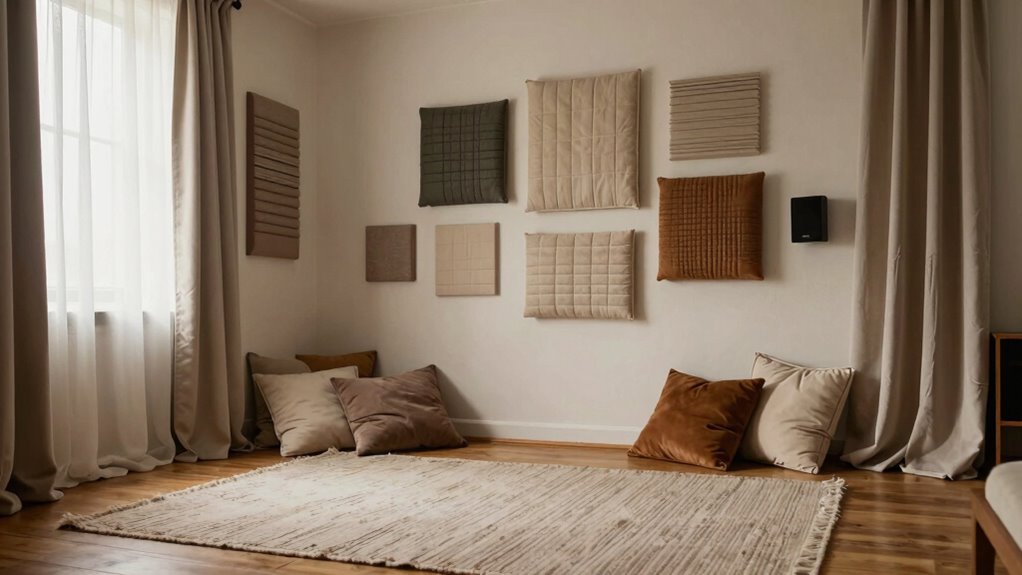
Have you ever wondered why some rooms sound lively and others feel dull? It all comes down to sound wave behavior within the space. When sound waves bounce around unevenly or get trapped, they create issues like echo, muddiness, or dead spots. Before you rush out to buy more speakers, it’s worth exploring some simple, inexpensive ways to improve your room’s acoustics. Small adjustments can make a big difference, and understanding how sound waves interact with your space is the first step.
Your room’s shape, size, and furnishings influence how sound waves behave. Hard surfaces like bare walls and floors reflect sound, causing echoes and reverberation that can muddy clarity. Conversely, soft materials absorb sound, reducing reflections and making your space feel more controlled. This is where acoustic treatment options come into play. You don’t need expensive foam panels or professional-grade equipment; even budget-friendly solutions like thick curtains, rugs, or bookshelves filled with books can help scatter and absorb sound waves effectively.
By strategically placing these materials, you can manage how sound waves reflect and diffuse throughout the room. For instance, hanging a curtain over a plain wall or adding a thick rug under your listening position can notably decrease unwanted reflections. These adjustments help break up sound wave behavior that causes muddiness or excessive reverberation. It’s about creating a balance—allowing enough sound reflection for liveliness, but not so much that it turns into chaos. The goal is to tame harsh echoes and dead spots, making the sound more natural and pleasing.
In addition to soft furnishings, consider positioning your speakers and listening area to optimize sound wave interaction. Keeping speakers away from corners and reflective surfaces can prevent exaggerated bass and echo. Using bookshelves or other irregular surfaces nearby can also help diffuse sound waves, reducing sharp reflections that distort audio clarity. These tweaks are simple, affordable, and often overlooked, but they can dramatically improve your listening experience. Understanding sound wave behavior helps you see that acoustics aren’t just about equipment but also about how your space interacts with sound. Additionally, recognizing how room shape and furnishings influence acoustic performance empowers you to make better adjustments that suit your specific space.
Furthermore, experimenting with reflective and absorptive surfaces around the room can provide tailored acoustic improvements based on your unique environment. Ultimately, understanding sound wave behavior helps you see that acoustics aren’t just about equipment but also about how your space interacts with sound. Before investing in more speakers or expensive gear, try these easy, cost-effective fixes. They’ll help you create a more balanced, lively sound environment where your audio sounds clearer, richer, and more natural. Small changes in your room’s layout and furnishings can elevate your listening experience without breaking the bank, proving that good acoustics start with smart, simple adjustments.
budget acoustic panels for room treatment
As an affiliate, we earn on qualifying purchases.
As an affiliate, we earn on qualifying purchases.
Frequently Asked Questions
How Do I Identify if My Room Has Bad Acoustics?
To identify if your room has bad acoustics, listen for echoes, muddiness, or uneven sound distribution. Use acoustic measurement tools to analyze sound clarity and reverberation times. You can also try simple soundproofing techniques, like adding soft furnishings or rugs, to improve acoustics. If these steps reveal persistent issues, it might be time to contemplate more advanced acoustic treatments or seek professional advice.
Can Furniture Placement Improve Sound Quality Significantly?
Think of your room as a musical instrument; furniture arrangement can tune it for better sound. By strategically placing furniture, you can break up sound waves and enhance sound absorption, reducing echoes and dullness. Proper furniture placement minimizes reflections and improves clarity, making your listening experience richer. So, yes, rearranging your furniture can profoundly improve sound quality without investing in extra speakers, turning your space into a sound-friendly environment.
Are DIY Acoustic Treatments Effective Compared to Professional Solutions?
DIY acoustic treatments can be quite effective if you focus on sound absorption and using acoustic diffusers. You’ll find that simple materials like foam panels or even DIY bass traps can substantially reduce echo and improve clarity. While professional solutions are more precise, your homemade treatments can make a noticeable difference in your room’s acoustics, especially if you’re mindful of placement and quality of the materials you choose.
How Do I Prevent Sound Reflections From Windows and Mirrors?
You gotta stop those window reflections and mirror echoes from turning your room into a chaotic echo chamber! Hang thick curtains or acoustic blankets over windows to absorb reflections, and use furniture or acoustic panels to tame mirror echoes. Even placing plants or bookshelves strategically can break up sound waves. These simple tricks prevent sound reflections from windows and mirrors from ruining your sound quality, making your space sound way better instantly.
What Are the Best Budget Materials for Acoustic Panels?
For budget-friendly acoustic panels, you should consider DIY installation with sound absorption materials like mineral wool, fiberglass, or recycled denim insulation. These materials are affordable, effective at reducing echo, and easy to cut and mount on your walls. Cover them with fabric for a clean look, and place strategically around your room to improve acoustics without breaking the bank. This approach is both cost-effective and straightforward.
Conclusion
Before investing in new speakers, try simple, affordable fixes like adding rugs, curtains, or furniture to absorb excess sound. These adjustments can dramatically improve your room’s acoustics without breaking the bank. Some might think these changes won’t make a difference, but even small tweaks can reduce echo and enhance clarity. Remember, optimizing your space first often yields better sound quality than rushing to buy expensive equipment—so give these tips a shot before spending more.
Fall Picks
fall essentials
As an affiliate, we earn on qualifying purchases.