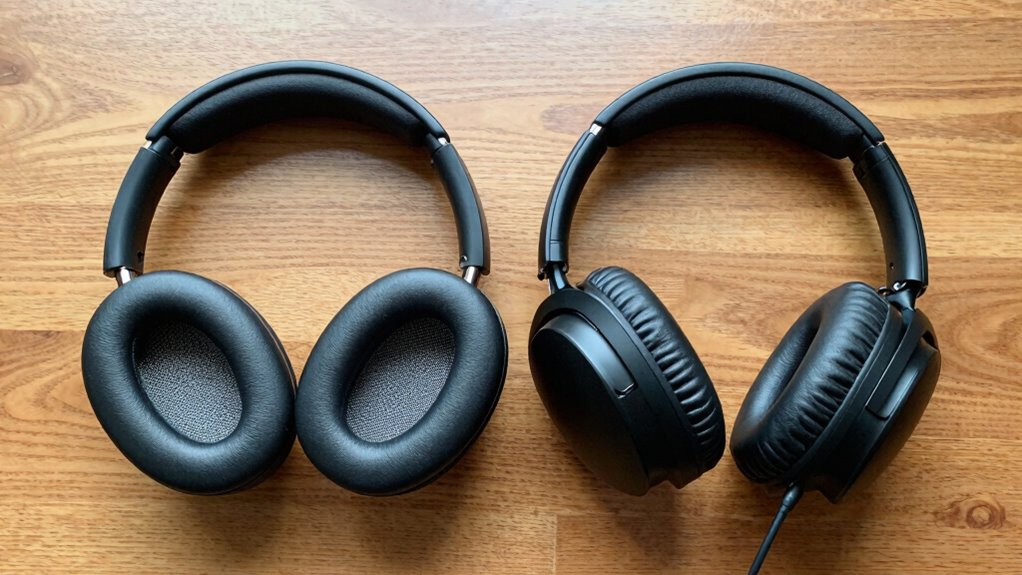

If you mainly listen at home, open-back headphones offer a natural, spacious sound perfect for relaxed environments, but they leak sound and aren’t ideal if others are nearby. Closed-back headphones block out external noise and create a personal sound bubble, making them better for focused listening or if privacy matters. Open-backs are more comfortable for long wear, while closed-backs are often more portable with wireless options. Keep exploring to find the right fit for your home setup.

Get the latest gadgets delivered free — and shop member deals
- Fast, free delivery on millions of items
- Access to Prime Big Deal Days deals on October 6–7
- Prime Video, Amazon Music and more included
Key Takeaways
- Open-back headphones offer natural, immersive sound ideal for relaxed, at-home listening in quiet environments.
- Closed-back headphones provide better noise isolation, making them suitable for focused activities or sharing space.
- Open-backs are generally more comfortable for long sessions due to better airflow and less heat buildup.
- Closed-backs often feature wireless options, offering more convenience and freedom of movement at home.
- The choice depends on whether you prioritize sound quality and comfort (open-back) or privacy and noise control (closed-back).
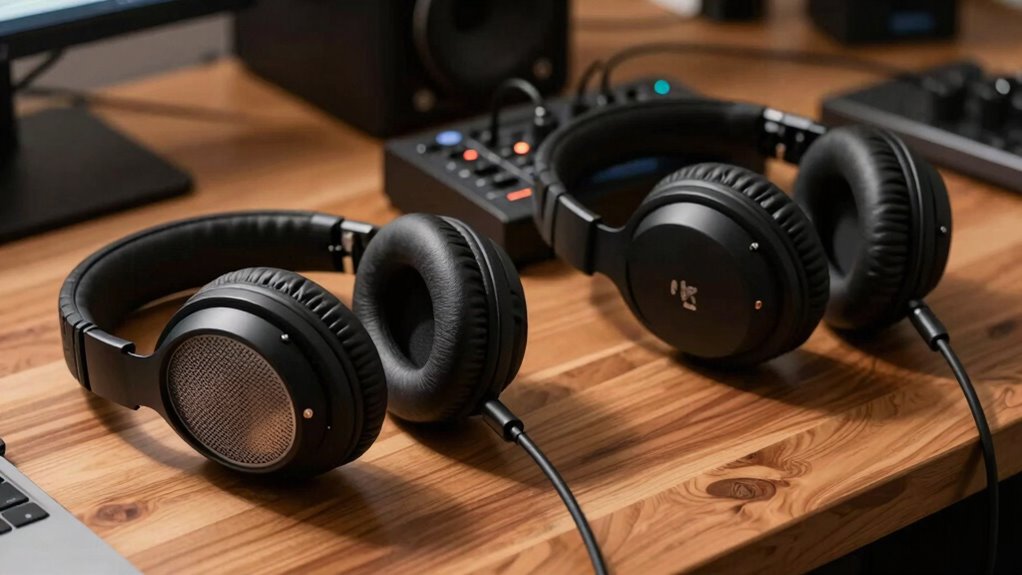
Whether you’re working, streaming movies, or just relaxing, having the right headphones at home can make a big difference in your daily comfort and entertainment experience. When choosing between open-back and closed-back headphones, you’ll want to evaluate how each design impacts features like wireless convenience and noise isolation, which are essential for different activities.
Open-back headphones typically provide a more natural, spacious sound. Because they have grills or vents on the ear cups, sound can escape and air can flow freely, giving you a sense of openness that’s ideal for immersive listening in calm environments. However, this design means they lack effective noise isolation; sounds from your surroundings can seep in, and your audio can leak out, making them less suitable if you need to block out noise or keep your listening private. Despite this, many find open-backs more comfortable for long sessions since they don’t create a sealed seal around your ears, reducing heat buildup. If you’re at home and want a clear, natural audio experience without worrying about ambient noise, open-back headphones are a great choice. Additionally, they often feature vented ear cups, which contribute to their comfort and sound quality.
Open-back headphones offer natural sound and comfort but lack noise isolation.
Closed-back headphones, on the other hand, are designed with sound isolation in mind. Their airtight ear cups prevent sound from leaking out and block external noise, making them perfect for environments where you need focus or privacy. This noise isolation can markedly enhance your listening experience, especially if your household is lively or if you’re trying to drown out background sounds. Many closed-back models also offer wireless convenience, letting you move freely without tangled cords, which adds to your comfort during extended use. The sealed design, however, can sometimes cause your ears to feel warmer, and the soundstage might not be as expansive as open-back options. Still, if you’re working or gaming at home and need to concentrate, closed-backs help create a personal bubble of sound. Additionally, the design features of closed-back headphones often prioritize durability and longevity, making them a reliable choice for everyday home use.
Ultimately, your choice depends on your priorities. If you prefer a natural sound and don’t mind some ambient noise, open-back headphones deliver comfort and clarity. If you need to block out distractions and enjoy more privacy, closed-back models with wireless convenience and strong noise isolation are better suited. At home, balancing these factors helps you find the perfect fit for your daily routines, whether for work, entertainment, or relaxation. Each design offers unique advantages, so understanding your environment and preferences will guide you toward the right headphones to elevate your home audio experience.
best open-back headphones for home
As an affiliate, we earn on qualifying purchases.
As an affiliate, we earn on qualifying purchases.
Frequently Asked Questions
Which Headphone Type Is Better for Gaming at Home?
For gaming at home, closed-back headphones are better because they provide superior noise isolation, helping you focus on the game without distractions. Wireless comfort is also a plus, offering freedom of movement and reducing cable clutter. Open-back headphones let in more ambient sound, which can be helpful for awareness but might be distracting during intense gaming sessions. Overall, closed-back models enhance immersion and concentration for gaming.
Do Open-Back Headphones Cause More Sound Leakage?
Yes, open-back headphones cause more sound leakage, leading to less sound isolation. This means your music or game sounds can disturb others nearby, especially in quiet environments. If you’re concerned about noise disturbance or want better sound isolation, closed-back headphones are a better choice. Open-back headphones excel in delivering natural sound quality but aren’t ideal if you need to keep your audio private or reduce noise leakage.
Are Closed-Back Headphones Suitable for Long Listening Sessions?
Yes, closed-back headphones are suitable for long listening sessions because they offer better sound isolation, reducing external noise and allowing you to focus comfortably. Their design also enhances listening comfort by preventing sound leakage, so you won’t disturb others. However, be mindful of potential ear fatigue if you wear them for extended periods. Taking breaks and adjusting the fit can help maintain comfort and protect your hearing during long sessions.
How Do Open-Back Headphones Affect Room Acoustics?
Open-back headphones turn your room into a concert hall—literally! They substantially influence room acoustics by allowing sound reflection and room resonance to escape, preventing sound from bouncing endlessly. This creates a more natural, spacious listening experience, but it also means your music blends with the room’s ambient noise. If you crave immersive sound without trapping noise, open-backs are your best bet, transforming your space into a lively, resonant playground.
Can I Switch Between Open-Back and Closed-Back Headphones Easily?
You can switch between open-back and closed-back headphones, but it’s not always seamless. Closed-back headphones offer better sound isolation and noise cancellation, making them ideal for focused listening. Open-back headphones, on the other hand, provide a more natural sound but lack noise isolation. Switching requires adjusting to different sound profiles and comfort levels. So, while possible, it’s best to choose the type suited for your environment and needs.
Conclusion
Choosing between open-back and closed-back headphones is like selecting a window or a wall—you’ll either enjoy the fresh air of openness or the cozy privacy of sound isolation. Consider your environment and how you want to experience your music or calls. Think of open-backs as a breezy meadow and closed-backs as a snug cabin. Whichever you pick, make sure it fits your needs so your listening experience feels just right—like finding the perfect seat in a concert hall.
Fall Picks
fall essentials
As an affiliate, we earn on qualifying purchases.