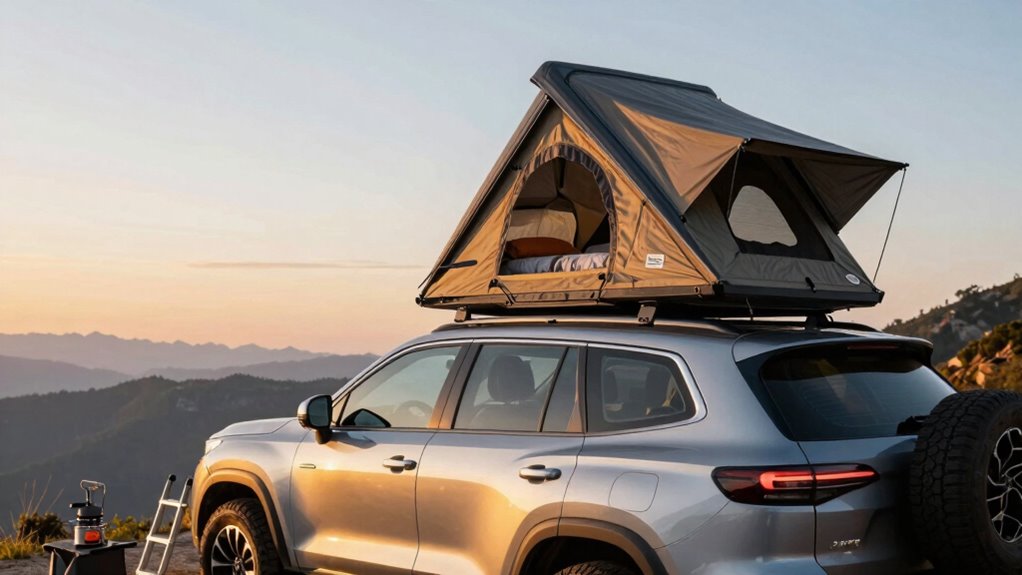
Hard-shell rooftop tents let you set up camp quickly with just a few simple motions, saving you time after a long drive. However, they often have limited interior space and may feel snug or less comfortable compared to soft-shell tents, which offer more room and ventilation. If you prioritize convenience and speed, these tents are ideal. Yet, if comfort matters more for extended stays, other options might suit you better. Keep exploring to find out which fits your style best.
Key Takeaways
- Hard-shell tents set up quickly, often in minutes, prioritizing convenience over spaciousness.
- They offer superior weather protection but may sacrifice interior room and ventilation.
- Their aerodynamic shape reduces wind noise and improves fuel efficiency during travel.
- Compact design can limit comfort for extended stays or multiple occupants.
- Easy roof rack compatibility ensures stable, secure mounting across various vehicles.

When choosing a rooftop tent, you often have to weigh setup time against comfort. Hard-shell rooftop tents are designed to provide a quick, straightforward setup process, making them a popular choice for those who value camping convenience. Unlike soft-shell tents, which require unfolding, staking, and sometimes additional pole setups, hard-shell models typically open with just a few simple steps, allowing you to settle in faster after a long day on the road. This quick deployment means you spend less time fussing with your gear and more time enjoying your surroundings. If convenience is your priority, especially when you’re keen to relax or pack up quickly, a hard-shell rooftop tent offers a significant advantage. Additionally, their durability and stability make them suitable for more challenging terrains and rougher driving conditions. The rigid shell design also contributes to better protection against weather elements, which is an important consideration for unpredictable outdoor conditions. This design also often results in a more streamlined profile, reducing wind resistance and noise during driving. However, this ease of setup often comes with a trade-off in comfort. Hard-shell tents tend to have a more rigid, compact design, which can sometimes limit interior space and ventilation. While they are usually well-insulated, some users find that the snug fit doesn’t provide the same roominess or airflow as soft-shell alternatives. If you’re planning extended stays or traveling with family or friends, comfort might become a more critical factor, and a softer, more spacious tent could suit your needs better. Still, many hard-shell models incorporate thick foam mattresses and smart interior features to enhance comfort, but they may not match the plushness or customization options found in traditional tents. For many campers, the choice often comes down to balancing setup speed with overall comfort. Considering roof rack compatibility can further influence your decision, as it ensures easier installation and versatility across different vehicles. Another important aspect to contemplate is roof rack compatibility. Hard-shell rooftop tents are generally designed with specific mounting systems in mind, and many models are built to fit standard roof racks without requiring extensive modifications. This compatibility simplifies installation and makes it easier to switch the tent between different vehicles, which is a huge plus if you own more than one vehicle or frequently change your setup. Plus, because the base of a hard-shell tent is usually sturdy and secure, it can handle rougher terrains and more demanding driving conditions without shifting or becoming unstable. This durability ensures that your camping gear remains safe and accessible, no matter where your adventures take you.
hard-shell rooftop tent with quick setup
As an affiliate, we earn on qualifying purchases.
As an affiliate, we earn on qualifying purchases.
Frequently Asked Questions
How Do Hard-Shell Rooftop Tents Perform in Extreme Weather Conditions?
Hard-shell rooftop tents perform well in extreme weather, offering good insulation effectiveness to keep you warm or cool. However, ventilation concerns can arise, making it harder to circulate air during hot weather. You’ll want to make certain of proper ventilation to prevent condensation and discomfort. Overall, they’re sturdy and weather-resistant, but paying attention to ventilation and insulation details helps maximize comfort in harsh conditions.
Are Hard-Shell Rooftop Tents Suitable for All Vehicle Types?
Hard-shell rooftop tents are suitable for many vehicle types, but you should check vehicle compatibility first. Larger SUVs and trucks usually handle them well, while smaller cars might struggle with weight considerations. Keep in mind the tent’s weight and your vehicle’s roof capacity to guarantee safe installation. If your vehicle supports the load, a hard-shell rooftop tent can be a great, durable option for comfortable camping on the go.
What Maintenance Is Required for Hard-Shell Rooftop Tents?
Like tending a well-loved garden, maintaining your hard-shell rooftop tent involves regular cleaning routines and proper storage solutions. You should wipe down the exterior to prevent dirt buildup and inspect for damage after each trip. Store it in a cool, dry place when not in use, and occasionally lubricate hinges and locks to guarantee smooth operation. This upkeep keeps your tent durable, reliable, and ready for new adventures.
Can Hard-Shell Tents Be Used in Off-Grid Locations?
Yes, you can use hard-shell tents in off-grid locations. They’re built with durable rooftop tent materials that withstand rough conditions, making them dependable for remote camping. Just make certain you have the right camping accessories, like sturdy ladders and ventilation options. Their solid shells provide excellent protection from the elements, so you can comfortably enjoy off-grid adventures without worrying about weather or terrain.
How Do Security Features Vary Among Different Hard-Shell Rooftop Tents?
Like a fortress guarding your treasure, the security features of hard-shell rooftop tents vary widely. You’ll find locking mechanisms that range from simple latches to advanced central locks, ensuring your gear stays safe. Privacy features, such as tinted windows and secure zippers, add extra layers of protection. Some tents even include alarm systems or reinforced materials, giving you peace of mind whether you’re off-grid or parked in busy areas.
Conclusion
In the end, choosing a hard-shell rooftop tent boils down to your priorities. If quick setup matters most, you’ll appreciate its rapid deployment—saving you roughly 50% more time than traditional tents. However, if comfort is your priority, a softer, more spacious option might suit you better. Remember, 70% of users report feeling more at ease with traditional tents, but the convenience of a hard-shell could mean the difference between a quick getaway and a delayed adventure.