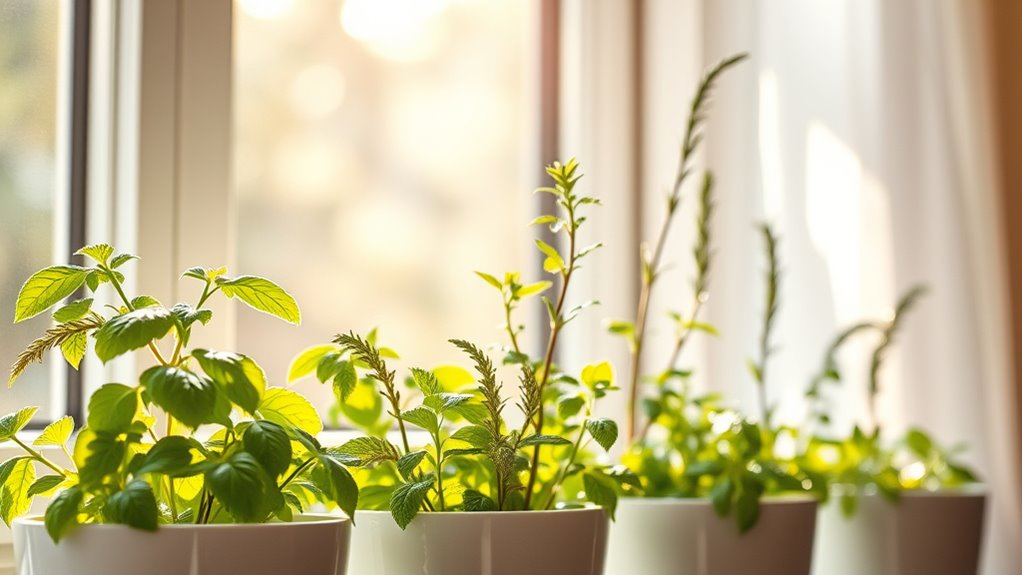

To grow herbs indoors year-round, set up a hydroponic system near a sunny window or with grow lights. Choose a beginner kit with reservoirs and LED lights, then regularly check and replenish the nutrient solution. Maintain proper light, water levels, and cleanliness to promote healthy growth. This method reduces pests and soil mess, ensuring fresh herbs all year. Keep going to discover more tips for successful, hassle-free herb gardening indoors.
Key Takeaways
- Use a hydroponic system with grow lights and a nutrient-rich water solution for continuous indoor herb growth.
- Position herbs near natural sunlight or supplement with LED grow lights for consistent light exposure.
- Maintain proper pH levels and regularly replenish nutrients to ensure healthy, vigorous herbs year-round.
- Keep the environment clean and pest-free, reducing the need for chemical treatments and ensuring organic herbs.
- Monitor water and light levels consistently, adjusting as needed to promote lush, healthy herbs throughout the year.
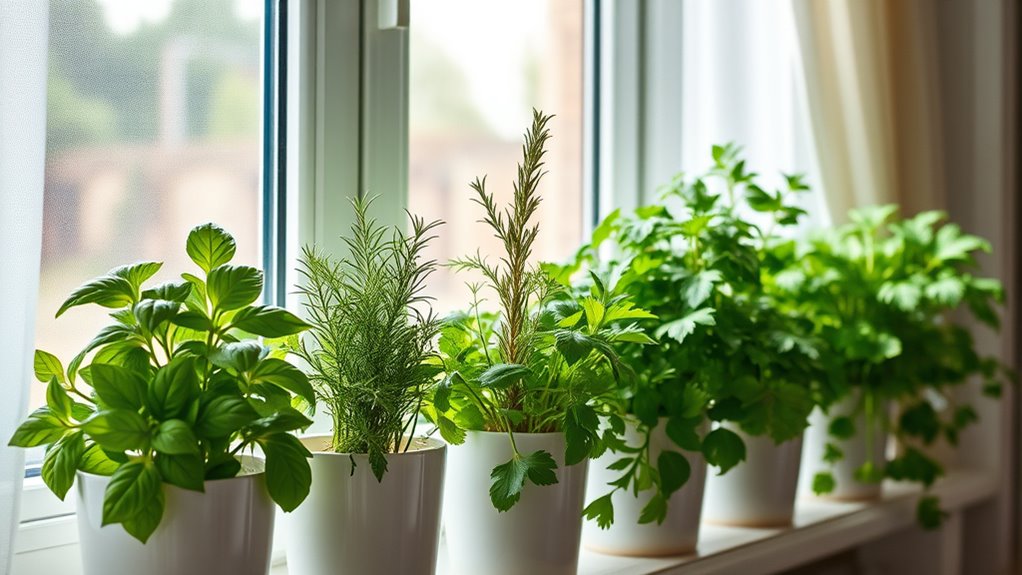
Have you ever considered growing fresh herbs right in your kitchen? It’s a simple way to add flavor to your meals and bring a touch of greenery indoors. One effective method to do this is through hydroponic systems, which allow you to grow herbs without soil. These systems use nutrient-rich water solutions to nourish your plants, making them faster-growing and easier to manage than traditional soil gardening. Plus, they help you control the environment more precisely, guaranteeing your herbs thrive year-round. Since hydroponic setups are typically sealed and contained, they also substantially reduce pest problems. Pest prevention becomes much simpler because you’re not dealing with soil-borne insects or diseases that often attack outdoor gardens. This means fewer worries about pests damaging your herbs or needing chemical treatments. Instead, you can focus on maintaining a clean, controlled environment that promotes healthy growth.
To start with hydroponic systems, you’ll want to choose a setup suited for herbs like basil, mint, or cilantro. Many kits are designed for beginners and come with all the necessary components, including reservoirs, grow trays, and LED grow lights. Position your system near a sunny window or install grow lights if natural light is limited. Keep the water nutrient solution at the right pH and replenish it regularly to ensure your herbs get the minerals they need. Because these systems are less susceptible to pests, you won’t need to worry about spraying pesticides, which helps keep your herbs organic and safe to eat. It’s a low-maintenance solution that assures fresh herbs whenever you need them, regardless of the season outside.
In addition to pest prevention, hydroponic systems offer a host of other benefits. They typically use less water than traditional gardening because the water recirculates within the system. This makes them eco-friendly and cost-effective over time. You also avoid soil-borne diseases, which can be a common issue in traditional indoor or outdoor gardens. Your herbs will grow more quickly and healthily, giving you a continuous supply of aromatic leaves that enhance your cooking. The controlled environment minimizes the risk of pests such as aphids or whiteflies that often plague indoor plants in soil-based containers. Maintaining your hydroponic setup is straightforward—you just need to monitor water levels, nutrient concentration, and lighting. With consistent care, you’ll enjoy lush, vibrant herbs all year long without the mess or pests typical of soil gardening. Growing herbs indoors with hydroponic systems not only simplifies pest prevention but also ensures you have fresh, flavorful herbs at your fingertips whenever you want them.
Frequently Asked Questions
What Are the Best Herbs for Low-Light Indoor Environments?
You should choose indoor herb varieties that thrive in low light, like mint, parsley, chives, and basil. These herbs are well-suited for low light gardening tips, making them perfect for shaded spots or rooms with limited sunlight. To keep them healthy, rotate their placement, use reflective surfaces to maximize available light, and avoid overwatering. With patience and proper care, you’ll enjoy fresh herbs year-round, even in low-light indoor environments.
How Often Should I Water My Indoor Herbs?
You should water your indoor herbs when the top inch of soil feels dry, typically every 2-3 days. Keep an eye out for overwatering signs like yellowing leaves or soggy soil, which indicate you’re watering too often. Adjust your watering frequency accordingly to prevent root rot. Remember, consistent moisture is key, but never let your herbs sit in water or stay overly dry for too long.
Can I Grow Herbs From Store-Bought Herbs?
Did you know that up to 40% of store-bought herbs can be successfully propagated? Yes, you can grow herbs from store-bought herbs by herb propagation in your indoor herb containers. Simply trim healthy stems, remove lower leaves, and plant them in moist soil. With proper light and watering, your new herbs will thrive, giving you fresh flavors all year round. It’s an easy, sustainable way to expand your herb garden!
What Fertilizers Are Suitable for Indoor Herb Gardens?
You should use balanced liquid or water-soluble fertilizers for your indoor herb garden, applying them every few weeks. Organic options like compost tea, fish emulsion, or seaweed extract are great choices, providing essential nutrients naturally. Avoid over-fertilizing, as it can harm your herbs. Choose fertilizer types suited for indoor plants, and always follow the instructions for safe and healthy growth.
How Do I Prevent Pests Indoors?
To prevent pests indoors, you should regularly inspect your herbs and keep the growing area clean. Use pest prevention methods like introducing natural remedies such as neem oil or insecticidal soap, which are safe for your herbs. Avoid overwatering and ensure proper airflow to reduce pest attraction. By maintaining hygiene and using natural remedies proactively, you can keep pests at bay and enjoy healthy, thriving herbs year-round.
Conclusion
Now that you know how to nurture your herbs indoors year-round, imagine the possibilities that await. With just a little care and attention, your kitchen could become a lush, fragrant oasis at any time. But don’t stop here—there’s always more to discover about perfecting your indoor garden. Keep experimenting, stay curious, and soon you’ll unveil the full potential of your green sanctuary. The next surprise might be just a leaf away.