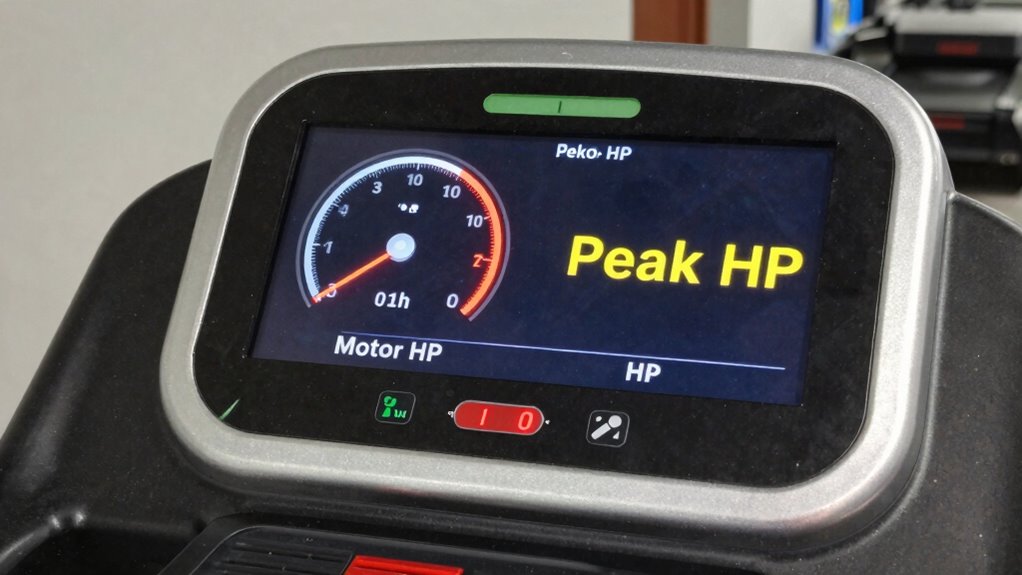

When choosing a treadmill, don’t get fooled by peak horsepower claims; they only show short burst power, not sustained, reliable performance. Focus on continuous horsepower, which indicates the motor’s ability to run smoothly over time, supporting your walking or running needs. Peak ratings can be misleading marketing tricks. To avoid disappointment, look for honest specs and know how to spot overstated claims—if you want to make a smarter choice, there’s more to uncover.

Get the latest gadgets delivered free — and shop member deals
- Fast, free delivery on millions of items
- Access to Prime Big Deal Days deals on October 6–7
- Prime Video, Amazon Music and more included
Key Takeaways
- Continuous horsepower reflects reliable, sustained motor performance, while peak HP indicates only short-term power output.
- Rely on continuous HP for accurate assessments of treadmill durability and real-world workout capability.
- Peak HP is often exaggerated in marketing and does not represent the treadmill’s long-term performance.
- For walking, look for at least 2.0–3.0 CHP; for running, opt for 3.0 CHP or higher for durability.
- Focus on motor efficiency and design quality rather than peak HP to ensure better performance and longevity.
treadmill with high continuous horsepower
As an affiliate, we earn on qualifying purchases.
As an affiliate, we earn on qualifying purchases.
What Are Continuous and Peak Horsepower on Treadmills?
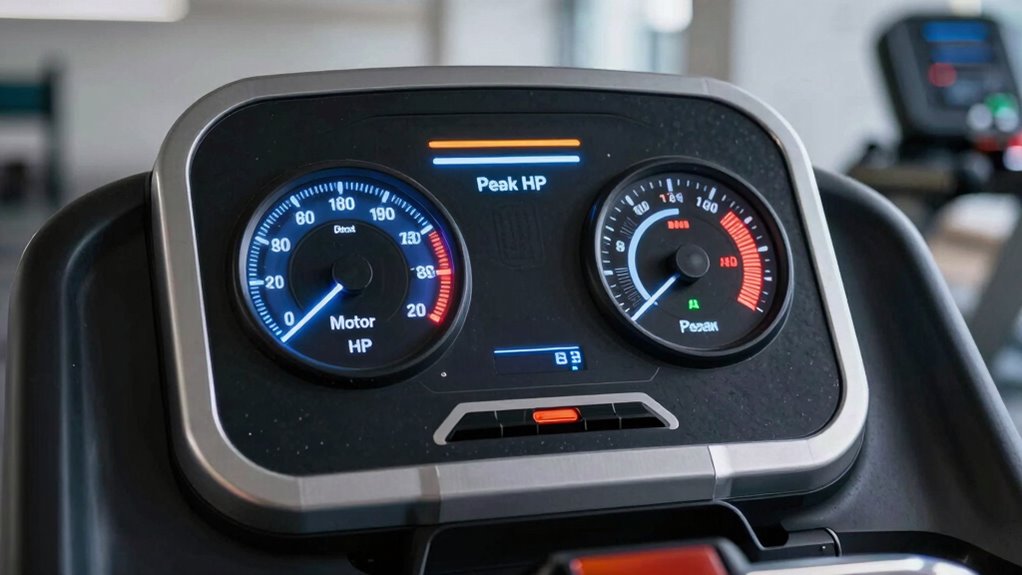
Understanding the difference between continuous and peak horsepower on a treadmill is essential for choosing the right equipment. Motor specs reveal these power ratings, which influence performance and durability. Continuous horsepower indicates the motor’s reliable power output over extended periods, meaning it can run steadily without overheating. Peak horsepower, on the other hand, reflects the maximum power the motor can deliver momentarily, often during startup or intense workouts. While peak HP might seem impressive, it doesn’t show how the motor performs during sustained use. Recognizing motor technology helps you understand how these ratings translate into real-world performance. Additionally, the design and construction of the motor can significantly impact its ability to sustain consistent output over time. A well-designed motor with high-quality components often provides better heat dissipation and longevity. Knowing these distinctions helps you assess a treadmill’s true capabilities. Reliable motor specs ensure your treadmill can handle regular exercise without issues, so pay attention to continuous power ratings for a realistic measure of performance. motor design also plays a significant role in how well the treadmill can sustain consistent performance over time.
How Does Motor Horsepower Impact Treadmill Performance?
Your treadmill’s continuous motor power is what truly influences its performance and durability during regular use. Peak horsepower can seem impressive but often doesn’t reflect the machine’s real-world capabilities. Focusing on continuous power gives you a clearer idea of how well a treadmill will handle your workouts over time. Understanding motor efficiency can also help you choose a more reliable and energy-efficient machine. Additionally, the quality of internal components plays a vital role in maintaining consistent performance and longevity. Recognizing performance metrics can further assist in evaluating a treadmill’s suitability for your fitness needs. Being aware of energy consumption can also help you select a model that balances power and cost-effectiveness. Paying attention to engine design can reveal how well the motor maintains performance under sustained loads, contributing to your treadmill’s overall reliability.
Continuous Power Matters
While peak horsepower might sound impressive, it’s the continuous power that truly determines a treadmill’s performance during your workout. Continuous power, reflected in motor specifications, shows how well a treadmill can sustain effort over time. A motor with high continuous power supports smoother operation, better incline handling, and consistent speeds, especially during intense sessions. Treadmill engineering prioritizes this metric because it directly impacts durability and reliability. Understanding motor ratings helps you make informed decisions about which treadmill will perform reliably under regular use. Motor durability is crucial for long-term performance, as it relates directly to the lifespan of the machine. Additionally, proper maintenance can help preserve motor efficiency and extend its operational life. For instance, choosing a treadmill with adequate cooling systems can prevent overheating during prolonged use. Recognizing the importance of continuous power can also guide you in selecting models that offer better overall value and longevity. Here’s a quick comparison:
| Motor Power (HP) | Use Case | Durability Impact |
|---|---|---|
| High continuous | Long workouts, inclines | Longer motor lifespan |
| Low continuous | Light walking, brief sessions | Less durable |
| Peak HP | Short bursts, marketing | Not indicative of endurance |
Focusing on continuous power helps you choose a treadmill built for real performance, not just impressive specs.
Peak Power Misleading
Peak horsepower often gets attention because it sounds impressive, but it can be misleading when evaluating a treadmill’s performance. Manufacturers use peak HP in their brand marketing to make units appear more powerful, but it doesn’t reflect real-world use. Here’s what to remember:
- Peak HP indicates maximum power briefly, not sustained output.
- It can exaggerate a treadmill’s capabilities, especially in aesthetics-focused models.
- Continuous HP provides a more accurate measure of endurance and performance.
- Relying on peak power can lead you to overlook essential features like motor design and cooling systems.
Understanding these differences helps you avoid being swayed by flashy brand marketing. Instead, focus on continuous power ratings to choose a treadmill that meets your actual workout needs.
Why Peak Horsepower Can Be Deceptive for Your Workout Needs
Peak horsepower numbers can be misleading because they often exaggerate a treadmill’s true capabilities. You might see high ratings that don’t match how the machine performs during your workout. To make the right choice, it’s important to focus on actual, real-world performance metrics rather than just peak horsepower.
Misleading Power Ratings
Many treadmill manufacturers advertise peak horsepower figures because they sound impressive, but these numbers can be misleading when it comes to your workout. Peak horsepower often highlights short bursts of motor strength rather than consistent power, which matters during prolonged use. Relying solely on these ratings skews the power comparison, making some machines seem more powerful than they truly are for regular workouts. To make an informed decision, consider these points:
- Peak HP reflects maximum output, not sustained performance
- Continuous HP indicates the motor’s real-world endurance
- Peak figures can exaggerate motor strength misrepresenting actual power
- Focus on motor specs designed for durability and consistent power output
- Understanding motor ratings helps you choose a treadmill that matches your workout needs, not just impressive-sounding numbers. Additionally, power ratings that emphasize continuous performance are more reliable indicators of a treadmill’s long-term capabilities. Recognizing the difference between peak and continuous horsepower ensures you select equipment suitable for your exercise routine without being deceived by short-term power spikes. Being aware of motor durability can prevent disappointment and ensure your treadmill performs reliably over time.
Real-World Performance Gaps
While a treadmill’s peak horsepower might look impressive on paper, it doesn’t always translate to real-world performance during your workout. Brand marketing often highlights peak power to make models seem more powerful, but motor efficiency is what truly matters. A motor with high peak horsepower may struggle to sustain that power due to poor efficiency, leading to inconsistent performance. Understanding this gap helps you avoid overspending on misleading specs. Here’s a quick comparison:
| Metric | Peak Horsepower | Real-World Performance | Motor Efficiency |
|---|---|---|---|
| Power sustainability | Short bursts | Consistent effort | High |
| Impact on workouts | Limited | Reliable | Critical |
| Brand marketing focus | Yes | Less emphasized | Often overlooked |
Pay attention to motor efficiency rather than peak horsepower alone, as performance durability is essential for a satisfactory workout experience.
Choosing the Right Metric
Although a treadmill’s peak horsepower might catch your eye, it doesn’t necessarily reflect how well the machine performs during your workout. To choose the right treadmill, focus on more meaningful metrics like motor efficiency and treadmill design, which impact real-world performance. Peak HP can be misleading because it shows the maximum power the motor could deliver momentarily, not sustained strength. Consider these factors instead:
- Continuous horsepower ratings for consistent performance
- Motor efficiency affecting durability and energy use
- Treadmill design influences stability and smoothness
- Real-world performance, not just peak numbers, ensures your workout meets expectations
- Understanding personality assessments can help you choose equipment that matches your workout style and motivation levels. Additionally, evaluating motor efficiency can provide insights into the treadmill’s long-term reliability and energy consumption, helping you make a smarter investment.
How Continuous Horsepower Affects Treadmill Durability and Reliability
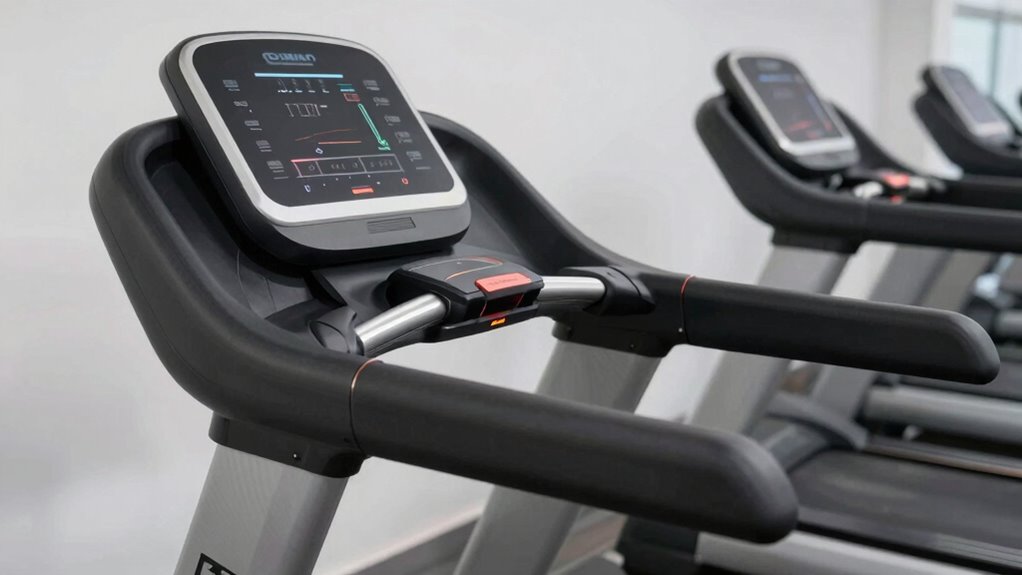
Continuous horsepower (CHP) plays a crucial role in a treadmill’s durability and reliability because it directly reflects the motor’s ability to sustain consistent performance over time. A higher CHP indicates that the motor can handle prolonged use without overheating or losing power, boosting motor longevity. This consistency reduces wear and tear, making the machine more dependable in the long run. Reliability factors, like fewer breakdowns and steady operation, hinge on the motor’s ability to deliver continuous power without dips or interruptions. When shopping for a treadmill, prioritize models with a robust CHP rating to ensure your machine can handle regular workouts without compromising performance. Essentially, CHP is a key indicator of a treadmill’s capacity to stay dependable and durable through daily use. Motor performance is an integral aspect that influences a machine’s overall lifespan and user experience.
How to Spot When Brands Overstate Motor Power Ratings
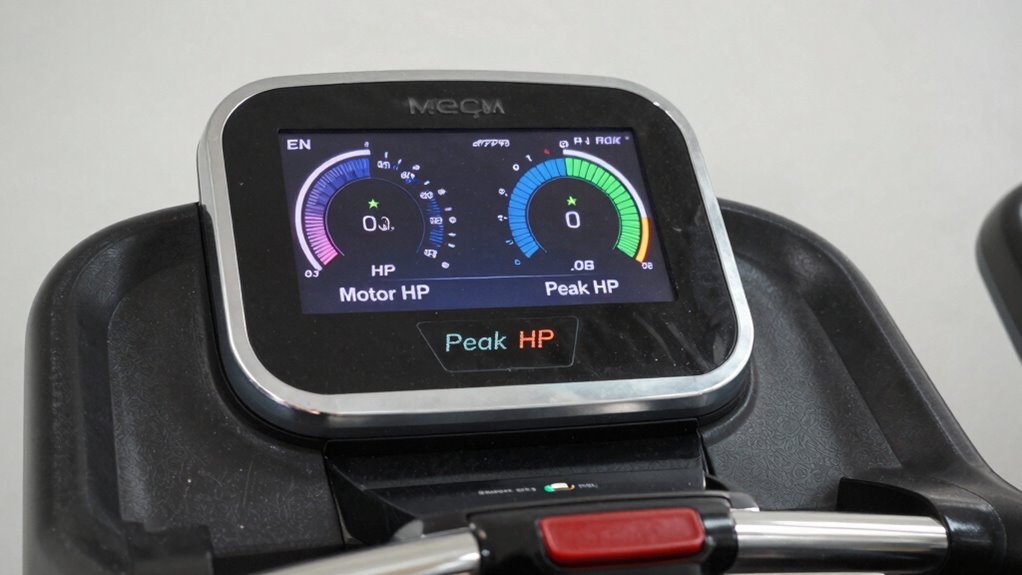
Motor power ratings can be misleading if brands overstate their claims to make their treadmills appear more powerful. To spot this, you need to understand common tactics used in brand marketing and stay aware as a consumer. Here are four signs to watch for:
Beware of overstated motor power ratings; look for clear specs and independent testing to verify treadmill strength.
- Claims of “Peak” or “Maximum” HP without clarification.
- Comparing horsepower numbers across different brands, even if testing conditions differ.
- Absence of detailed motor specifications or independent testing results.
- Use of marketing language that emphasizes “high horsepower” without technical context.
Additionally, understanding home design principles can help you evaluate the overall quality and durability of fitness equipment within your space.
Which Treadmill Motor Rating Is Best for Walking or Running?
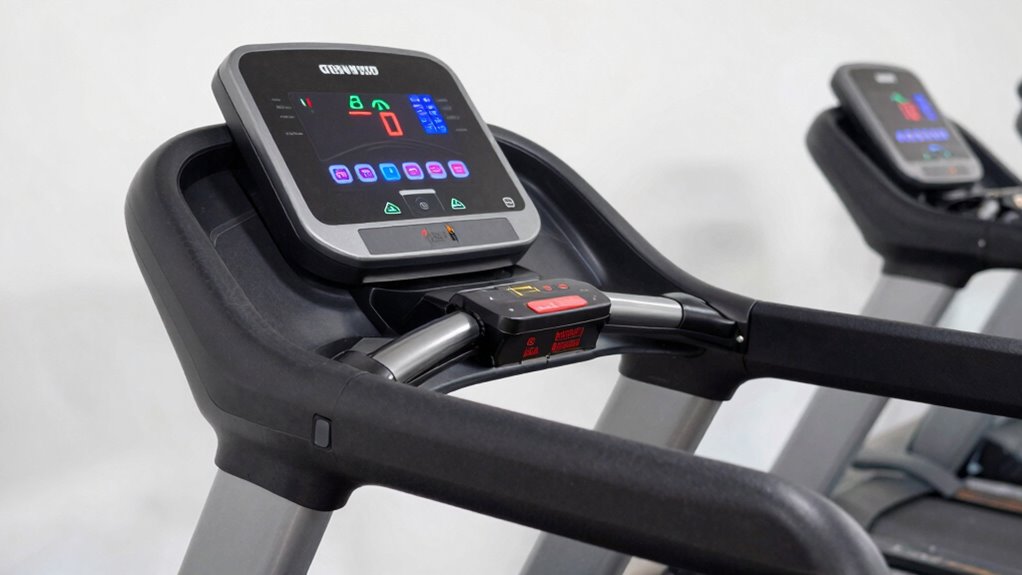
Are you wondering which treadmill motor rating is best for walking or running? For walking, a motor with 2.0 to 3.0 CHP (Continuous Horsepower) usually suffices, offering smooth operation without overkill. If you’re running regularly, aim for at least 3.0 CHP to handle higher speeds and increased wear. Keep in mind, a more powerful motor may require less treadmill maintenance over time. Customer reviews often highlight that motors with true continuous horsepower last longer and perform better under frequent use. Avoid being fooled by peak horsepower ratings, which can be misleading. Choose a treadmill with a motor rated for your activity level, and you’ll enjoy a more reliable, durable workout machine that stands up to your routine.
How to Read Treadmill Specifications to Make Smarter Choices
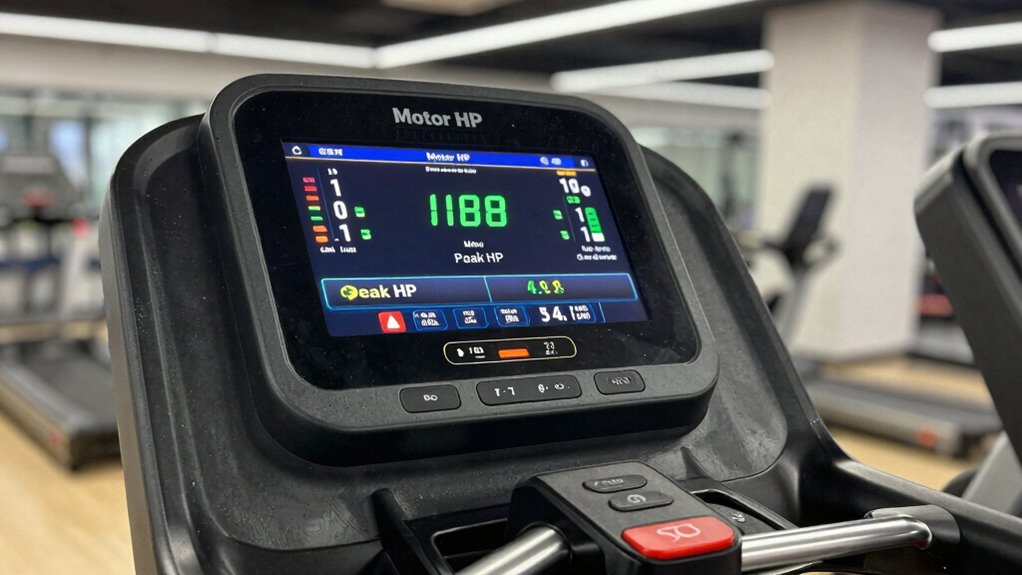
Understanding treadmill specifications can seem intimidating at first, but learning how to interpret key details helps you make smarter choices. Focus on these essential aspects:
- Speed settings – Check the maximum speed to ensure it matches your workout needs.
- Incline features – Look for adjustable inclines to add variety and intensity.
- Motor horsepower – Understand the continuous HP for durability, not just peak ratings.
- Program options – Review available workout programs for versatility and motivation.
Common Myths About Treadmill Horsepower Debunked

Many people believe that a higher peak horsepower on a treadmill means it’s more powerful or durable, but that’s a common misconception. Treadmill design is more important for overall performance and user comfort than peak horsepower alone. Manufacturers often highlight peak HP to make machines seem more impressive, but this number doesn’t reflect real-world reliability or longevity. Instead, focus on continuous motor HP, which indicates consistent power during use. Additionally, a well-designed treadmill offers better cushioning, stable construction, and quieter operation, all contributing to user comfort. Relying solely on peak horsepower can lead you to choose a treadmill that’s loud, uncomfortable, or prone to breakdowns. Prioritize overall design and motor specifications to find a machine that truly meets your fitness needs.
Frequently Asked Questions
How Does Treadmill Motor Horsepower Affect Overall Workout Safety?
Higher motor horsepower can enhance workout safety by handling increased speeds and weights without overheating or stalling. To guarantee safe use, follow safety precautions like avoiding sudden speed changes and staying alert during your session. Regular motor maintenance keeps the treadmill in top condition, preventing malfunctions that could cause accidents. A well-maintained, appropriately powered motor helps you exercise confidently, reducing risks and promoting a safer, more effective workout experience.
Are Higher Peak HP Ratings Always Better for Heavy Users?
Think of peak HP ratings like a sprinter’s burst of speed—impressive but not always essential for heavy users. Higher peak HP doesn’t automatically signify better motor durability or longer equipment longevity. Heavy users benefit from steady, continuous horsepower ratings that ensure consistent performance without straining the motor. Focus on treadmill models with reliable, high-quality motors designed for sustained use, rather than just chasing the highest peak HP figures.
Can a Treadmill With Lower Continuous HP Suffice for Intense Training?
A treadmill with lower continuous HP can suffice for intense training if it offers good motor endurance and power consistency. Focus on models designed for heavy use, which maintain steady performance under stress. While higher peak HP might seem appealing, it doesn’t guarantee durability or consistent power during rigorous workouts. Prioritize continuous HP ratings and the motor’s ability to handle prolonged, intense sessions for better reliability and safety.
What Are the Signs of a Poorly Rated Treadmill Motor?
You notice the motor struggles to maintain speed or makes unusual noises, like grinding or clicking—that’s a sign of poor motor performance. You might also see excessive heat or frequent pauses during use. A poorly rated treadmill motor often comes from a lesser-known brand with a weak reputation. These issues indicate the motor can’t handle your workouts, risking breakdowns and safety concerns. Always choose a reputable brand for reliable performance.
How Do I Verify Motor Specifications From Manufacturers Reliably?
You verify motor specifications by cross-checking manufacturer claims with independent reviews and trusted sources. Request detailed specifications directly from the manufacturer, including continuous and peak horsepower ratings. Use third-party testing reports or expert evaluations for comparison. Don’t rely solely on marketing materials—look for verified data, certifications, and user feedback to guarantee you’re getting accurate information. This approach helps you confidently assess motor quality and avoid misleading claims.
Conclusion
Understanding the difference between peak and continuous horsepower helps you make smarter treadmill choices. Don’t be fooled by flashy numbers—focus on what truly guarantees durability and performance for your workouts. By reading specs carefully, you can avoid overpaying for overstated power ratings. Isn’t your fitness journey worth investing in a treadmill that’s reliable and built to last? Make informed decisions and enjoy a safer, more effective workout every time.
Fall Picks
fall essentials
As an affiliate, we earn on qualifying purchases.