Telemedicine is shaping the future of digital healthcare by making access more convenient and personalized. You’ll benefit from advanced AI diagnostics that analyze your data quickly and accurately, leading to faster and more precise treatments. Continuous remote monitoring using wearable devices allows for proactive health management and early intervention. As these technologies become more integrated and sophisticated, healthcare will become more efficient and less intrusive. Keep exploring to discover how these trends can transform your healthcare experience.
Key Takeaways
- Increasing integration of AI diagnostics and remote monitoring for faster, personalized healthcare delivery.
- Expansion of telemedicine platforms to enhance accessibility and patient convenience worldwide.
- Adoption of advanced wearable devices for continuous health monitoring and early intervention.
- Standardization of digital health tools to improve accuracy, security, and seamless data sharing.
- Growing emphasis on proactive, patient-centered care through innovative digital healthcare solutions.
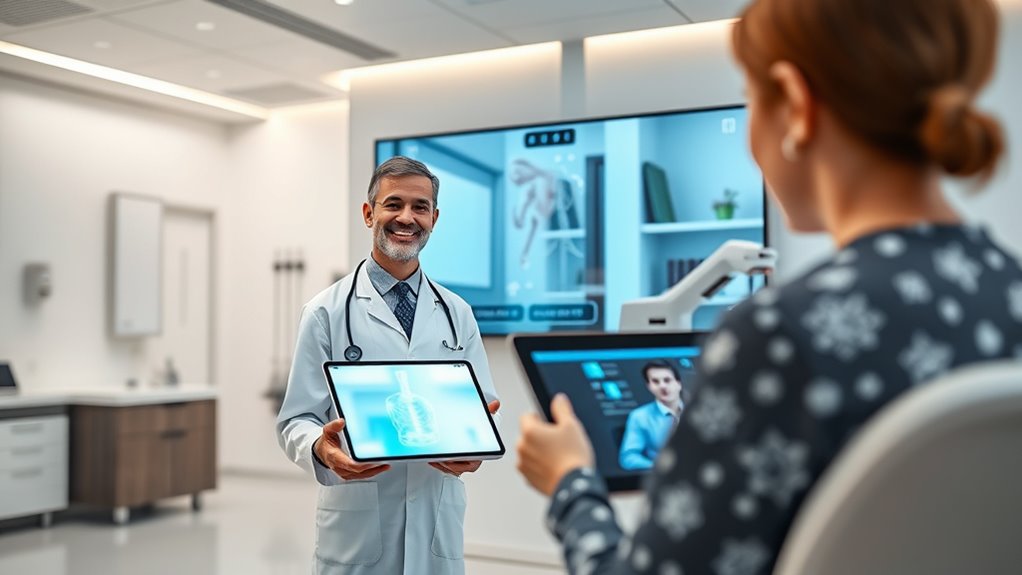
Telemedicine is rapidly transforming healthcare by making medical services more accessible and convenient. You now have the ability to consult with healthcare professionals from the comfort of your home, eliminating the need for long waits or travel. This shift is powered by advancements like AI diagnostics and remote monitoring, which are revolutionizing how diagnoses are made and how health is managed over distance. AI diagnostics, in particular, helps clinicians analyze vast amounts of data quickly and accurately, leading to faster diagnoses and personalized treatment plans. Instead of waiting days for lab results or imaging interpretations, AI algorithms can assess your symptoms, review your medical history, and suggest potential diagnoses in real-time, streamlining the entire process. This technology not only improves accuracy but also reduces the risk of human error, giving you greater confidence in your care.
Remote monitoring is another key trend that’s redefining digital healthcare. Wearable devices, smart sensors, and connected health tools allow your healthcare team to keep track of your essential signs, activity levels, and other health metrics continuously. For you, this means ongoing oversight without frequent clinic visits, especially for chronic conditions like diabetes or hypertension. Your data is transmitted securely to your provider, who can analyze trends and intervene early if they notice any concerning changes. This proactive approach helps prevent complications before they become severe, ultimately improving your health outcomes. It also empowers you to take a more active role in managing your health, with real-time feedback and personalized recommendations based on your data.
Together, AI diagnostics and remote monitoring create a seamless, patient-centered healthcare experience. They enable quicker interventions, more precise treatments, and a continuous flow of information that keeps your care tailored to your needs. As these technologies become more sophisticated, expect even greater integration with telemedicine platforms, making healthcare more efficient and less intrusive. For you, this means fewer unnecessary visits, faster diagnoses, and a more personalized approach to health management. Telemedicine’s future will likely see these tools becoming standard, helping you stay healthier and more connected to your providers, no matter where you are. With AI diagnostics and remote monitoring leading the way, the digital healthcare landscape is becoming more innovative, accessible, and responsive than ever before.
Frequently Asked Questions
How Will Telemedicine Impact Rural Healthcare Access Long-Term?
You’ll see rural telehealth substantially improve healthcare access long-term by bridging gaps caused by healthcare disparities. As technology advances, you’ll find it easier to connect with specialists and primary care providers without traveling long distances. This reduces barriers for rural populations, ensuring timely care. Over time, rural telehealth will help create more equitable healthcare, making quality services accessible to everyone, regardless of where they live.
What Are Privacy Concerns With Increased Telemedicine Use?
You should be aware that increased telemedicine use raises privacy concerns, especially around data security and patient confidentiality. As you share sensitive health information online, there’s a risk of data breaches or unauthorized access. To protect yourself, verify providers use strong encryption and secure platforms. Staying informed about privacy policies helps you maintain control over your personal health data and reduces the risk of information being compromised.
How Will Telemedicine Services Be Integrated Into Traditional Healthcare Systems?
You’re about to see telemedicine seamlessly integrated into traditional healthcare, transforming patient experiences. As remote diagnostics and virtual consultations become routine, healthcare providers will adopt hybrid models combining in-person visits with digital care. This integration promises faster diagnoses and personalized treatment plans, all while preserving the continuity of care. Expect a future where your doctor effortlessly switches between virtual and physical visits, making healthcare more accessible, efficient, and responsive than ever before.
What Are the Costs Associated With Expanding Telemedicine Infrastructure?
You’ll face costs like investing in telemedicine equipment, which varies based on technology quality and scale. Training costs are also vital, as staff need to learn new systems and workflows. Additionally, you might need to upgrade your internet infrastructure and maintain devices over time. While these expenses can be significant upfront, they’re essential for ensuring effective, accessible telemedicine services that complement traditional healthcare delivery.
How Will Telemedicine Adapt to Future Technological Advancements?
Ever wonder how telemedicine will keep pace with rapid tech progress? You’ll see AI diagnostics become smarter, enabling quicker, more accurate patient assessments remotely. Wearable integration will seamlessly connect your health data to providers, making real-time monitoring effortless. As these advancements unfold, you’ll experience more personalized, efficient care at home, transforming the way you manage your health daily. Telemedicine’s future is all about blending innovation with your needs.
Conclusion
So, enjoy your future of endless virtual visits—who needs in-person care anyway? With all these sleek apps and instant chatbots, real doctors might soon be just a nostalgic memory. Just remember, when your smartwatch starts diagnosing your every sniffle, you’ll have no one to blame but yourself for trusting pixels over people. But hey, at least you’ll never have to leave your couch—your new favorite doctor is just a screen away.