
Stress-detecting technology, like wearable sensors and mindfulness apps, helps you track and manage stress more effectively. Wearables monitor your heart rate, skin conductance, and breathing, alerting you to early signs of stress. These devices provide real-time feedback and store data to identify patterns. Paired with mindfulness exercises, they enable proactive responses and personalized routines. To discover how these tools can transform your stress management, keep exploring the latest innovations.
Key Takeaways
- Wearable sensors monitor physiological signs like heart rate and skin conductance to detect stress in real time.
- These devices provide immediate feedback and prompt mindfulness or breathing exercises during stressful situations.
- Integration with meditation apps allows personalized stress management based on real-time physiological data.
- Stored data over time helps identify stress patterns and triggers for proactive routine adjustments.
- Combining biometric data with digital tools shifts stress response from reactive to proactive, enhancing overall well-being.

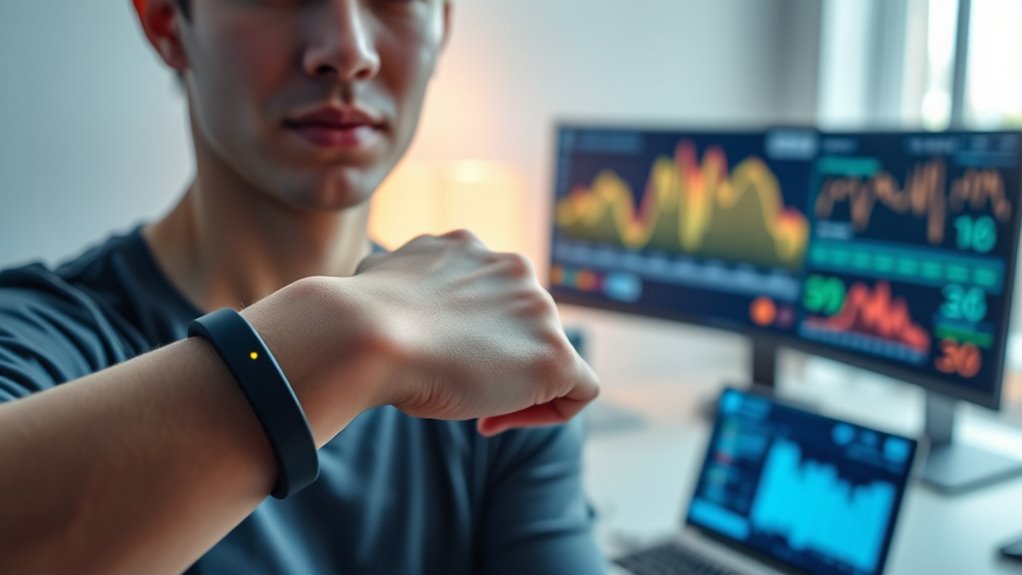
Have you ever wondered how technology can help you manage stress more effectively? Today, that curiosity is entirely justified, thanks to innovations like mindfulness meditation apps and wearable sensors. These tools are transforming the way you understand and respond to stress, making it easier to stay balanced amidst life’s chaos. With wearable sensors, you can monitor physiological signs such as heart rate, skin conductance, and even breathing patterns in real time. These sensors are often embedded in smartwatches or fitness bands, giving you immediate insights into how your body reacts under different circumstances. For example, if your heart rate spikes during a stressful meeting, the device detects this change and can prompt you to take a moment for mindfulness meditation or deep breathing exercises. This immediate feedback loop empowers you to recognize stress signals early, so you can act before stress overwhelms you.
Mindfulness meditation, on the other hand, has become more accessible through dedicated apps that guide you through exercises designed to calm your mind and body. Some apps even integrate with wearable sensors, creating a seamless experience: as your sensor data indicates rising stress levels, the app suggests specific meditation techniques tailored to your needs. This synergy between technology and mindfulness helps you develop a proactive approach to stress management. Instead of waiting until you’re overwhelmed, you learn to listen to your body’s cues and respond with targeted practices. Over time, this can build resilience, lower your baseline stress levels, and improve your overall well-being.
These innovations don’t just stop at tracking; they enable you to take control. For instance, many wearable sensors can store your stress data over days or weeks, allowing you to identify patterns and triggers. Maybe you notice increased stress during certain times of the day or specific activities, prompting you to adjust your routines or incorporate regular mindfulness meditation breaks. The combination of real-time data and actionable insights makes managing stress a more personalized and effective process. Plus, because these tools are often portable and user-friendly, you can carry them into your daily life—whether at work, at home, or on the go—making stress management a continuous, integrated practice.
In essence, wearable sensors and mindfulness meditation apps are revolutionizing stress management, giving you the tools to understand your body better and respond with calm, clarity, and confidence. They make it possible to turn stress from a reactive experience into a proactive one, helping you stay centered no matter what challenges come your way. Additionally, understanding and utilizing biometric data can further enhance your stress management strategy by providing more precise insights into your physiological responses.

TIAZUUX Smart Ring for Women&Men-Activity/Sleep/Heart Rate/HRV/Stress/Women's Health Tracker-IP68 Waterproof/Wearable-No Subscription Fee Required-Compatible with iPhone &Android
【Comprehensive Health Insights】TIAZUUX smart ringis a comprehensive health tracker that seamlessly monitors your daily activity, sleep quality, heart…
As an affiliate, we earn on qualifying purchases.
As an affiliate, we earn on qualifying purchases.
Frequently Asked Questions
How Accurate Are Current Stress-Detecting Devices?
Current stress-detecting devices are fairly accurate, but their reliability depends on proper sensor calibration and consistent data collection. You can trust these devices to provide useful insights, but keep in mind that factors like movement or skin condition can affect data accuracy. Regular calibration and understanding their limitations help you get the most reliable stress readings. So, use them as helpful tools, not definitive diagnoses.
Can Stress-Detecting Tech Predict Future Health Issues?
Nearly 80% of healthcare providers believe stress-detecting technology can predict future health issues. You can use these devices for predictive health, helping you spot risks early. This early intervention allows you to manage stress before it worsens, potentially preventing chronic conditions. While not foolproof, these tools give you valuable insights, empowering you to take proactive steps toward better long-term health outcomes.
Are There Privacy Concerns With Stress-Monitoring Data?
Yes, there are privacy concerns with stress-monitoring data. You might worry about data privacy, as sensitive health information could be misused or accessed without your consent. Ethical considerations come into play, especially regarding who owns the data and how it’s shared. It is crucial to guarantee that companies implement strong privacy protections and transparent policies so you can trust that your stress data remains secure and used responsibly.
How Affordable Is Stress-Tracking Technology for Everyday Users?
Stress-tracking technology has become quite affordable, with many options fitting different budgets. You’ll find devices ranging from budget-friendly wearables to more advanced models, making it accessible for everyday users. The cost comparison shows that entry-level options are often less expensive than traditional health gadgets. This improves user accessibility, allowing you to easily incorporate stress management into your daily routine without breaking the bank.
Will Stress Detection Replace Traditional Mental Health Assessments?
Stress detection won’t replace traditional mental health assessments, but it can enhance your emotional awareness. These devices provide real-time insights, helping you recognize stress patterns early. While they support behavioral interventions, they still rely on clinical evaluations for diagnosis. You’ll benefit from combining technology with professional guidance, ensuring an extensive approach to your mental health. This integration helps you manage stress more effectively, without replacing the depth of traditional assessments.

Mindsight 'Breathing Buddha' Guided Visual Meditation Tool for Mindfulness | Slow Your Breathing & Calm Your Mind for Stress & Anxiety Relief | Perfect for Adults & Kids (Multicolor, Pebble (Sound))
🧠 Introducing (6) Ambient Nature Sounds: the addition of crashing waves, birds chirping or a strong breeze can…
As an affiliate, we earn on qualifying purchases.
As an affiliate, we earn on qualifying purchases.
Conclusion
Think of stress-detecting technology as your personal lighthouse, guiding you safely through turbulent waters. When stress clouds your mind, this tech shines a light, helping you steer clear of rocky shoals. With each alert, it’s like having a friendly captain by your side, steering you toward calmer seas. Embrace this innovation as your trusty compass—leading you to smoother, more balanced days where you can navigate life’s storms with confidence.

USMECBL Fitness Trackers,Blood Oxygen Heart Rate Sleep Monitor,Smart Band 24/7 Health Monitoring,Calorie Pedometer Steps Counter Activity watchs/Notifications for iOS/Android
【10-14 Day Long Battery Life – Wear It Day and Night】Forget daily charging anxiety. A single, full charge…
As an affiliate, we earn on qualifying purchases.
As an affiliate, we earn on qualifying purchases.

Smart Watches for Men Women, Alexa Built-in, 1.8" Smartwatch with Heart Rate/SpO2/Sleep/Stress, IP68 Waterproof Fitness Tracker with Bluetooth Call (Answer/Make), 101+ Sports Modes, for Android iPhone
【24/7 Health Data Monitoring】The Women's Smartwatch Will Monitor Your Heart Rate, Blood Oxygen, and Stress all the time…
As an affiliate, we earn on qualifying purchases.
As an affiliate, we earn on qualifying purchases.