

The future of surgery is revolutionized by robots and remote operations that increase precision, expand access, and reduce invasiveness. AI integration boosts safety and decision-making, while miniaturized tools enable complex procedures through tiny incisions. Autonomous robots and tele-surgery break down geographic barriers, making advanced care more widespread. Despite challenges like infrastructure and security, ongoing innovations promise safer, more efficient surgeries worldwide—discover how these breakthroughs are shaping healthcare’s next chapter.

Get the latest gadgets delivered free — and shop member deals
- Fast, free delivery on millions of items
- Access to Prime Big Deal Days deals on October 6–7
- Prime Video, Amazon Music and more included
Key Takeaways
- AI-integrated robotic systems enhance precision, automation, and real-time decision-making in future surgical procedures.
- Remote surgeries enable access to specialized care across distances, overcoming geographic barriers with reliable wireless networks.
- Autonomous and semi-autonomous robots perform complex tasks, increasing safety and efficiency in delicate surgeries.
- Miniaturized micro-robots expand minimally invasive options, reducing tissue trauma and improving patient recovery.
- Ethical, safety, and cybersecurity considerations are critical for the responsible development and adoption of robotic and remote surgical technologies.
As an affiliate, we earn on qualifying purchases.
The Growing Market and Technological Advancements in Surgical Robotics

The surgical robotics market is rapidly expanding, driven by technological innovations and increasing adoption worldwide. You’ll notice the market is projected to grow at a CAGR of 9.42% from 2025 to 2030, reaching USD 7.42 billion.
In 2023, it was valued at $9.6 billion and is expected to hit $11.1 billion by 2024, climbing to $23.7 billion by 2029.
Technological advancements, especially AI integration, are transforming systems to improve precision, automate tasks, and enhance safety. AI-driven features like motion control, image recognition, and haptic feedback help reduce surgeon workload and errors. The integration of AI is also facilitating real-time data analysis, which further enhances surgical decision-making. Additionally, ongoing research into robot-assisted surgical procedures promises to further improve outcomes and expand the capabilities of robotic systems. As regulations and standards evolve to support these innovations, the legal and compliance landscape is becoming more streamlined, encouraging broader adoption. Moreover, developments in safety protocols are critical for maintaining high standards and ensuring patient trust in robotic surgeries. The increasing availability of training programs ensures surgeons can safely and effectively operate these advanced systems. Furthermore, the demand for interdisciplinary collaboration between engineers, surgeons, and regulatory bodies is vital for advancing surgical robotics technology.
Enhancing Accessibility With Remote Surgical Procedures

Remote surgical procedures are transforming healthcare by removing geographic barriers that traditionally limited access to specialized care. With remote platforms, you can now get expert treatment regardless of your location, bridging gaps in areas lacking skilled surgeons. Cross-continental surgeries have already proven feasible, allowing complex procedures to be performed across borders via robotic systems and wireless networks. This technology is especially essential in low-resource settings, where it enables access to advanced care without local specialists. It also promotes collaboration among experts, supporting multidisciplinary input for intricate cases. By decentralizing surgical services, remote operations help deliver timely care to underserved populations. Advances in telecommunication infrastructure are critical for ensuring the reliability and safety of these procedures. Additionally, remote robotic systems are continually improving in precision and ease of use, making them more accessible to healthcare providers worldwide. The development of cybersecurity protocols is vital to protect patient data and prevent malicious interference during remote surgeries. Reliable internet, advanced robotic systems, and cybersecurity are indispensable for safe, effective procedures. These innovations are making equitable healthcare a more achievable goal worldwide, supported by increased emphasis on patient safety standards across the industry.
The Rise of Autonomous and Semi-Autonomous Surgical Robots

Advancements in artificial intelligence, machine learning, and deep learning have propelled the development of autonomous and semi-autonomous surgical robots, transforming how surgeries are performed. These robots now operate with higher precision and smarter maneuvers, such as tissue damage avoidance.
Some autonomous systems, like the STAR robot, have successfully performed laparoscopic surgeries without human intervention, while others, like the da Vinci system, have been upgraded to perform autonomous tasks using vision-language models. These systems can imitate surgeons by analyzing surgical videos and executing complex tasks like suturing and tissue manipulation.
With sensor integration, including ultrasound, and advanced algorithms, autonomous robots are improving surgical accuracy and consistency. Though mostly experimental, these innovations show great potential to revolutionize surgical outcomes and reduce human error. Additionally, ongoing research focuses on safety protocols to ensure reliable autonomous operation in diverse surgical environments. Incorporating medical robotics standards and best practices is essential for widespread adoption and trust in autonomous surgical systems. Furthermore, advancements in robotic autonomy are enabling these systems to adapt to unexpected intraoperative situations, increasing their reliability and safety. Moreover, incorporating patient safety considerations is critical as these technologies move toward clinical implementation. As AI systems become more integrated into surgical procedures, addressing AI trustworthiness and vulnerabilities remains a key aspect of ensuring safe deployment.
Miniaturization: Pushing the Boundaries of Minimally Invasive Surgery

Miniaturization in surgical tools has revolutionized minimally invasive procedures by enabling surgeons to perform complex tasks through smaller incisions. These tiny tools offer enhanced precision and dexterity, allowing for detailed work with minimal tissue disruption. They also reduce the size of incisions, leading to less scarring, less postoperative pain, and faster recovery times. Advanced materials, like miniaturized plastic injection-molded parts, improve durability and accuracy. When integrated with robotic systems, these tools increase precision further and make single-incision surgeries possible. Micro-robotics and smarter components are pushing boundaries, making procedures less invasive and more efficient. The surgical robot market is projected to reach $14.5 billion by 2030, driven by technological advances. While designing these tiny devices presents engineering challenges, ongoing innovations continue to improve patient outcomes, reduce complications, and enhance the overall surgical experience. Additionally, incorporating natural techniques for seed production can inform sustainable practices in medical device manufacturing, emphasizing eco-friendly and resource-efficient methods. Moreover, developing advanced manufacturing processes is crucial for ensuring the scalability and cost-effectiveness of these miniature tools, further accelerating their adoption in healthcare. These advancements also open new possibilities for customized surgical solutions, tailored to individual patient needs and anatomy.
Integrating Artificial Intelligence to Boost Surgical Precision
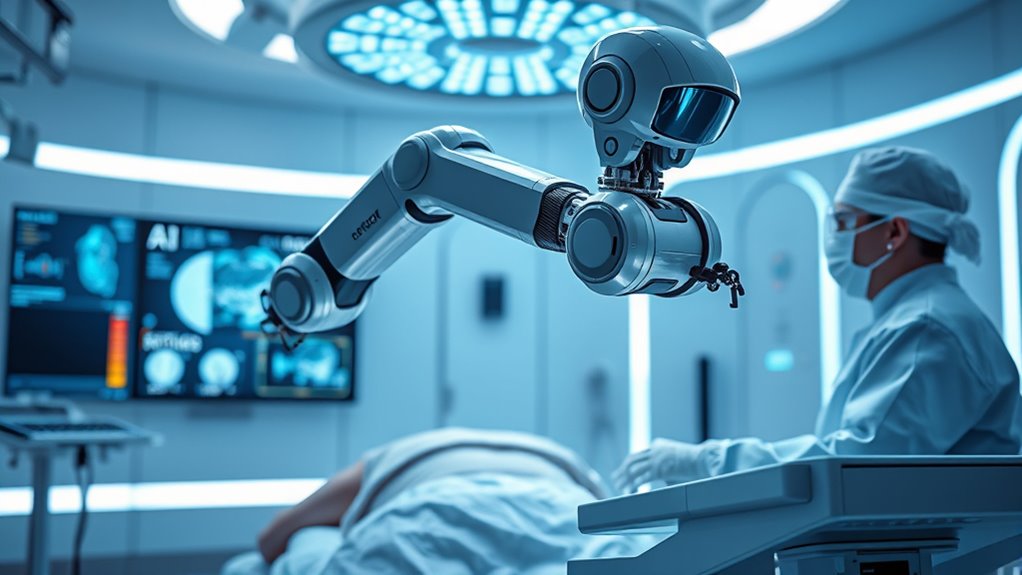
Integrating artificial intelligence into surgical procedures is transforming how surgeons approach complex tasks with greater accuracy and confidence. AI algorithms generate detailed 3D models of your patient’s anatomy, improving surgical planning precision. AI’s Role in Surgical Safety and Quality By combining advanced imaging with AI, surgeons can better identify anomalies before surgery and predict potential challenges, reducing complications. During procedures, AI enhances real-time navigation, offering precise guidance and alerts to avoid risks. Decision support systems analyze vast data sets, helping you choose ideal strategies quickly and accurately. AI also improves outcomes in specific fields like spinal, neurosurgery, and cardiovascular surgery by providing real-time feedback and detailed anatomical insights. As AI continues to evolve, it promises safer, more personalized surgeries, though challenges like workflow integration and ethical considerations remain. Incorporating robotic-assisted systems into surgical workflows further enhances precision and minimizes invasiveness, leading to better patient outcomes. Additionally, ongoing advancements in predictive modeling enable preoperative assessments that improve overall surgical planning and risk management. Furthermore, the integration of machine learning algorithms into surgical tools is driving innovation and increasing procedural success rates. Moreover, addressing the training and adaptation needs of surgical teams is crucial as these technologies become more prevalent.
Economic Impact and the Evolution of Surgical Education

The adoption of robotic surgery is reshaping the healthcare economy and surgical training by introducing both significant costs and notable efficiencies. While initial expenses for robotic systems and disposable tools are high, long-term savings come from reduced complications, shorter hospital stays, and faster recoveries.
In the U.S., widespread use could save $1.5 to $6.5 billion annually, and in the UK, robotic prostate surgeries could save over £286 million over 20 years. These financial benefits support revenue growth, as seen with Intuitive Surgical’s 28% increase in 2022.
Additionally, robotic technology enhances surgical education by providing better visualization, ergonomic control, and simulation-based training. However, it also demands new skills and standardized curricula, alongside efforts to address disparities in access and infrastructure investments.
Overcoming Challenges: Infrastructure, Security, and Safety in Remote Operations

How can remote robotic surgery overcome the significant hurdles posed by infrastructure, security, and safety?
You need high-speed, reliable networks to ensure real-time communication, but current infrastructure, especially in underserved areas, can fall short. Integrating robotic systems with existing healthcare setups adds complexity, requiring advanced equipment and maintenance.
Security is critical; safeguarding patient data involves encryption and secure protocols to prevent breaches.
Safety depends on system reliability, redundancy, and fail-safe mechanisms to avoid failures during procedures.
Latency and technical limitations, like bandwidth constraints and advanced technology requirements, must be addressed to maintain precision.
Overcoming these challenges demands investments in infrastructure, robust cybersecurity measures, and thorough safety protocols, ensuring remote surgeries are safe, secure, and accessible across diverse healthcare environments.
Envisioning the Future: Innovations and Ethical Considerations

Advancements in robotic surgery are rapidly transforming the landscape of medical procedures, offering unprecedented precision and expanding capabilities. You’ll see autonomous systems like STAR outperforming humans in delicate tasks, reducing errors and improving outcomes.
Miniaturized micro-robots enable surgeries in tight spaces, broadening minimally invasive options. AI integration enhances planning and decision-making during operations, while advanced imaging with fluorescent agents improves visualization of critical structures.
Hospitals are expanding robotic availability around the clock, increasing access to complex procedures. However, ethical considerations arise, such as liability issues, patient consent, and algorithmic bias.
Ensuring human oversight, safeguarding data privacy, and establishing clear legal frameworks are crucial. These innovations promise a future where surgery is safer, more precise, and more accessible—yet require responsible development and ethical vigilance.
Frequently Asked Questions
How Will Robotic Surgery Impact Surgeon-Patient Interactions?
Robotic surgery changes how you interact with patients by emphasizing technology over personal connection. You might find more reliance on explanations of robotic procedures and less face-to-face contact during procedures.
While shorter recovery times can boost patient satisfaction, there’s a risk of misunderstandings about risks and outcomes. To build trust, you need to communicate clearly, address concerns transparently, and make sure patients feel informed and comfortable with the technology involved in their care.
What Are the Privacy Concerns With Remote Surgical Data Transmission?
You should be aware that remote surgical data transmission raises significant privacy concerns. Unauthorized interception is a risk if networks aren’t secured properly, and weak encryption can expose sensitive patient info.
Man-in-the-middle attacks and data sniffing threaten confidentiality. Plus, outdated systems, unmonitored APIs, and inconsistent regulations can result in data breaches.
To protect patient privacy, implementing robust encryption, continuous authentication, and extensive security protocols is essential.
How Will Autonomous Robots Handle Unexpected Surgical Complications?
You might wonder how autonomous robots will manage unexpected surgical complications. They’ll rely on advanced sensors, AI-driven anomaly detection, and fail-safe systems to respond quickly.
When issues like instrument malfunctions or tissue damage occur, these robots will halt or adjust procedures while alerting human surgeons.
Continuous learning algorithms will improve responses over time, but real-time decision-making and safety protocols remain vital to minimize risks effectively.
What Materials Are Used to Create Reliable Miniaturized Surgical Robots?
You want to know what materials create reliable miniaturized surgical robots. You’ll find piezoelectric ceramics deliver precise linear motions, while high-strength polymers keep joints flexible.
Ceramic-metal composites balance durability with responsiveness, and biocompatible coatings ensure safety during tissue interaction. Smart materials enable self-sensing, and laser-responsive alloys allow post-fabrication adjustments.
These materials work together, combining strength, flexibility, precision, and safety, to make tiny surgical robots trustworthy and effective in delicate procedures.
How Can Regulatory Agencies Keep Pace With Rapid Technological Innovations?
To keep pace with rapid technological innovations, you should support adaptive and flexible regulatory frameworks that evolve alongside new tech.
Stay proactive by anticipating changes and collaborating with private sectors and international partners.
Invest in training for your staff to understand emerging technologies and engage with public stakeholders.
Regularly review policies to address new risks, ensuring safety without stifling innovation.
This approach helps you effectively manage cutting-edge advancements.
Conclusion
As you embrace the future of surgery, remember that by 2025, over 10 million robotic surgeries are expected worldwide, transforming patient care. With advancements like remote operations and AI, you’ll see safer, more accessible procedures. Though challenges remain, your role in supporting innovation and ethical practices is crucial. Together, you can help shape a future where technology saves more lives and redefines what’s possible in healthcare.
Fall Picks
fall essentials
As an affiliate, we earn on qualifying purchases.