mRNA technology has transformed medicine by enabling rapid, precise vaccine development that can be quickly adapted to new variants and diseases. It works by instructing your cells to produce viral proteins, activating your immune system safely. Innovations in design, manufacturing, and delivery have made mRNA vaccines highly effective and scalable. If you want to see how this groundbreaking approach is shaping future treatments, there’s much more to discover below.

Get the latest gadgets delivered free — and shop member deals
- Fast, free delivery on millions of items
- Access to Prime Big Deal Days deals on October 6–7
- Prime Video, Amazon Music and more included
Key Takeaways
- mRNA vaccines use genetic instructions to teach cells to produce viral proteins, triggering a targeted immune response.
- Rapid development and adaptability of mRNA technology accelerated vaccine responses to COVID-19 and variants.
- Advances in delivery systems and manufacturing made mRNA vaccines safe, effective, and scalable worldwide.
- mRNA technology enables personalized therapies and vaccines for diseases like cancer, HIV, and genetic disorders.
- The success of mRNA vaccines has revolutionized medicine, opening new possibilities for future treatments and global health improvements.
As an affiliate, we earn on qualifying purchases.
The Fundamentals of Mrna Vaccines
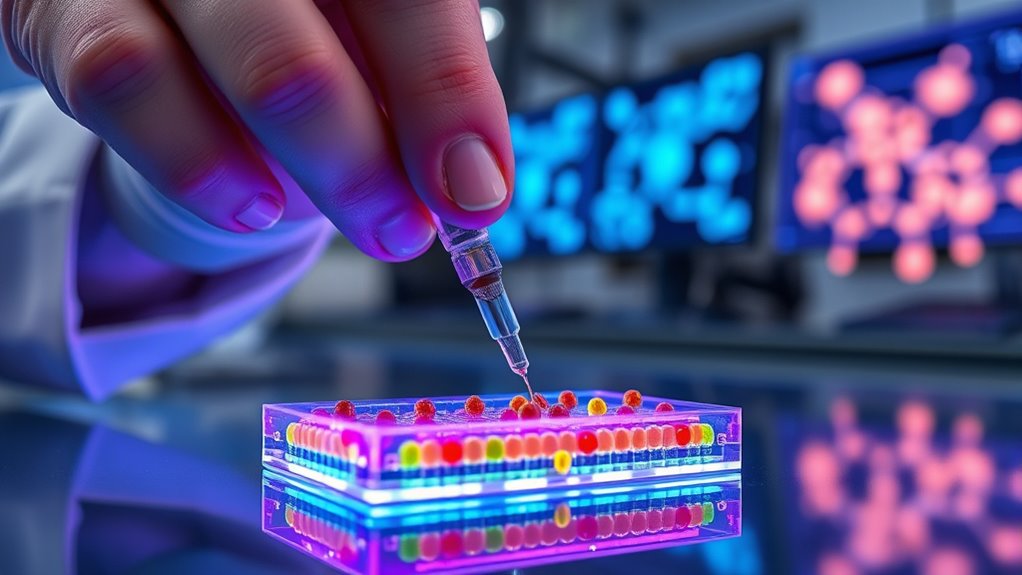
Have you ever wondered how mRNA vaccines work? They introduce a piece of genetic material called messenger RNA—mRNA—that instructs your cells to produce a viral protein, like the spike protein of SARS-CoV-2. mRNA vaccines are a type of preventive treatment that teach your immune system to recognize specific pathogens. Your body recognizes this protein as foreign and starts an immune response by creating antibodies. The mRNA itself isn’t infectious and doesn’t integrate into your DNA, making it safe. It’s quickly broken down in your body after delivering its instructions. Once inside your cells, the mRNA acts as a blueprint to produce the viral protein, which is displayed on the cell surface. This exposure trains your immune system to identify and fight the actual virus if you encounter it later, forming a strong, targeted immune defense. Biotechnology advances have significantly enhanced the development and efficacy of these vaccines, and ongoing research continues to improve their effectiveness and safety. The onset of immune response is typically rapid, contributing to their effectiveness in preventing disease. The precision of mRNA technology allows for rapid updates and customization of vaccines to combat emerging variants.
How Mrna Vaccines Are Engineered and Built

Understanding how mRNA vaccines are engineered and built requires a closer look at the meticulous processes involved in their production.
First, you prepare a cDNA template from plasmid DNA, which is linearized for transcription. Using bacteriophage RNA polymerase, you synthesize the mRNA through in vitro transcription. This process is carefully monitored to ensure accurate sequence copying, which is crucial for the vaccine’s effectiveness. Proper monitoring of transcription fidelity is essential to prevent errors that could affect vaccine efficacy. Techniques such as quality control testing are employed to verify the integrity of the mRNA.
You create a linear cDNA template from plasmid DNA for in vitro mRNA synthesis.
To improve stability and translation, you add a 5′ cap, UTRs, an open reading frame, and a poly(A) tail.
Next, you formulate the mRNA with lipid nanoparticles, which protect the message and enable cellular delivery. These lipid nanoparticles are designed to facilitate efficient entry into cells and protect the mRNA from degradation. Advances in nanoparticle design have significantly enhanced delivery efficiency and stability of the vaccines. Ongoing research continues to optimize these delivery systems for better performance.
After formulation, purification removes DNA and contaminants, ensuring safety.
Quality control confirms the product’s purity and consistency.
The final step involves administering the vaccine, where lipid nanoparticles facilitate cellular uptake, leading to protein production and immune activation. This precise engineering leverages advances in prophetic dreams to innovate and improve vaccine design and delivery methods.
The Historical Progression of Mrna Research

Ever wondered how mRNA research evolved from a scientific curiosity to a cornerstone of modern medicine? It all began in the early 1960s when scientists discovered messenger RNA, opening new possibilities in molecular biology.
Initially, researchers focused on using mRNA to study gene functions and produce proteins. However, mRNA’s instability limited its medical use until the 1990s, when cross-disciplinary efforts improved its stability with nanotechnology and synthetic enzymes. AI-driven innovations played a crucial role in enhancing delivery systems and optimizing mRNA stability for therapeutic applications. These advancements also benefited from increased community engagement within scientific and medical communities, fostering collaboration.
During this period, studies explored mRNA’s potential for cancer treatments and viral vaccines, with promising results in mice. Major milestones included lipid nanoparticle delivery techniques and breakthroughs in rapid vaccine development. Understanding investment in research and funding was vital to advancing this technology.
The COVID-19 pandemic then acted as a catalyst, accelerating mRNA research, regulatory approval, and global manufacturing, transforming it into a crucial tool for future medicine. This surge in interest and investment also led to a better understanding of mRNA’s safety profile and effectiveness in humans, paving the way for broader applications.
Ensuring Safety and Maximizing Effectiveness
Ensuring the safety and maximizing the effectiveness of mRNA vaccines require rigorous testing and ongoing monitoring. You can be confident that these vaccines go through strict clinical trials to verify their safety and efficacy before approval. Because mRNA is temporary and naturally degrades in cells, long-term risks are minimized. Ongoing surveillance tracks adverse events, which remain rare, and helps identify any safety concerns early. Extensive testing ensures high quality Regulatory agencies enforce strict standards, ensuring vaccines meet high safety criteria. To boost effectiveness, scientists can quickly adapt mRNA vaccines to target new virus variants, maintaining strong protection. They also demonstrate high efficacy across age groups and effectively prevent severe illness. Continuous research and monitoring keep safety and effectiveness at the forefront, supporting public trust and health outcomes. Additionally, understanding the mechanisms of mRNA delivery allows for further improvements in vaccine design and safety profiles. Advances in excipients and formulation contribute to enhanced stability and reduced side effects, further optimizing vaccine performance. Implementing robust quality control measures throughout production ensures consistent vaccine quality and safety. Furthermore, ongoing research into the long-term effects of mRNA vaccines helps to continually refine safety protocols and address emerging concerns. In addition, public health strategies play a vital role in ensuring that vaccination campaigns are effective and accessible to diverse populations.
Manufacturing Processes and Scalability Advantages
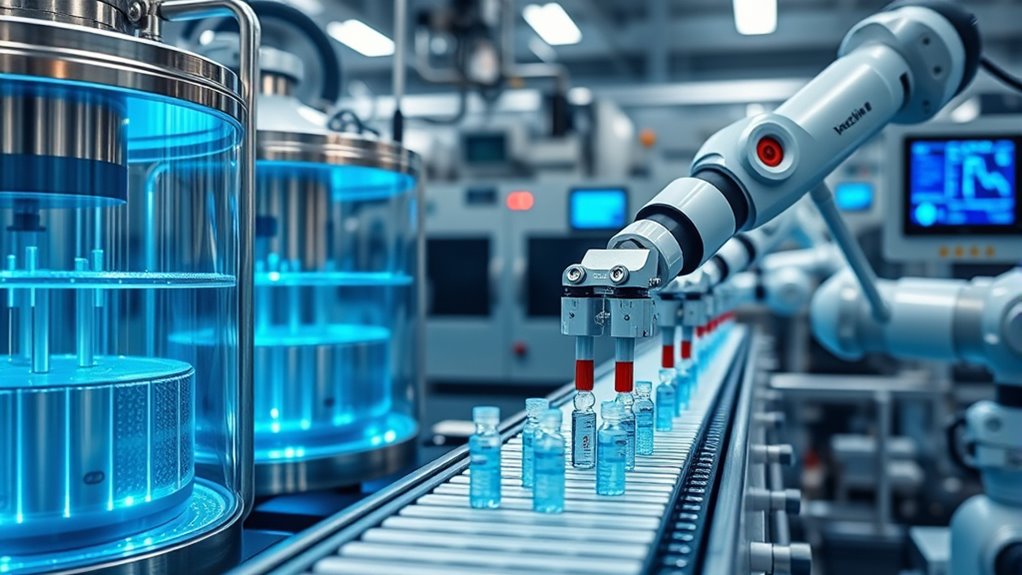
Manufacturing mRNA vaccines involves a series of sophisticated steps designed for efficiency and scalability. You start with creating a DNA template that encodes the target antigen, like the spike protein. This involves constructing plasmids with the gene of interest, which are then transcribed in vitro into mRNA using enzymes. The mRNA includes essential components such as the 5′ UTR, start codon, optimized ORF, stop codon, 3′ UTR, and a poly(A) tail. To improve translation, the mRNA is capped and polyadenylated. Advances like improved templates, optimized transcription, and bioreactor technology have streamlined production. These innovations enable rapid scale-up, lower costs, and consistent quality, making mRNA vaccines highly adaptable for large-scale manufacturing and swift responses to emerging health threats. Cookies are also utilized during manufacturing to enhance process efficiency and ensure quality control throughout production. Incorporating SQA best practices, such as rigorous process validation and documentation, further ensures product reliability and safety. Additionally, ongoing research into process automation helps reduce variability and accelerate production timelines, and the implementation of quality assurance measures is vital for maintaining high standards. Moreover, integrating automation technologies can further optimize manufacturing workflows and enhance overall consistency.
Future Possibilities and Broader Impact of Mrna Technology
Have you considered how mRNA technology’s rapid development and adaptability could revolutionize future healthcare? With ongoing research, you might soon see vaccines targeting diseases like malaria, tuberculosis, hepatitis B, influenza, HIV, and herpes.
Cancer therapies could become more personalized, with mRNA instructing your cells to attack tumors based on genetic mutations. Treatments for genetic disorders and regenerative medicine are also on the horizon. This versatility is partly due to the evolution of AI methodologies, which has improved the design and optimization of mRNA sequences, leading to more effective vaccines and therapies. Additionally, advancements in nanoparticle delivery systems make these vaccines more effective and quicker to produce, while multivalent vaccines could protect against multiple diseases simultaneously.
This innovation could boost global health equity, improve pandemic preparedness, and lower healthcare costs. As regulatory frameworks evolve, transparency and ethical use of data will guarantee public trust, paving the way for broader, safer applications of mRNA in medicine. Ongoing research continues to unlock new possibilities, promising a transformative impact on healthcare worldwide.
Frequently Asked Questions
How Do Mrna Vaccines Differ From Traditional Vaccine Types?
You might wonder how mRNA vaccines differ from traditional ones. Unlike traditional vaccines that use weakened or inactivated pathogens, mRNA vaccines deliver genetic instructions to your cells, prompting them to produce specific proteins that trigger an immune response.
They’re non-infectious, safer, and can be developed quickly. Plus, mRNA vaccines are easily adaptable for new variants, making them highly versatile and useful for rapid pandemic responses.
What Are the Common Challenges Faced During Mrna Vaccine Development?
When developing mRNA vaccines, you face several common challenges. You need to overcome mRNA’s inherent instability and vulnerability to degradation, which complicates storage and delivery.
You also have to manage complex manufacturing processes, including raw material access and purification. Regulatory hurdles and funding constraints can slow progress.
Additionally, public perception issues, like concerns over safety and efficacy, can hinder acceptance. Addressing these challenges requires innovative solutions and clear communication.
Can Mrna Technology Be Used to Treat Non-Infectious Diseases?
You might wonder if mRNA technology can treat non-infectious diseases. The answer is yes. It can target fibrotic tissues, modulate immune responses, and correct genetic mutations.
Researchers are exploring its use in cancer immunotherapy, genetic disorders, neurodegenerative conditions, and regenerative medicine. With its ability to instruct cells to produce specific proteins, mRNA offers promising, personalized treatments for a wide range of health issues beyond infections.
How Long Does It Take to Develop a New Mrna Vaccine?
When you ask how long it takes to develop a new mRNA vaccine, it typically ranges from 10 to 12 months.
Thanks to recent advancements, you can see that this process is much faster than traditional methods, which often take years.
Rapid design, testing, and manufacturing, combined with regulatory acceleration during emergencies, enable you to see vaccines reach the public quickly, especially during urgent health crises like COVID-19.
What Are the Environmental Impacts of Mrna Vaccine Manufacturing?
Imagine standing at the dawn of a new era, much like the first flight—your mRNA vaccine manufacturing impacts the environment. You contribute to high energy use, significant waste, and carbon emissions from transportation.
Cooling requirements and material use add to pollution. But, by adopting biodegradable packaging, greener waste management, and sustainable transport, you can reduce these impacts and help protect our planet for future generations.
Conclusion
Just like the dawn breaking after a long night, mRNA technology has illuminated a new era in medicine. You now hold the power to embrace these advancements, knowing they can save lives and transform health care worldwide. Remember, this breakthrough isn’t just science — it’s hope, resilience, and the promise of brighter tomorrows. Together, you can be part of this historic journey, shaping a future where innovation and compassion go hand in hand.
Fall Picks
fall essentials
As an affiliate, we earn on qualifying purchases.