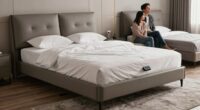
Firmness labels often mislead because they vary by brand and don’t reflect how a mattress feels for you personally. Your comfort depends on factors like your sleeping position, body weight, and materials used. Relying solely on labels can cause dissatisfaction, but testing mattresses and taking advantage of generous trial periods helps guarantee you find the right fit. Keep exploring how to evaluate comfort beyond labels to make a smarter sleep investment.

Get the latest gadgets delivered free — and shop member deals
- Fast, free delivery on millions of items
- Access to Prime Big Deal Days deals on October 6–7
- Prime Video, Amazon Music and more included
Key Takeaways
- Firmness labels vary widely between brands and lack a universal standard, making them unreliable indicators of comfort.
- Personal preferences, body weight, and sleep position significantly influence how firmness feels, regardless of labels.
- Mattress support and pressure relief are more important for comfort than the firmness rating on the label.
- In-store testing and trial periods are essential to find the right feel, as labels cannot predict individual comfort.
- Marketing claims and labels can be misleading; thorough research and personal testing are key to making an informed choice.
As an affiliate, we earn on qualifying purchases.
Why Mattress Firmness Labels Are Not Always Reliable
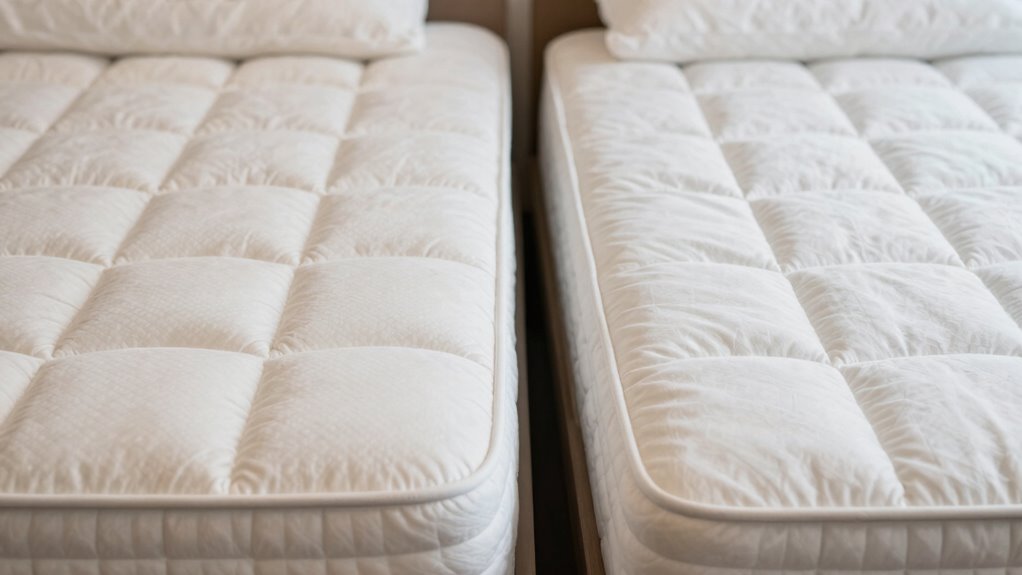
Mattress firmness labels can be misleading because they often vary between brands and manufacturers. What’s labeled as “firm” on one mattress might feel softer or firmer on another, depending on design and materials. Your bed frame compatibility also plays a role—some frames may support certain firmness levels better than others, affecting how the mattress feels. Additionally, mattress weight considerations are essential; a heavier person might sink into a mattress labeled as “firm,” making it feel softer, while a lighter individual might find the same mattress too hard. These factors highlight that firmness labels are not a universal standard. Instead, focus on testing mattresses personally and considering your body weight and bed frame to find the right fit. Understanding mattress materials can also help you select a mattress that maintains its intended firmness over time. Knowing how different body weights interact with various firmness levels can make a significant difference in your comfort and satisfaction. Moreover, bed construction and the quality of materials used can influence how firmness is perceived and maintained over years of use. Exploring sleep science research can provide further insights into how firmness affects sleep quality and overall health. It’s also important to recognize that personal comfort preferences play a crucial role in choosing the right firmness.
Understanding Why Mattress Feel Is Personal and How to Find Yours
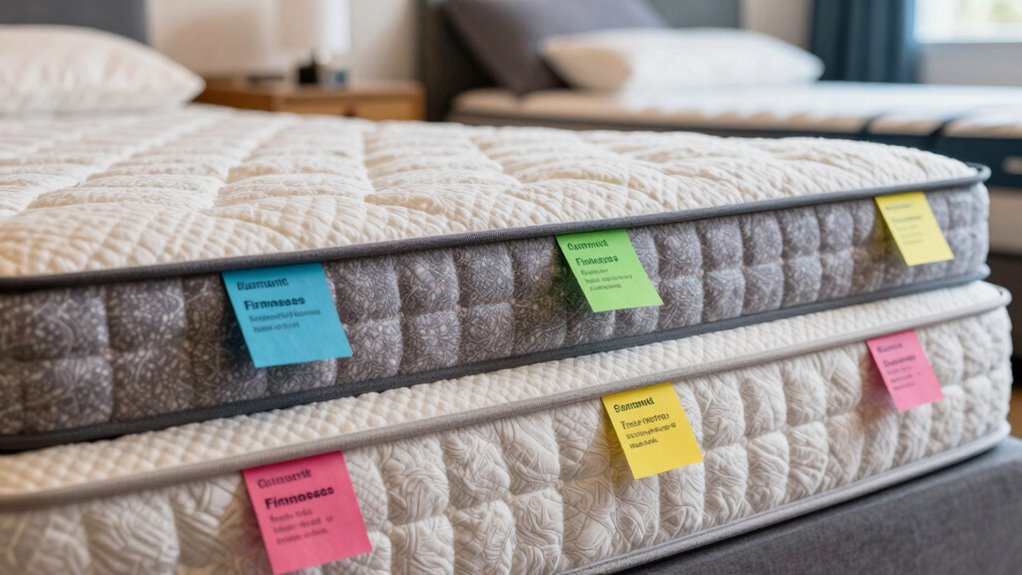
Everyone’s comfort preferences are different, so what feels perfect for one person might not work for another. To find your ideal mattress, you need to test different feels and see how they respond to your body. Keep in mind that factors like sleeping position, body weight, and personal preferences influence how you perceive mattress comfort. Additionally, home safety considerations are essential when selecting a mattress to ensure it supports safe and comfortable living at home. Understanding content formats and how they impact your experience can also help you make more informed choices. Being aware of sauna safety tips, such as proper ventilation and recognizing heatstroke signs, highlights the importance of safe practices in your overall home environment. Exploring sleep health and the role of mattress support can further enhance your overall well-being and comfort. Recognizing the importance of certifications and standards can also guide you towards safer and more reliable mattress options.
Personal Comfort Variability
Since comfort is highly subjective, what feels perfect to one person might be uncomfortable to another. Your personal preference plays a big role in how you perceive mattress feel, which is rooted in subjective comfort. Factors like body weight, sleep position, and even previous experiences influence what you find supportive or cozy. A mattress that feels plush to someone else might be too soft for you, or vice versa. It’s important to recognize that comfort isn’t one-size-fits-all. You need to focus on how the mattress responds to your unique body and preferences. Trust your instincts and pay attention to how different mattresses feel during trials. Finding your ideal mattress is about matching your personal comfort needs, not just following generic firmness labels. Additionally, trying out various mattress types can help you better understand what suits your comfort preferences best. Recognizing the subjective nature of comfort can help you make more informed choices during your mattress search. Remember, personal comfort variability highlights the importance of personalized testing rather than relying solely on standardized firmness ratings.
A better understanding of individual comfort preferences can further assist in making a confident choice.
Testing Mattress Feel
Ever wonder why some mattresses feel perfect to you while others don’t? Testing mattress feel involves understanding that comfort is highly personal. When trying out mattresses, focus on how different materials respond. For example, memory foam offers a slow response and molds to your body, providing pressure relief. In contrast, a spring system delivers a bouncy feel and support through individual coils. To find your ideal feel, consider:
- How quickly the mattress responds when you shift positions
- The level of sink-in comfort or support you prefer
- Whether you like a more hugging sensation or a bouncy feel
- Trying out various materials and construction types in-store
Factors Affecting Perception
Your personal preferences play a significant role in how a mattress feels to you. Your sleep position influences comfort—side sleepers may prefer softer beds, while stomach or back sleepers need firmer support. Body weight is also key; heavier individuals often feel firmer mattresses, while lighter people might find the same feel too soft. These factors affect your perception of firmness and support, making it essential to contemplate your sleep habits when shopping. What feels comfortable for someone else might not suit you, so don’t rely solely on labels. Instead, focus on testing mattresses in real-world scenarios, considering your body weight and sleep position. Your body’s response to different materials and structures also impacts your comfort, emphasizing the importance of personalized sleep preferences. Additionally, recognizing that perception of firmness varies from person to person can help manage expectations during your search. Being aware of how material composition influences comfort can further guide you toward a mattress that aligns with your unique needs. Moreover, understanding how sleep environment factors such as temperature and humidity affect comfort can help you make better choices.
The Risks of Relying Solely on Firmness Ratings When Buying a Mattress
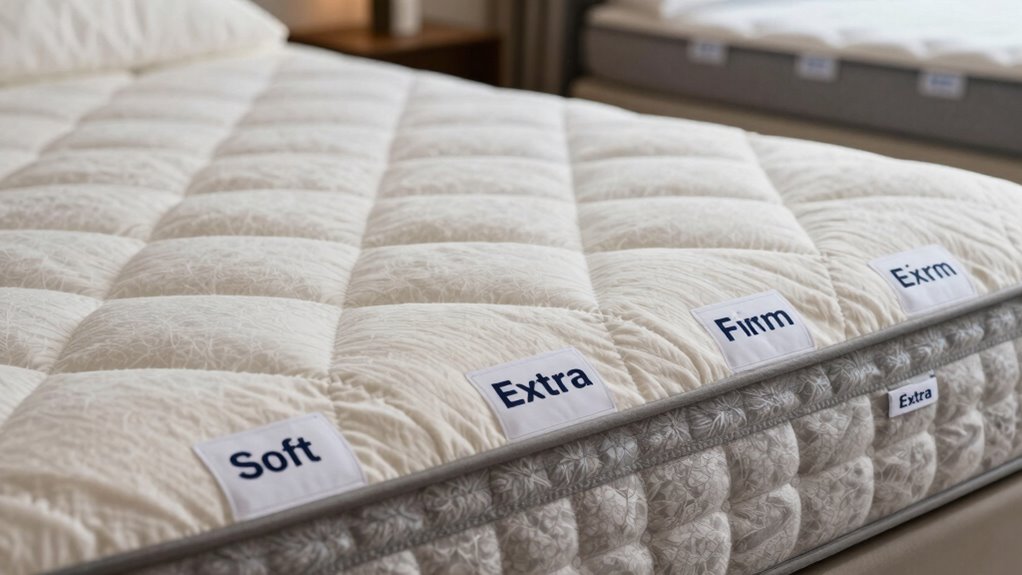
Relying only on firmness ratings can be misleading because those ratings often vary between brands and models. Your personal comfort preferences might not match a mattress’s firmness label, leading to dissatisfaction. It’s important to take into account how a mattress feels to you, not just what the rating says.
Variability in Firmness Ratings
Firmness ratings can be misleading because they often vary markedly between brands and even between different models from the same manufacturer. This variability fuels comfort myths and firmness myths, making it risky to rely solely on these labels. Recognizing this helps you avoid disappointment and poor sleep. Keep in mind:
- Different brands may label similar mattresses with different firmness levels.
- A “firm” mattress from one brand could feel soft from another.
- The same mattress model may feel different over time or with different bedding.
- Variations are common, so firmness ratings aren’t a universal standard.
Relying solely on firmness labels ignores these inconsistencies, risking misjudging comfort. Instead, focus on testing mattresses in person or reading independent reviews to find what truly suits your sleep needs.
Personal Comfort Preferences
While firmness ratings can give a general idea of a mattress’s feel, they often fall short of capturing what truly makes a mattress comfortable for you. Your personal comfort preferences depend on factors like ergonomic support and pressure relief, which vary from person to person. Relying solely on firmness labels ignores these essential elements that affect how well you sleep. A mattress that’s labeled “firm” might not provide enough support for your back or enough pressure relief for your hips and shoulders. Conversely, a softer mattress might lack the support you need. To find true comfort, prioritize testing mattresses based on how they support your body’s unique needs, rather than just their firmness rating. Comfort is highly individual—trust your body’s signals. Additionally, understanding air system features like adjustable firmness can help tailor your sleep experience more precisely. Incorporating personalized sleep adjustments can further enhance your overall sleep quality by accommodating your evolving preferences. Recognizing requirements traceability in mattress features can also help you make more informed and satisfying choices. Being aware of adjustable firmness options allows you to fine-tune your comfort level over time, ensuring your mattress adapts to your changing needs.
How to Test Mattresses and Use Return Policies to Your Advantage
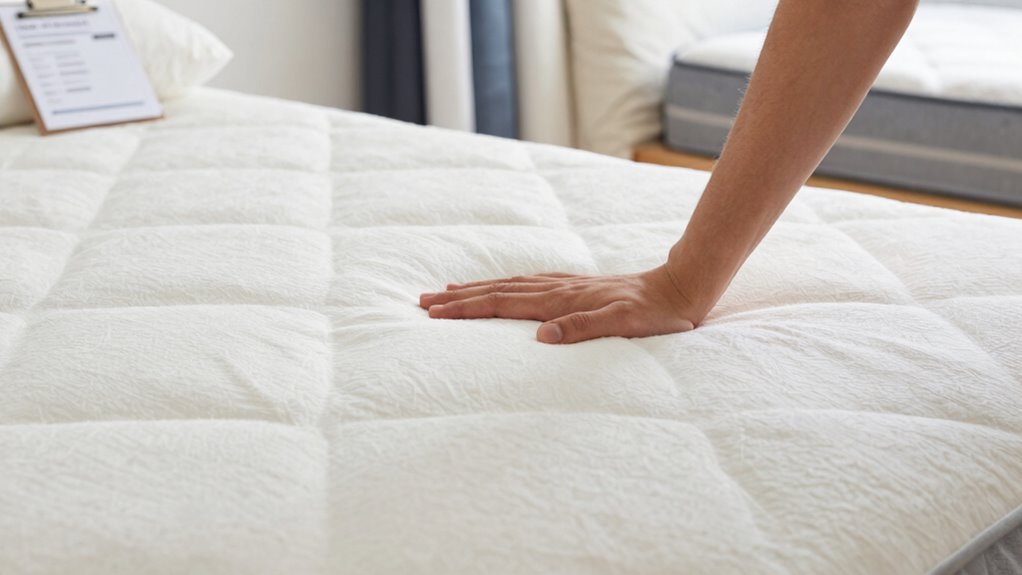
Testing a mattress thoroughly is essential to guarantee it meets your comfort and support needs before committing to a purchase. When trying out mattresses, focus on how well they support your body and fit your preferred sleeping positions. Use your trial period to evaluate different mattress size options and see how the mattress fits within your bedroom decor. Take note of how you feel after sleeping on it for at least 15-20 minutes. Remember, many stores offer generous return policies, so don’t hesitate to test multiple mattresses. To maximize your advantage:
Thorough mattress testing ensures comfort, support, and the best fit for your sleep needs before purchase.
- Lie down in your usual sleep position
- Test for comfort and support
- Check for ease of movement
- Review return policies and trial periods
- Consider the capacity and watt-hours of the mattress to ensure it aligns with your sleep environment and energy needs
Use these strategies to find the right mattress risk-free.
Tips for Evaluating Mattress Comfort Beyond the Labels
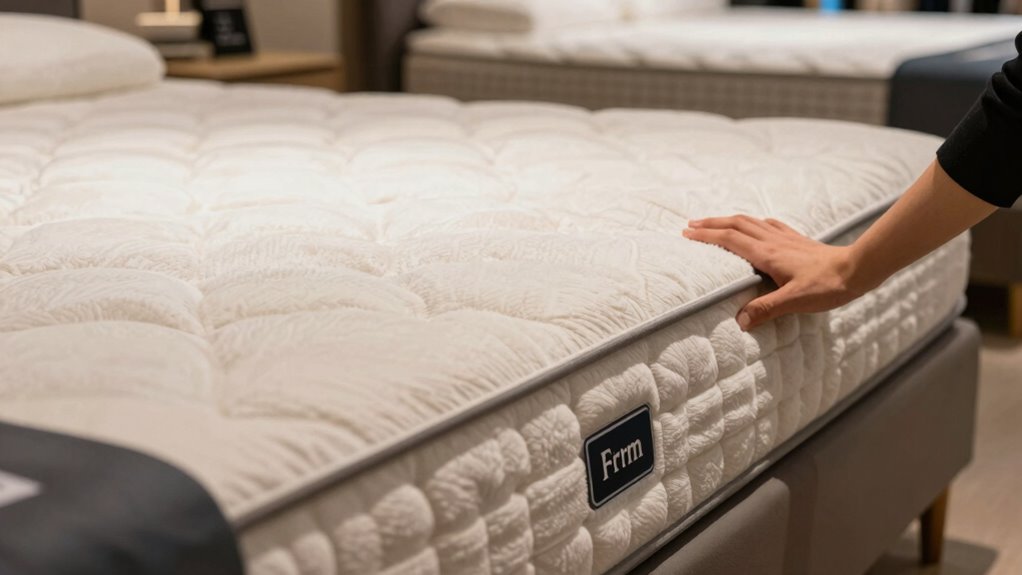
Labels and marketing claims can be misleading, so it’s vital to evaluate a mattress’s comfort through your own experience rather than relying solely on descriptions. When testing, focus on how the mattress interacts with your sleep environment and how the materials feel against your skin. Spend time lying on different areas to assess support and pressure points. Pay attention to the firmness, but remember that comfort is subjective. To help compare options, consider this quick guide:
| Mattress Material | Feel | Suitable For |
|---|---|---|
| Memory Foam | Soft | Pressure relief, side sleepers |
| Latex | Springy | Natural feel, durability |
| Innerspring | Firm | Traditional support |
| Hybrid | Balanced | Versatile, all sleep styles |
Use these insights to find a mattress that truly suits your unique sleep needs.
Developing a Mattress Shopping Strategy That Fits Your Sleep Needs
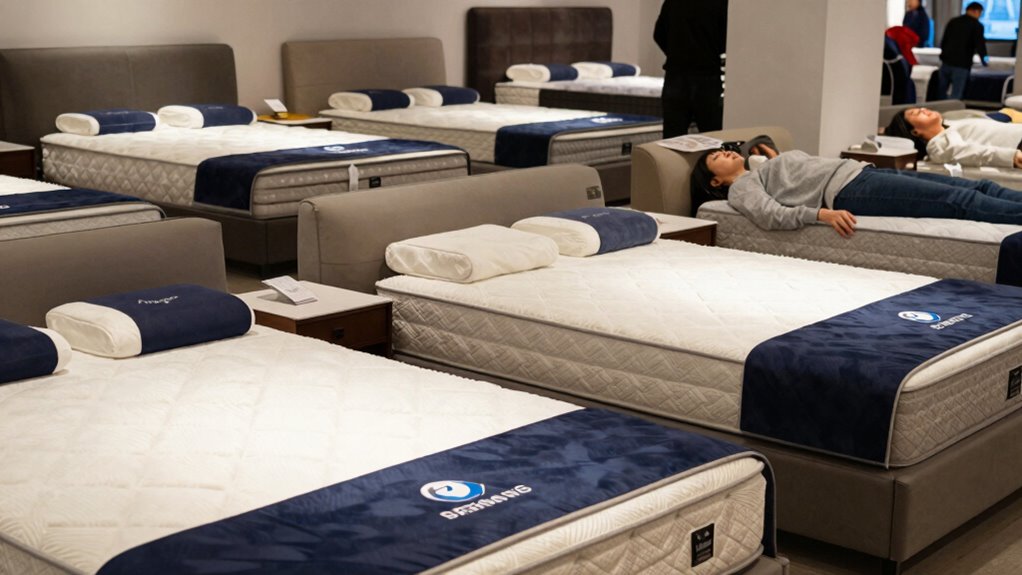
To develop a mattress shopping strategy that truly meets your sleep needs, start by clearly identifying your priorities, such as preferred firmness, support level, and any specific health considerations. Consider your sleep environment—whether you sleep hot, have allergies, or need edge support. Budget considerations are also key; set a realistic price range to narrow options and avoid overspending. Keep in mind that comfort doesn’t always align with price. To help guide your choices, think about:
Identify your sleep priorities and environment to choose a mattress that offers lasting comfort and support.
- Your preferred sleep position
- Any pain or health issues
- Room temperature and ventilation
- Long-term durability needs
How to Avoid Marketing Hype and Make an Informed Mattress Choice

When you’re ready to choose a mattress, it’s easy to get caught up in marketing claims that highlight features like “perfect support” or “bed-in-a-box convenience.” These messages can often be misleading or exaggerated, making it hard to tell which options truly meet your needs. To avoid falling for hype, focus on your priorities and do thorough research. Don’t rely solely on marketing slogans—check customer reviews and ask about mattress warranties, which reveal the manufacturer’s confidence in their product. Consider how the mattress will fit with your bedroom decor, ensuring it complements your space. Be skeptical of claims that sound too good to be true. Making an informed choice means cutting through the marketing noise and prioritizing practical factors that impact your sleep and comfort long-term.
Frequently Asked Questions
How Do I Identify a Truly Supportive Mattress Beyond Firmness Labels?
To find a truly supportive mattress, focus on material consistency and firmness variability. Test the mattress by lying on it in different positions to see how it responds, ensuring it offers even support without sagging. Look for high-quality materials that maintain their shape over time, and avoid models with inconsistent firmness. Supportive mattresses promote proper spinal alignment, so prioritize how the mattress feels and responds, not just the firmness label.
Are There Specific Materials That Provide Consistent Comfort Regardless of Labels?
Irony strikes—materials like high-density foam and pocket coils often deliver consistent comfort, no matter what labels say. You should look for foam with a density of at least 1.8 pounds per cubic foot, which offers reliable support. Pocket coils, especially those with thicker gauge wire, provide uniform comfort and responsiveness. These materials tend to perform predictably, giving you the support you need, regardless of misleading firmness labels.
Can My Sleeping Position Influence the Ideal Mattress Firmness for Me?
Yes, your sleep posture influences the ideal mattress firmness for you. If you sleep on your side, a softer mattress helps cushion your shoulders and hips, supporting proper spinal alignment. Back sleepers often benefit from medium firmness, which maintains spinal alignment without pressure points. Stomach sleepers usually need a firmer surface to prevent sagging and keep your spine aligned. Adjusting firmness based on your sleep posture guarantees better comfort and healthier sleep.
How Often Should I Replace My Mattress for Optimal Sleep Health?
You should replace your mattress every 7-10 years for ideal sleep health. This is because the mattress lifespan diminishes over time, leading to less support and comfort. Regular replacement ensures you avoid sagging, allergens, and discomfort that can impact your sleep quality. Keep an eye on signs like persistent aches or visible wear, and stick to the recommended replacement frequency to maintain restful, healthy sleep.
What Are the Best Questions to Ask Sales Staff About Mattress Quality?
When asking sales staff about mattress quality, focus on questions about bed frame compatibility and sleep trial policies. You want to know if the mattress fits your bed frame and if you can test it at home before buying. Ask about the materials used, warranty coverage, and return options. These questions help guarantee you choose a durable, comfortable mattress that suits your needs and allows for a risk-free trial.
Conclusion
Remember, mattress labels can be misleading, but your comfort isn’t. While a firm mattress might seem ideal on paper, it could feel wrong once you lie down. Don’t let flashy marketing or generic ratings sway you—your sleep is personal. Instead, test, ask questions, and use return policies to find what truly supports you. After all, choosing the right mattress isn’t about the label; it’s about finding what makes you rest easy.
Fall Picks
fall essentials
As an affiliate, we earn on qualifying purchases.