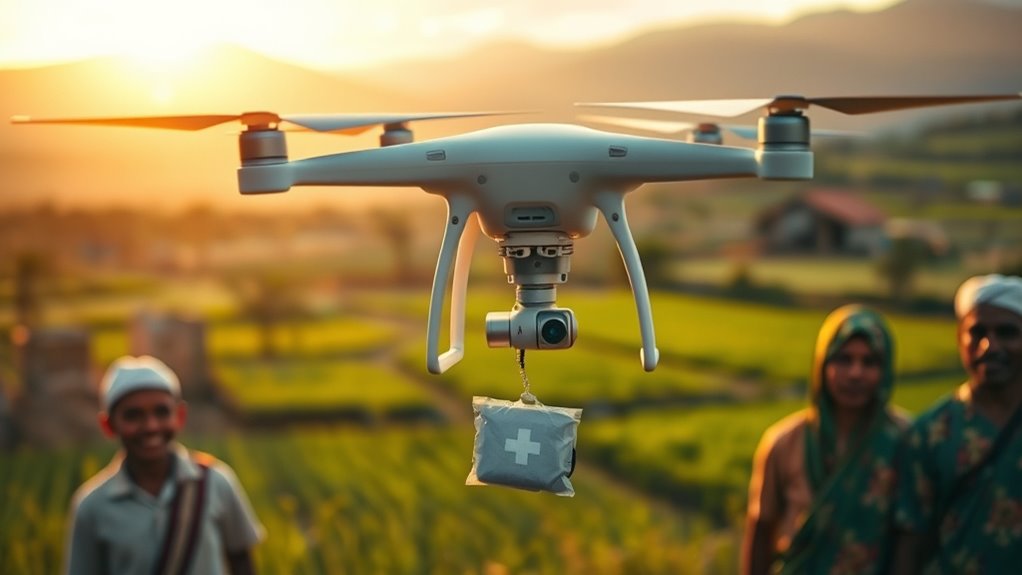

Drones play a crucial role in healthcare delivery by quickly transporting medical supplies like blood, vaccines, and medications, especially in hard-to-reach areas. They can bypass obstacles, reducing delivery times and saving lives during emergencies. With ongoing technological advances and supportive regulations, drones are increasingly reliable for routine healthcare tasks and emergency responses alike. Understanding their impact helps you see how they’re transforming how healthcare reaches people—stay with us to discover more about their future potential.
Key Takeaways
- Drones enable rapid delivery of essential medical supplies like blood, vaccines, and medications to hard-to-reach areas.
- They improve emergency response times by swiftly transporting AEDs, blood, and vaccines during critical situations.
- Technological advances and regulatory frameworks expand drones’ operational range and safety for healthcare use.
- Drones streamline healthcare logistics by transporting lab samples and medicines within hospitals, reducing delays.
- They enhance public health outcomes by ensuring timely access to critical supplies and supporting emergency preparedness.

Drones are transforming healthcare delivery by providing rapid, reliable access to essential supplies in even the most challenging environments. When it comes to drones in healthcare delivery, their ability to reach remote areas swiftly makes a significant impact on public health. You’re now able to get critical medical supplies such as blood, vaccines, and medications delivered quickly, bypassing difficult terrains, water barriers, and other obstacles that traditionally hinder logistics.
This rapid delivery capability is especially crucial during emergencies, where every second counts. Instead of waiting hours or days for ground transport, drones can deliver blood for transfusions or vaccines to isolated communities within minutes, saving lives and improving health outcomes. Studies show that integrating drone technology into healthcare can significantly reduce delivery times, enhancing emergency response and routine healthcare services. Additionally, the integration of regulatory frameworks is essential to expand drone operations safely and effectively in healthcare.
In emergency response scenarios, drones equipped with AEDs have proven to be game-changers. They can arrive faster than ambulances, providing immediate access to life-saving defibrillators, which increases survival chances for cardiac arrest victims. The ability to deploy emergency drones in critical moments underscores their role in public health, especially in areas with limited infrastructure or during natural disasters when roadways are blocked or impassable. Moreover, ongoing innovations in drone technology continue to improve their reliability and operational range, making them even more indispensable in healthcare.
Their rapid delivery capability guarantees that essential medical supplies are available when and where they’re needed most, reducing mortality and morbidity rates. Furthermore, the development of specialized delivery systems tailored for medical use enhances the precision and safety of drone deliveries, ensuring high-quality service. Additionally, advances in regulatory frameworks, such as FAA rules permitting flights above structures up to 700 feet, are expanding the operational scope of medical drones and allowing for higher, longer-range flights.
Beyond emergency interventions, drones support healthcare logistics within hospital complexes by transporting lab samples and medicines efficiently. This reduces manual effort, minimizes delays, and decreases reliance on ground vehicles, which can be hampered by traffic or other logistical challenges.
You’ll find that deploying drones in healthcare logistics streamlines operations, speeds up diagnosis and treatment, and ultimately enhances patient care. As these technologies continue to evolve, their integration into healthcare systems promises even greater improvements in public health and emergency preparedness.
Frequently Asked Questions
How Are Drones Used in Healthcare?
You might wonder how drones are used in healthcare today. They deliver crucial supplies like vaccines, blood, and medications quickly, even to remote areas, cutting delivery times from hours to minutes.
Drones also bring emergency equipment like AEDs directly to patients in need.
Inside hospitals, they transport lab samples and medicines efficiently.
During disasters or conflicts, drones provide indispensable aid where traditional transport can’t reach.
How Do Drones Help With Delivery?
Imagine you’re in the 21st century, and drones are like your own personal delivery robots. They help with delivery by quickly transporting medical supplies—like blood, vaccines, and medications—right to your doorstep or remote clinics.
They can reach hard-to-access places, bypassing geographical barriers. With their fast speeds and large payloads, drones guarantee you get urgent supplies swiftly, saving lives and streamlining healthcare operations.
What Is the Future of Drones in Healthcare?
You’re wondering about the future of drones in healthcare. As technology advances, drones will become more autonomous, weather-resistant, and capable of flying longer distances beyond visual line of sight.
With evolving regulations and growing industry collaborations, you can expect drones to reach more hospitals worldwide, delivering essential supplies quickly and efficiently.
Public acceptance and regulatory harmonization will be key, making drone-assisted healthcare more accessible, dependable, and life-saving in the years ahead.
Who Are the Big 3 in US Drone Delivery?
You’re asking about the big three in US drone delivery. Amazon Prime Air leads with FAA approval for BVLOS deliveries and testing in multiple states.
Wing, a subsidiary of Alphabet, has done extensive commercial deliveries in Virginia and holds FAA certification for regular operations.
UPS Flight Forward was the first to get FAA Part 135 certification for medical and commercial deliveries.
These companies push the industry forward with innovation and regulatory progress.
Conclusion
As you explore drone technology in healthcare, you’ll see it transforming the sky into a lifeline, seamlessly weaving hope and healing. These flying messengers are like digital angels, bridging gaps and delivering essential supplies where obstacles once stood tall. Embracing drones means opening a new chapter where healthcare soars above barriers, turning the impossible into the everyday. With every delivery, you’re witnessing a future where technology lifts lives, making compassion truly fly.