
TL;DR

Get the latest gadgets delivered free — and shop member deals
- Fast, free delivery on millions of items
- Access to Prime Big Deal Days deals on October 6–7
- Prime Video, Amazon Music and more included
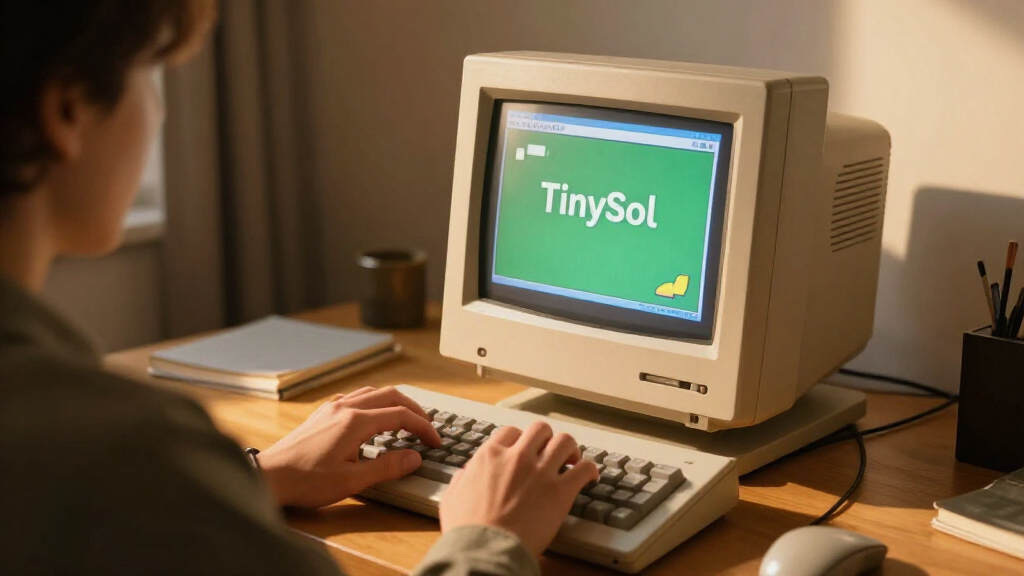
TinySol, a compact and compatible Klondike Solitaire game for DOS, has released version 1.3. It runs on vintage hardware and emulators, supporting various video modes and input options. Its release highlights ongoing interest in retro computing and small software projects.
TinySol, a tiny Klondike Solitaire game for DOS systems, has been officially released in its latest version 1.3, supporting a wide range of hardware and video modes. This development is notable for vintage computing enthusiasts and those interested in small, efficient DOS games, as it demonstrates ongoing activity in preserving and enhancing classic software for modern and legacy systems.
Developed in x86 Assembly and first released in early 2022, TinySol is a free, 3KB game designed for good playability on vintage computers, including monochrome and color systems. The latest version, 1.3, released on May 25, 2026,, includes fixes, performance improvements, and new features such as multiple build options (full, medium, tiny, micro). It supports various hardware configurations, including 8088, 286, and Pentium systems, and runs on MS-DOS 3.30 through 6.22, as well as DOS emulators like DosBox.
The game features support for multiple video modes—CGA, AT&T 6300, EGA, and VGA—detecting modes automatically or switching on the fly with function keys F1-F4. It offers both keyboard and mouse controls, with mouse support for select modes, and includes features like save/load game state, auto-finish, and score tracking. It has been demonstrated on hardware such as Zenith Heath/Z-110 and a 286 running FreeDOS, with positive performance reports from users.
TinySol
A tiny solitaire game for DOS
TinySol, a tiny solitaire game for DOS, squeezes full Klondike Solitaire into a 3KB x86 Assembly binary. Version 1.3 — released May 25, 2026 — runs on everything from an original 8088 to Pentium systems and DOS emulators, with four video modes, mouse support, and save/load built in.
hand-written asm
May 25, 2026
modes mid-game
Runs on (almost) anything with a DOS prompt
TinySol was engineered for reach: one tiny binary that adapts to four decades of PC hardware, real or emulated, monochrome or color.
8088 → Pentium
From the original IBM PC’s 8088 through 286 up to Pentium-class CPUs — the same binary plays across the whole line.
MS-DOS 3.30 – 6.22
Runs on MS-DOS 3.30 through 6.22, plus community favorites like FreeDOS — no extensions, no drivers, no fuss.
DosBox & friends
Equally at home inside DOS emulators like DosBox, so modern machines can deal the cards without vintage silicon.
CGA · EGA · VGA · AT&T
Four graphics modes, auto-detected at launch or switched on the fly with function keys F1–F4.
Keyboard + mouse
Full keyboard control everywhere, with mouse support on select modes — select piles, auto-send cards to foundations.
Proven on real metal
Demonstrated on a Zenith Heath/Z-110 and a 286 running FreeDOS, with positive performance reports from users.
Auto-detected at startup · switchable live via F1–F4 · monochrome & color systems supported
One 3KB binary · the entire IBM PC hardware line
Four builds, one deck of cards
Version 1.3 lands with fixes, performance improvements, and a new multi-build system — pick the binary that fits your machine, from full-featured down to micro.
Micro
Smallest possible binary · bare essentials
Tiny
Core Klondike · minimal extras
Medium
Balanced features vs. size
Full
Every feature · still only kilobytes
| Platform | Video | Mouse | v1.3 Status | Notes |
|---|---|---|---|---|
| IBM PC · 8088 | ✓ CGA | ~ Select modes | ✓ Runs | Monochrome & color OK |
| 286 · FreeDOS | ✓ EGA | ✓ Supported | ✓ Tested | Positive user reports |
| AT&T 6300 | ✓ 640×400 mode | ~ Select modes | ✓ Runs | Dedicated F-key mode |
| Pentium-class | ✓ VGA | ✓ Supported | ✓ Runs | Full resolution cards |
| DosBox | ✓ All modes | ✓ Supported | ✓ Runs | Modern host friendly |
TinySol demonstrates how small, well-optimized assembly code can still deliver engaging gameplay on vintage systems.
— An anonymous researcher
Why a 3KB card game matters
The v1.3 release underscores enduring interest in retro computing and small, efficient software — and the community effort keeping classic DOS applications alive.
Preservation in practice
Vintage hardware can still run engaging games. TinySol keeps a piece of computing history playable instead of museum-bound.
Assembly-era efficiency
Hand-optimized x86 Assembly delivers save/load, scoring, and auto-finish in 3KB — a masterclass in doing more with less.
Community momentum
Active updates since 2022 show the retro scene isn’t nostalgia alone — it’s an ongoing, shipping software culture.
First release
An anonymous developer ships a tiny, high-quality Klondike for vintage hardware.
Steady updates
Scoring, save/load game state, and auto-finish arrive across iterative versions.
Version 1.3
Fixes, performance gains, and four build options: full, medium, tiny, micro.
Open question
Further updates, ports, or new modes are unconfirmed — community interest is high.
- Will the developer ship further updates — new game modes or enhanced graphics?
- Could community ports carry TinySol to other platforms?
- Will it see official inclusion in retro software collections?
- Watch the developer’s channels for update announcements or new builds.
- Enthusiasts can publish tutorials and demos on vintage systems.
- Community forums remain the hub for save files, tips, and support.
community sources
FreeDOS · DosBox
AT&T 6300
mouse or keyboard
in 3 kilobytes
TinySol, answered
The essentials for players, collectors, and the retro-curious.
What hardware does TinySol support?
Systems from the original IBM PC (8088) to Pentium-class CPUs, running MS-DOS 3.30–6.22 or emulators like DosBox — across CGA, EGA, VGA, and AT&T 6300 video.
Can TinySol be played with a mouse?
Yes. Mouse controls — selecting piles and auto-sending cards to foundations — work on supported modes and configurations.
Is TinySol available for download now?
Yes. Version 1.3 was released on May 25, 2026, and is available from community sources — sample save files included.
Why is TinySol significant for retro computing?
It proves that small, optimized assembly programs still run beautifully on vintage hardware — preserving computing history while staying genuinely fun.
Why TinySol’s Latest Release Matters
The release of TinySol version 1.3 underscores the enduring interest in retro computing and small, efficient software. It showcases how vintage hardware can still run complex games, and highlights ongoing community efforts to preserve and improve classic DOS applications. For hobbyists, it offers a compact, versatile game that runs on a broad spectrum of systems, from early 8088s to modern emulators, emphasizing the flexibility and longevity of well-crafted assembly code.
As an affiliate, we earn on qualifying purchases.
Historical and Technical Background of TinySol
TinySol originated as a project in early 2022, developed by an anonymous programmer aiming to create a small, high-quality solitaire game that could run on vintage hardware and in emulators. It was designed with compatibility and performance in mind, supporting various graphics modes and input methods. Since its initial release, TinySol has undergone multiple updates, adding features like scoring, save/load, and auto-finish, with the latest version released in May 2026. The project is part of a broader community effort to keep classic DOS software alive and accessible.
“TinySol demonstrates how small, well-optimized assembly code can still deliver engaging gameplay on vintage systems.”
— an anonymous researcher
Remaining Questions About TinySol’s Future
It is not yet clear whether the developer plans further updates or expansions for TinySol, such as additional game modes or enhanced graphics. The community’s long-term support and potential porting to other platforms remain uncertain, as does the level of official endorsement or integration into retro software collections.
Next Steps for TinySol and Retro Gaming Community
Further updates or community-driven ports could be announced, potentially expanding TinySol’s compatibility or features. Enthusiasts may also develop tutorials or share experiences to promote its use on various vintage systems. Monitoring the developer’s communication channels and community forums will be key to understanding future developments.
Key Questions
What hardware does TinySol support?
TinySol supports systems from the original IBM PC (8088) to Pentium-class CPUs, running MS-DOS 3.30 to 6.22, and emulators like DosBox. It also adapts to different video modes including CGA, EGA, VGA, and AT&T 6300.
Can TinySol be played with a mouse?
Yes, TinySol supports mouse controls, including selecting piles and auto-sending cards to foundations, on supported modes and configurations.
Is TinySol available for download now?
Yes, TinySol version 1.3 was released on May 25, 2026, and is available for download, along with sample save files, from community sources.
Will there be future updates?
It is not yet confirmed whether the developer plans further updates, but community interest suggests ongoing support and potential enhancements are possible.
Why is TinySol significant for retro computing?
It exemplifies how small, optimized assembly programs can run on vintage hardware, preserving a piece of computing history while offering functional, entertaining software.
Source: Hacker News
Fall Picks
fall essentials
As an affiliate, we earn on qualifying purchases.