
TL;DR
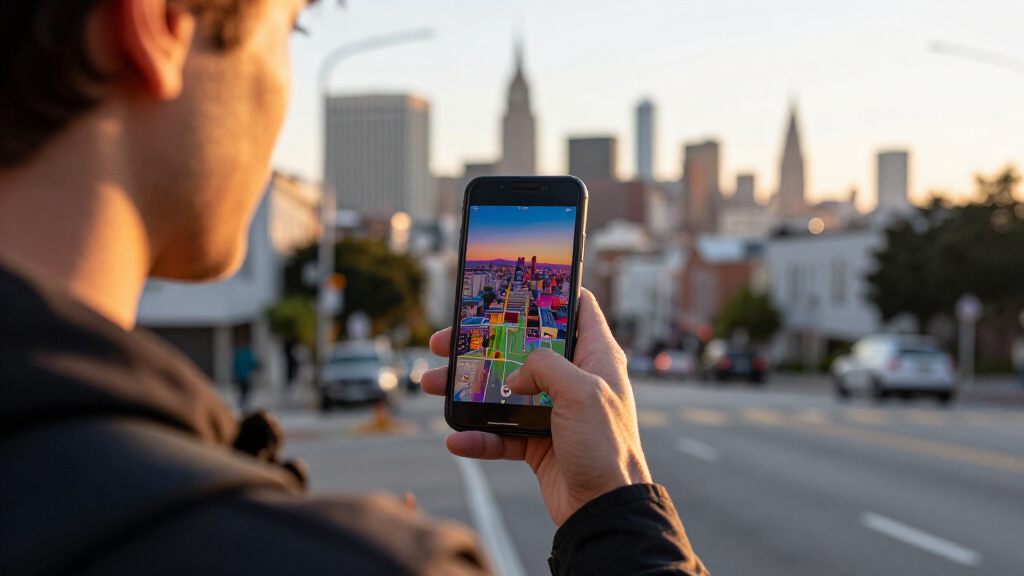
Developers have announced a project to recreate the entire city of San Francisco as a highly detailed video game environment. The initiative aims to explore new possibilities in urban simulation and digital interaction. The project is confirmed but ongoing, with many aspects still in development.
Developers have announced a project to recreate the entire city of San Francisco as a detailed video game environment. This initiative, confirmed by the project team, aims to produce a highly accurate digital replica of the city for use in virtual experiences. The project’s scope and technological approach are still being finalized, but it marks a significant step in urban simulation technology and digital immersion.
The project, led by a collaboration between software developers and urban planners, intends to build a virtual version of San Francisco that includes its streets, buildings, landmarks, and even dynamic elements like traffic and weather. Learn more about turning public data into interactive environments. This digital replica will be accessible through a dedicated platform, allowing users to explore or interact with the city in real-time.
According to a tweet from CDNG Dev, the project is currently in development, with a focus on achieving high fidelity in visual detail and functional realism. The team has not disclosed a specific launch date but indicated that the project is progressing steadily. The digital city will be built using a combination of satellite data, 3D modeling, and real-time rendering technologies.
While the project is confirmed, many technical details remain undisclosed, including the scale of interactivity, the intended use cases beyond gaming, and potential partnerships with local authorities or commercial entities. You might find it interesting to experience Grace Cathedral in San Francisco like never before with a VR tour. The developers emphasized that this is a proof of concept that could expand into various applications.
Implications for Urban Simulation and Digital Experiences
This project demonstrates the growing capabilities of digital modeling and virtual environments, with potential impacts on urban planning, virtual tourism, and gaming industries. A highly detailed virtual San Francisco could serve as a testing ground for infrastructure projects, disaster response simulations, or immersive experiences for remote users. It also raises questions about privacy, data accuracy, and the future of digital twins in urban management.
For consumers and tech enthusiasts, the project signifies a step toward more immersive and realistic virtual worlds, possibly transforming how cities are experienced remotely. For city officials, it offers a new tool for planning and public engagement, provided privacy and data security concerns are addressed.
As an affiliate, we earn on qualifying purchases.
Background on Digital Urban Modeling and Virtual City Projects
Over the past decade, advances in satellite imaging, 3D mapping, and real-time rendering have enabled the creation of digital replicas of cities. Notable examples include digital twins used in infrastructure management and virtual reconstructions for historical preservation. However, creating an entire city as an interactive, high-fidelity video game environment remains a complex challenge involving massive data processing and sophisticated graphics technology.
The current project builds on these developments, aiming to push the boundaries by integrating real-world data with game engine technology. Previous efforts focused on smaller-scale models or specific landmarks; this project aims for a comprehensive, city-wide simulation, which has not been achieved at this level of detail before.
While some companies and research institutions have experimented with virtual cities for training or simulation, this project’s focus on recreating San Francisco in a playable, interactive format marks a significant milestone in urban digitalization efforts.
“Our goal is to create the most accurate, immersive digital version of San Francisco to date, blending real-world data with cutting-edge graphics technology.”
— Lead Developer at CDNG Dev
Technical and Practical Aspects Still Under Development
Many details about the project remain unconfirmed, including the timeline for completion, the specific technologies used, and the scope of user interaction. It is unclear how the project will handle dynamic elements like traffic or weather, or whether it will incorporate real-time data updates. Additionally, questions about data privacy, licensing, and access policies have yet to be addressed fully.
Upcoming Milestones and Potential Public Demonstrations
The project team plans to release incremental updates, including beta versions of the digital city for testing and feedback. A public demonstration or showcase is expected within the next 12 months, providing a clearer view of the platform’s capabilities. Further collaborations with local authorities and technology partners are also anticipated to enhance realism and functionality.
Key Questions
When will the digital San Francisco be available to the public?
There is no confirmed release date yet, but the developers aim to showcase early versions within the next year.
What technologies are being used to create this virtual city?
The project combines satellite data, 3D modeling software, game engine technology, and real-time rendering systems, though specific tools have not been publicly disclosed.
Will this digital city be used for purposes other than gaming?
Yes, potential applications include urban planning, disaster simulation, virtual tourism, and public engagement, but these uses are still under exploration.
Are there privacy concerns associated with this project?
Privacy and data security are important considerations, and the project team has not yet detailed policies regarding data sources and user access.
How accurate will the virtual San Francisco be?
The goal is to achieve a high level of fidelity, incorporating detailed geographic and structural data, but some aspects may be simplified for performance reasons.
Source: hn