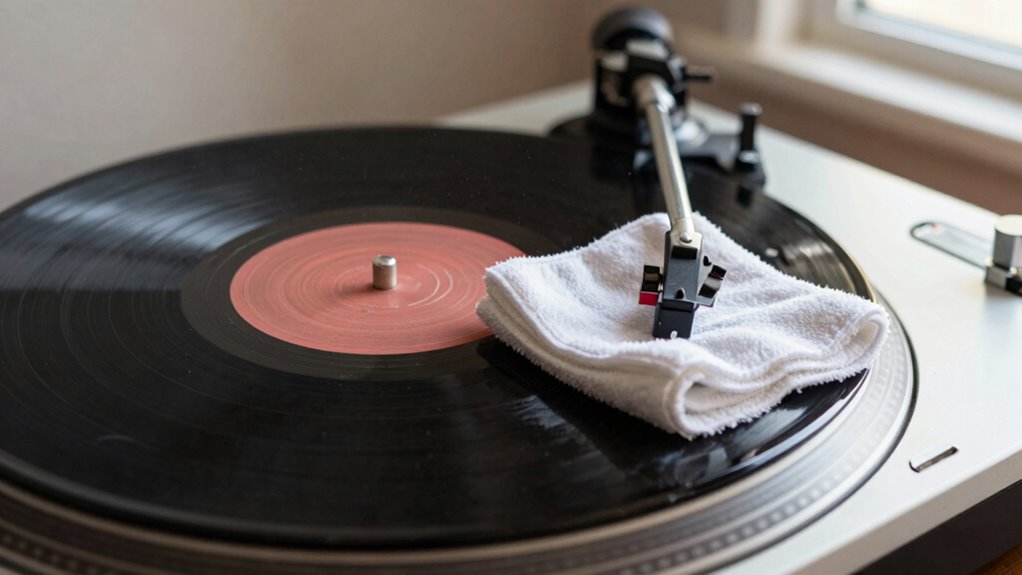

To make your old vinyl sound new, start with a quick, regular cleaning routine. Handle records by the edges, gently wipe off dust with a microfiber cloth, and use a soft brush to loosen dirt. Apply a simple cleaning solution in circular motions, then wipe dry. Keep your turntable clean and level for best results. Maintaining these habits often improves sound quality instantly. If you’d like to discover more tips, there’s plenty you can do to preserve your collection.
Key Takeaways
- Use a microfiber cloth and gentle cleaning solutions like distilled water and isopropyl alcohol for quick, effective record cleaning.
- Handle records by edges and avoid fingerprints to maintain surface quality and sound fidelity.
- Regularly clean the stylus and turntable components to prevent dirt transfer and preserve sound clarity.
- Remove surface dust with anti-static brushes before playing to reduce background noise and static buildup.
- Dry records thoroughly and store upright in a dust-free environment to prolong their lifespan and maintain optimal sound quality.

Hudson Hi-Fi Anti Static Microfiber Record Cleaning Cloth – 5 pk – The Audiophiles Anti-Scratch Lint & Dust Magnets – 7X Capillary Absorption LP & Record Cover Cleaner Protector Cleaning Cloths
Keep Your Collection Clean – Remove dust and dirt from your LP surface without scratching and get deep…
As an affiliate, we earn on qualifying purchases.
As an affiliate, we earn on qualifying purchases.
Why Regular Vinyl Record Cleaning Matters

Regularly cleaning your vinyl records is essential because dirt, dust, and grime can quickly build up on the surface, affecting sound quality. Proper vinyl care helps prevent scratches and reduces background noise, ensuring a clearer listening experience. When you neglect record storage, dust settles more easily, making cleanings more frequent and necessary. Clean records also last longer, protecting your investment in quality vinyl. Consistent maintenance keeps your collection sounding its best and minimizes the need for deep cleaning or repairs later on. By establishing a routine, you prevent buildup that can cause permanent damage. Good vinyl care isn’t just about sound; it also preserves the condition of your records, making every playback a smooth, enjoyable experience. Regular cleaning truly keeps your music sounding fresh. Additionally, understanding sound healing science can help collectors better appreciate their personal preferences and enhance their listening experience. Incorporating proper cleaning techniques also involves understanding record material and how different cleaning methods can impact longevity, especially considering the composition of vinyl records. Maintaining a clean collection also reduces the likelihood of static buildup, which can interfere with playback quality.

Boundless Audio Record Cleaner Brush – Carbon Fiber Anti-Static Vinyl Brush – Record Player Accessories for Vinyl Cleaning
Clean and protect your vinyl collection — Our vinyl record brush quickly and easily cleans your records before…
As an affiliate, we earn on qualifying purchases.
As an affiliate, we earn on qualifying purchases.
What You Need: Essential Supplies for Quick Record Cleaning
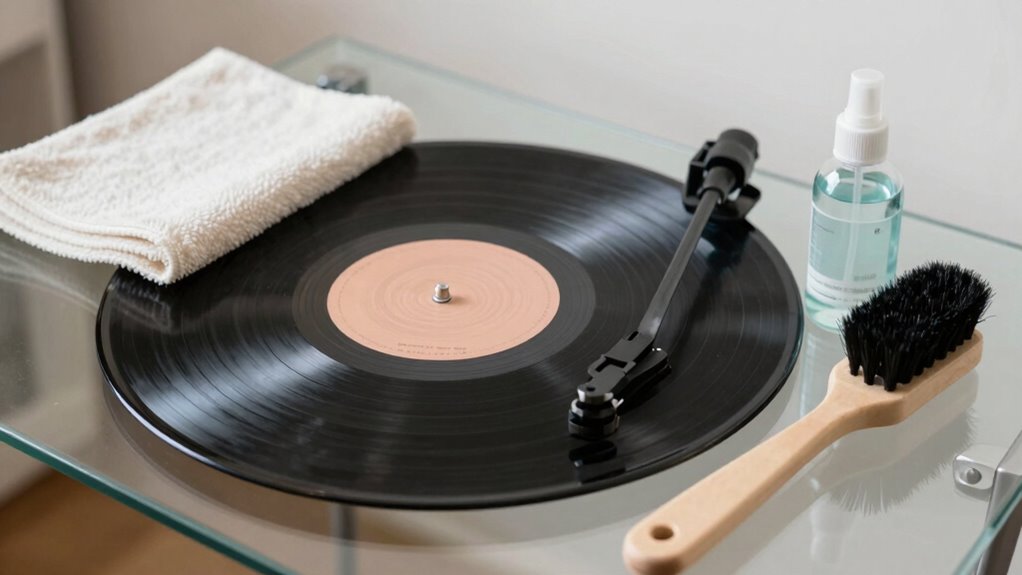
To clean your records quickly, you’ll need the right supplies, starting with a reliable cleaning solution. There are different types, like record-specific cleaners or distilled water, so choose one that fits your needs. It’s also helpful to understand the best woods for farmhouse tables to select gentle cleaning methods that won’t damage delicate finishes. Using a proper cleaning technique can further improve your results and extend the life of your records. Incorporating smarter devices in your cleaning routine, such as vibration-based cleaners, can help achieve more thorough results without risking damage. Don’t forget essential tools like microfiber cloths and record brushes to apply the solution effectively. Incorporating Free Floating techniques can also help prevent damage during cleaning.
Cleaning Solution Types
What’s the best cleaning solution to keep your records sounding their best? Many believe you need specialized or expensive formulas, but that’s a record cleaning myth. Simple solutions, like a mixture of distilled water and a few drops of isopropyl alcohol, work well for vinyl preservation. Avoid harsh chemicals, which can damage your records’ surfaces. Commercial record cleaning solutions are available, but check ingredients to ensure they’re safe. Vinegar-based cleaners are another option, but use sparingly to prevent residue buildup. The goal is to remove dirt and oils without leaving residues that can cause more wear. Properly selecting record cleaning solutions is essential to prevent damaging delicate surfaces while maintaining optimal sound quality. Using the right type of cleaning agents can make a significant difference in preserving your records. Regular maintenance and careful selection of cleaning materials help keep your vinyl in top condition, ensuring the best listening experience. Additionally, understanding how different cleaning techniques impact your records can help you choose the most effective routine. Employing the correct cleaning methods can also reduce the chances of scratches and other damage. Remember, effective cleaning solutions help maintain sound quality and extend your records’ life, making quick routines genuinely effective.
Essential Application Tools
Having the right tools on hand makes quick record cleaning more effective and efficient. Essential record cleaning tools include a soft-bristled brush, microfiber cloths, and a gentle applicator for cleaning solutions. A dedicated record cleaning brush helps loosen dust and debris without scratching your vinyl, while microfiber cloths are perfect for wiping away grime during and after cleaning. An applicator or stylus brush ensures even distribution of cleaning solutions, supporting effective vinyl maintenance. Using proper tools prevents damage and guarantees thorough cleaning, saving you time and effort. Keep your supplies organized and dedicated to record cleaning to maintain your collection’s sound quality. Proper tool selection is crucial for achieving optimal cleaning results. Additionally, selecting tools made from weather-resistant materials can extend their lifespan and ensure consistent performance during cleaning routines. Incorporating tools with anti-static properties can also help reduce static buildup that attracts dust. With these essential application tools, you’ll easily keep your vinyl sounding fresh and vibrant, even during quick cleaning routines.

OPULA 6oz Vinyl Record Cleaning Solution,180ml Vinyl Record Cleaner Fluid, Record Cleaner Spray for Lps Album, Remove Dirt & Debris & Fingerprint, Improve Sound Quality
【Remove Static & Dust】– Vinyl record cleaning solution remove dust, debris, fingerprint, deep cleaning the record, and save…
As an affiliate, we earn on qualifying purchases.
As an affiliate, we earn on qualifying purchases.
How to Clean Your Records: Step-by-Step Process

Wondering how to effectively clean your records? Start by gathering your supplies—cleaning solution, microfiber cloth, and a record brush. Avoid common record cleaning myths that could damage your vinyl. Follow these steps:
| Step | Action | Tip |
|---|---|---|
| 1 | Lightly brush the record to remove loose dust | Use an anti-static brush |
| 2 | Apply cleaning solution or a mix of distilled water and a few drops of dish soap | Avoid harsh chemicals |
| 3 | Gently wipe in a circular motion from center outward | Prevent scratches |
| 4 | Rinse with distilled water if needed | Keep water free of contaminants |
| 5 | Dry with a clean microfiber cloth | Use a soft, lint-free cloth |
Additionally, maintaining a consistent cleaning routine can help preserve the sound quality of your vinyl over time. Regular cleaning can prevent the buildup of dirt and static that compromise audio fidelity, making your record collection sound as fresh as new. To ensure your records stay in optimal condition, consider proper storage techniques that protect them from dust and warping. A thorough understanding of vinyl care can significantly extend the lifespan of your records and enhance your listening experience. Incorporating proper handling practices is also essential to prevent damage during use and storage.
Boundless Audio Record Cleaner Brush – Carbon Fiber Anti-Static Vinyl Brush – Record Player Accessories for Vinyl Cleaning
Clean and protect your vinyl collection — Our vinyl record brush quickly and easily cleans your records before…
As an affiliate, we earn on qualifying purchases.
As an affiliate, we earn on qualifying purchases.
Top Techniques for Removing Dust and Dirt From Vinyl
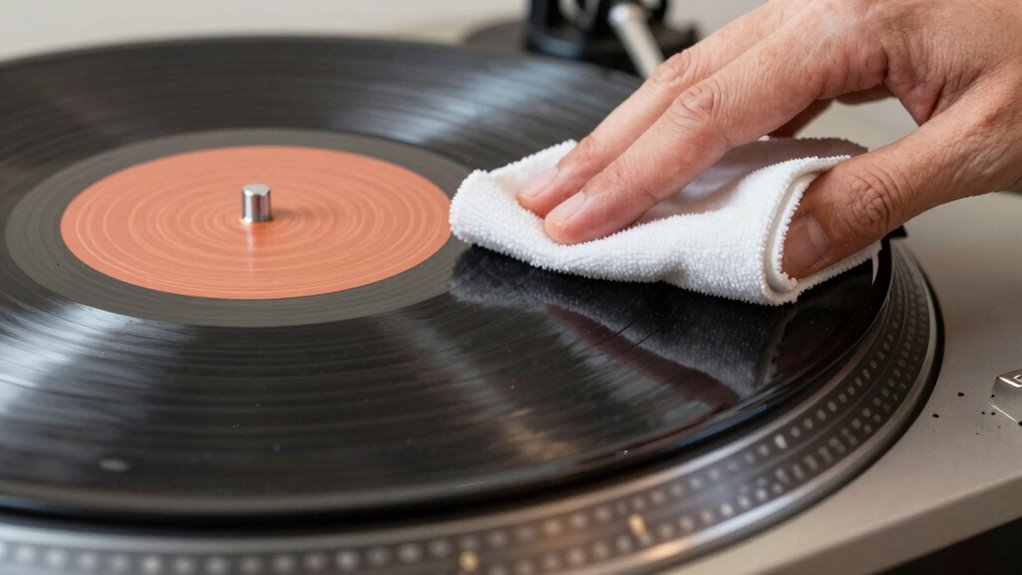
To effectively remove dust and dirt from your vinyl records, start with gentle brushing techniques that lift debris without scratching. Next, use appropriate cleaning solutions to break down stubborn grime, ensuring you don’t damage the record’s surface. Additionally, choosing a reliable vacuum specifically designed for record cleaning can help remove fine dust particles more thoroughly. Regularly inspecting your cleaning tools for caked-on debris can prevent the transfer of dirt back onto your records. Incorporating proper storage methods can also minimize dust accumulation between uses. Maintaining a dust-free environment is crucial for keeping your records pristine. Finally, dry your records properly to prevent water spots and static buildup, keeping them in top shape. Regular cleaning of your vinyl records can also help preserve their sound quality over time, much like maintaining the integrity of valuable investments in precious metals.
Gentle Brushing Techniques
Gentle brushing is essential for effectively removing dust and dirt from vinyl records without causing damage. Using proper brush techniques helps protect the delicate record grooves while cleaning. Start by holding the record by its edges to avoid fingerprints, then lightly place the brush on the surface. Use soft, circular motions to lift dust from the grooves, avoiding excessive pressure. Work from the outer edge toward the center, ensuring all areas are covered evenly. Keep the brush clean by periodically removing accumulated debris. This gentle approach prevents scratching or gouging the vinyl, maintaining its sound quality. Regularly using the right brush techniques keeps your records clean and preserves their longevity, making every listening session sound clearer and more vibrant.
Using Cleaning Solutions
What’s the most effective way to remove stubborn dust and dirt from your vinyl records? Using cleaning solutions is your best bet. Start with a quality record solution designed specifically for vinyl; these formulas break down dirt without damaging the surface. Apply a few drops of cleaning sprays or solution onto the record’s surface or a microfiber cloth. Gently spread it across the vinyl, focusing on heavily soiled areas. Let it sit for a moment to loosen grime. Then, use a soft-bristled brush or cloth to wipe away dirt, working from the center outward. Avoid harsh scrubbing, which can scratch the record. This method ensures a thorough clean, restoring sound quality and prolonging your vinyl’s lifespan.
Proper Drying Methods
After applying a cleaning solution and wiping away dirt, properly drying your vinyl records is key to preventing new dust and streaks. Start by blot drying with a clean, lint-free cloth to absorb excess moisture without scratching the surface. Once most of the water is removed, allow your vinyl to air dry in a dust-free environment. Make sure it’s placed upright and away from direct sunlight or heat sources, which can warp the record. Patience is essential; don’t rush the process. Air drying helps eliminate remaining moisture naturally, reducing the risk of streaks or residue. When fully dry, handle the record by the edges to keep it pristine. This method ensures your vinyl stays clean and sounds its best during playback.
Using Cleaning Solutions Safely and Effectively

Using cleaning solutions safely and effectively is essential to achieving a spotless record while protecting yourself and your surfaces. Always handle cleaning solutions with care, using gloves to prevent skin contact and avoid inhaling fumes. Check the chemical compatibility of your cleaning products with your record’s material—some solutions can cause warping or damage. Measure liquids precisely and follow the manufacturer’s instructions to prevent over-application. Store cleaning solutions in clearly labeled, secure containers away from children and pets. When applying, use a soft cloth or brush, and avoid excessive moisture that might seep into the record’s edges. By practicing safe handling and verifying chemical compatibility, you ensure your cleaning process is both effective and safe, preserving your vinyl’s sound quality and longevity.
How to Dry and Store Your Records to Keep Them Clean
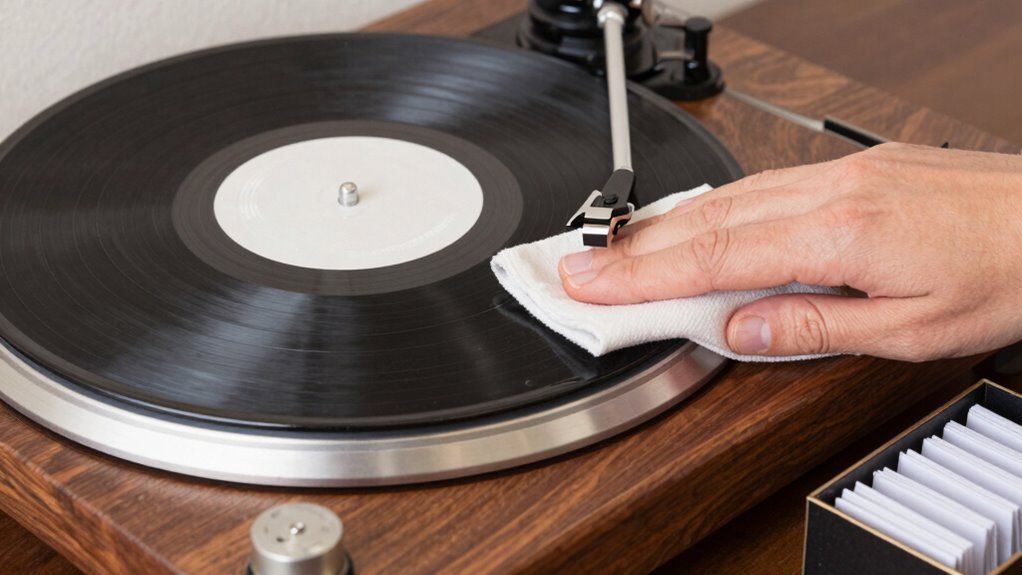
Properly drying and storing your records is essential for maintaining their cleanliness and sound quality. After cleaning, gently air-dry your vinyl on a soft, lint-free cloth or rack. Use clean, anti-static record sleeves to protect your records from dust and static buildup. Store records vertically in a stable, cool, and dry environment to prevent warping and scratches. Avoid high humidity and direct sunlight, which can damage the vinyl and sleeves. Organize your collection in a way that minimizes handling and exposure to contaminants. Here’s a helpful guide:
| Storage Environment | Record Sleeves | Handling Tips |
|---|---|---|
| Cool, dry, consistent | Acid-free, anti-static | Handle by edges only |
| Avoid humidity | Clear inner sleeves | Keep away from dust |
| Stable temperature | Replace worn sleeves | Store upright |
| No direct sunlight | Use protective outer sleeves | Don’t stack records |
Troubleshooting Common Record Cleaning Problems

When cleaning your records, you might encounter common issues like streaks, residue, or static cling that can affect sound quality. Streaks often result from improper drying, which can leave behind marks that obscure the groove details. Residue may be caused by using the wrong cleaning solutions or applying too much liquid, potentially leading to buildup that hampers playback. Static cling can attract more dust and debris, worsening sound quality. Record label issues, such as adhesive residues or damaged labels, can also complicate cleaning and risk further groove damage if not handled carefully. To avoid these problems, use gentle cleaning solutions, avoid excessive force, and handle records by the edges. Proper technique helps preserve your records and prevents issues like groove damage or label deterioration.
How Often Should You Clean Your Vinyl Records?
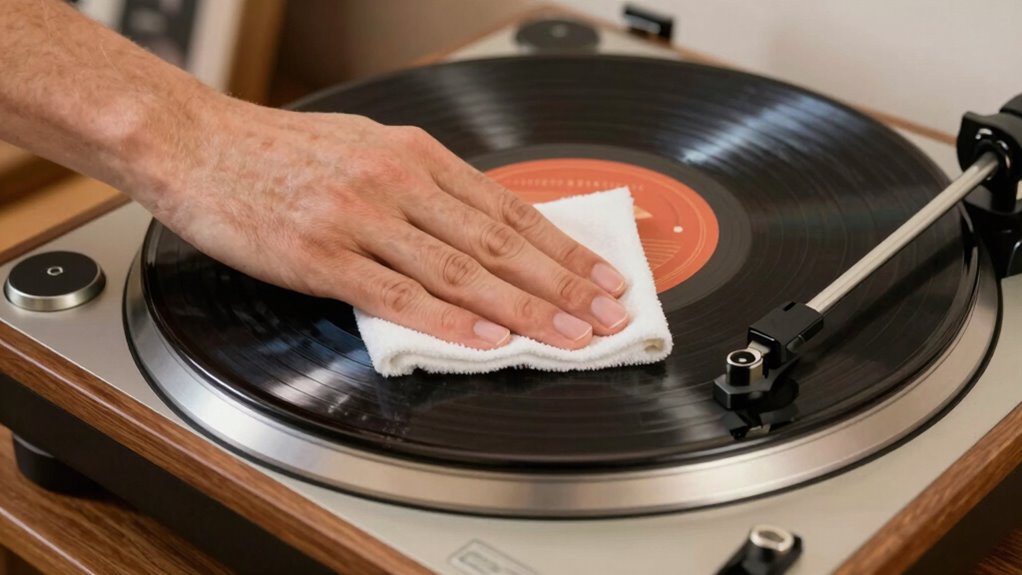
Regularly cleaning your vinyl records guarantees they stay in top playing condition and can considerably extend their lifespan. The ideal record cleaning frequency depends on how often you play your records and the environment they’re stored in. If you listen frequently or notice visible dust and fingerprints, cleaning after each play or weekly is advisable. For less frequent use, a monthly cleaning schedule may suffice. Establishing a consistent vinyl maintenance schedule helps prevent dirt buildup, which can cause surface noise and wear. Remember, over-cleaning can sometimes lead to damage, so focus on cleaning when needed. By sticking to a routine tailored to your listening habits, you ensure your records stay in excellent condition and sound their best for years to come.
Tips for Long-Term Record Preservation and Sound Quality

To guarantee your vinyl records maintain their sound quality over the long term, you need to adopt effective preservation strategies. Proper care ensures your record collection stays pristine and your vinyl aesthetics remain appealing. First, store records vertically in a cool, dry environment, away from direct sunlight. Second, handle records by the edges to prevent oils from damaging the surface. Third, use inner sleeves to protect from dust and scratches, and consider outer covers for added protection. Fourth, regularly inspect your collection for signs of warping or damage, addressing issues promptly. These habits help preserve the sound quality and visual appeal of your records, ensuring they remain a cherished part of your collection for years to come.
Quick Habits to Maintain Pristine Sound From Your Records

Maintaining pristine sound from your records doesn’t require complicated routines—simple, quick habits can make a big difference. Start with record sleeve care by always storing your vinyl in clean, anti-static sleeves to prevent dust buildup. Handle records by the edges to avoid transferring oils from your fingers. Regular turntable maintenance is also vital; keep the stylus clean with a brush and ensure your turntable is level and free of dust. Before playing, wipe down the record with a microfiber cloth to remove surface particles. These quick habits help preserve sound quality and prevent damage. Consistent, mindful care minimizes static and dust, guaranteeing each listen sounds as good as the first. With these easy routines, you keep your records sounding pristine over time.
Frequently Asked Questions
Can I Use Household Items for Record Cleaning?
You can use household solutions for record cleaning, but be cautious with DIY methods. Mild dish soap mixed with distilled water works well if you’re gentle and avoid harsh chemicals. Never use household items like alcohol or vinegar directly, as they can damage your records. Stick to safe, proven methods to preserve your vinyl’s sound quality. When in doubt, invest in proper record cleaning solutions for the best results.
What Are the Signs That My Record Needs Cleaning?
You’ll notice pops, crackles, or muffled sound when your record needs cleaning. Dust, fingerprints, or grime on the surface can cause your record player maintenance issues and affect sound quality. Regularly inspect your vinyl and follow proper vinyl storage tips to prevent buildup. Clean your records promptly with a gentle routine, ensuring clear sound and longer-lasting records. This keeps your listening experience enjoyable and your equipment in top shape.
Does Cleaning Improve Sound Quality or Just Remove Dust?
You might notice your records sound clearer after cleaning because it not only removes dust but also improves sound quality. Dust and grime can cause pops, crackles, and muffled audio, so cleaning restores the record’s surface, allowing your stylus to track better. This results in richer, more vibrant sound. Regular cleaning keeps your vinyl in top shape, ensuring every listen is as good as the first.
Are There Risks of Damaging Records During Cleaning?
Yes, there are risks of damaging your records during cleaning. You could accidentally cause record surface damage if you use harsh cleaning chemicals or scrub too aggressively. Always choose gentle cleaning solutions designed for vinyl and avoid abrasive tools. Using improper techniques or chemicals can lead to surface scratches or deterioration, so handle your records carefully and follow recommended cleaning routines to protect their longevity and sound quality.
How Do I Know When to Replace a Record Instead of Cleaning?
When wondering whether to replace or refresh your vinyl, watch for wear and warping which signal a shorter vinyl lifespan. If scratches, persistent pops, or significant surface damage dominate your listening, replacement is your best bet. Cleaned records often regain their groove, but if damage damages sound quality beyond repair, it’s time to trade your record for a fresh one. Trust your ears and examine the physical condition to guide your decision.
Conclusion
With just a quick routine, you turn your vinyl into a sparkling sea of sound, free from the debris that dulls its magic. Regular cleaning keeps your records singing like new, transforming each spin into a vibrant journey through music’s soul. Think of your cleaning routine as watering a delicate garden—nurture it often, and your vintage treasures will reward you with crystal-clear melodies that dance effortlessly through your speakers.