Interactive TV shows let you choose how the story unfolds, giving you the power to influence the outcome through your decisions. As you watch, you’ll be prompted to make quick choices at key moments, creating a personalized experience that can lead to different endings each time. This active participation increases your emotional investment and makes viewing more exciting. If you keep exploring, you’ll discover how these shows turn passive watching into an engaging adventure tailored just for you.
Key Takeaways
- Interactive TV shows enable viewers to influence story outcomes through real-time choices, creating personalized narratives.
- They utilize narrative branching, allowing multiple endings based on viewer decisions, enhancing engagement.
- Viewer agency fosters emotional investment and makes the viewing experience active rather than passive.
- Technology integrates decision prompts seamlessly into streaming platforms, often with quick response options.
- This format transforms traditional storytelling into an immersive, participatory adventure, increasing entertainment value.
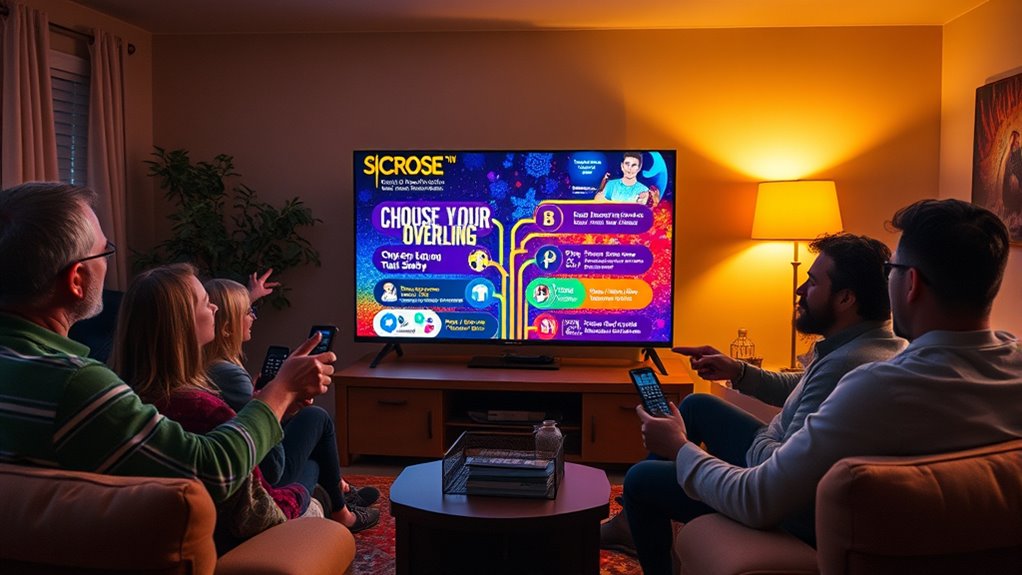
Have you ever wished you could influence the outcome of your favorite TV shows? With the rise of interactive television, that desire is becoming a reality. These shows are designed to give you more control through a concept called narrative branching, where your choices directly shape the story’s direction. Instead of passively watching, you become an active participant, exercising what’s known as viewer agency. This approach transforms traditional storytelling into a dynamic experience, making each viewing unique based on your decisions.
When you engage with an interactive TV show, you’re not just watching a fixed script unfold. Instead, the narrative branches at key moments, offering different options that lead to multiple endings. This branching structure means your choices matter—what you decide at one point can change the entire course of the story. For instance, you might choose to trust a character or betray them, and each decision sends the plot down a different path. This creates a personalized experience, where no two viewers might see the same ending, making your involvement feel more meaningful and immersive.
Your choices in interactive TV shape unique, personalized story endings.
Viewer agency is at the core of this format. It’s about giving you the power to influence the story, making you feel like a co-creator rather than just an observer. This sense of ownership heightens your engagement and investment in the show. Instead of simply watching from the sidelines, you’re actively shaping the narrative, which heightens excitement and emotional investment. You get to see the immediate consequences of your choices, making the experience more intense and satisfying.
The technology behind this is seamless, often integrated into streaming platforms or apps that allow for quick decision-making. As scenes unfold, you are prompted with options—sometimes with just a few seconds to choose—keeping the pace lively. This format appeals to those who crave interactivity and want their entertainment to feel more personal and unpredictable. It’s a way of breaking free from traditional storytelling constraints and embracing a more participatory approach that puts you at the center of the story.
Ultimately, interactive TV shows with their narrative branching and viewer agency are reshaping how we consume entertainment. They invite you to step into the story, make decisions, and experience different outcomes. This evolution in storytelling not only makes TV more engaging but also deepens your connection to the narrative, turning passive viewing into an active and memorable adventure. Incorporating interactive technology allows for a smoother, more engaging experience that adapts to your choices in real-time.
Frequently Asked Questions
How Do Viewers Select Options During the Show?
You select options during the show using your remote or device, engaging with choice mechanics designed for viewer engagement. When prompted, you press specific buttons or tap on-screen choices to influence the storyline. This interactive process keeps you actively involved, making decisions that shape the plot’s direction. The seamless integration of choice mechanics guarantees your selections feel natural, heightening your connection to the story and enhancing the overall viewing experience.
Are Interactive TV Shows Suitable for Children?
Interactive TV shows can be suitable for children if they promote child engagement and have educational value. You should look for shows that encourage kids to think, make decisions, and learn new concepts. When choosing such programs, make certain they are age-appropriate and designed to stimulate curiosity. This way, your children stay entertained while gaining skills and knowledge, making the experience both fun and beneficial.
Can I Watch Interactive Shows on Any Device?
Think of your device as a magic key to a vast kingdom of interactive shows. You can watch these shows on many viewing platforms, as long as your device is compatible. Smartphone, tablet, smart TV, or computer—each can access different stories. Just check the device compatibility and platform availability before diving in. With the right device, you hold the power to explore endless interactive adventures, anytime and anywhere.
Do Interactive Shows Require an Additional Subscription?
Interactive shows usually don’t require an additional subscription fee, but it depends on the platform. Some streaming services include interactive content within their regular subscription, while others might charge extra. Make sure to check platform compatibility since not all devices support interactive features. You might need to update your app or device to enjoy these shows seamlessly. Always review the platform’s details to avoid surprises.
How Are the Storylines Affected by Viewer Choices?
Think of the story as a river that flows differently based on viewer choices. Your decisions create branching narratives, which directly influence the show’s direction. With increased viewer agency, each choice you make can lead to new scenes, endings, and character developments. This dynamic structure keeps you engaged, ensuring that your experience is unique every time. Your input is like a paddle guiding the story’s course through different possibilities.
Conclusion
Just like Scheherazade enchanting her audience with endless tales, interactive TV shows invite you to become the master of your own story. With every choice, you step into a modern-day Odyssey, shaping your destiny with each decision. As technology weaves these tales, you’re reminded that, much like Alice tumbling into Wonderland, the power to explore new worlds lies in your hands. Embrace this revolution; your adventure awaits, and the ending is yours to write.