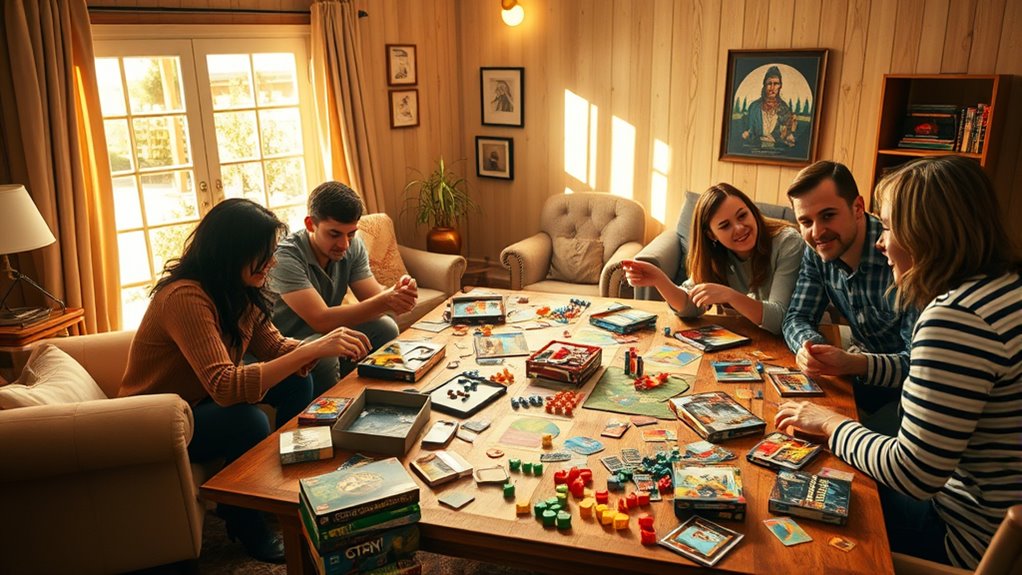

In today’s digital age, board games are making a strong comeback as people seek face-to-face fun and social connection. They challenge your critical thinking, require strategic planning, and offer immersive, tactile experiences that screens can’t match. By encouraging lively conversations and helping build bonds, board games bring a revitalizing break from digital routines. If you want to discover how this trend continues to grow and thrive, keep exploring how they’re reshaping our social lives.
Key Takeaways
- The resurgence of board games emphasizes face-to-face social interaction and mental engagement, countering digital dominance.
- Modern games challenge strategic thinking, problem-solving, and decision-making skills, offering deeper cognitive benefits.
- Playing board games fosters richer social bonds through direct communication, facial cues, and lively conversation.
- Tactile components like pieces and cards create immersive, sensory experiences unavailable in digital formats.
- Their broad appeal across ages and interests supports a cultural shift toward unplugged, meaningful shared activities.
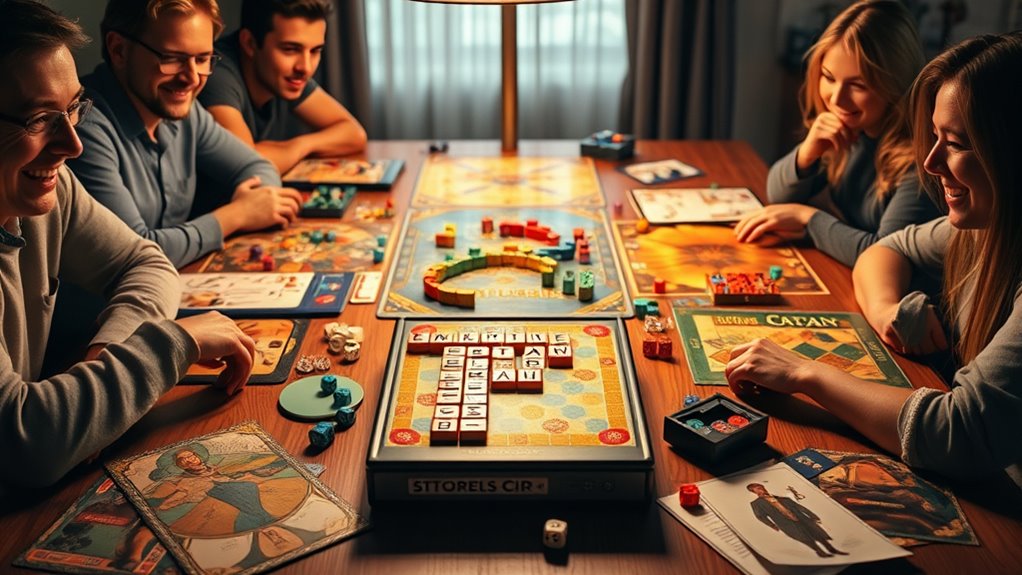
After years of digital dominance, board games are making a strong comeback, bringing people together for face-to-face fun. You might be surprised to find how much more engaging and satisfying it is to sit around a table, cards in hand, or a game board spread out before you. The resurgence isn’t just about nostalgia; it’s about reconnecting in a world increasingly dominated by screens. One key aspect that draws players back in is the opportunity for strategy development. Unlike quick mobile games, many modern board games challenge you to think critically, plan ahead, and adapt your tactics on the fly. You’re not just pressing buttons—you’re actively analyzing the game state, weighing options, and making decisions that can influence the outcome. This mental engagement creates a sense of mastery and progress that digital counterparts often lack. As you develop your strategies, you also sharpen your problem-solving skills, which can translate into real-world benefits.
But what truly makes board games stand out is the social interaction they foster. When you gather around a table with friends or family, you’re not just playing a game—you’re creating shared experiences and memories. The face-to-face communication enables you to pick up on subtle cues, facial expressions, and tone of voice, making the interaction richer and more meaningful. Unlike online games, where communication is often limited to text or voice chat, board games encourage lively conversation, playful banter, and even friendly rivalry. This direct contact helps build stronger bonds and improves your social skills, as you learn to negotiate, cooperate, or challenge others in a relaxed setting. It’s a unique kind of engagement that can’t be replicated through a screen. Additionally, the tactile nature of board games enhances sensory involvement, making the experience even more immersive and satisfying.
Furthermore, the tactile nature of board games appeals to a broad range of ages and interests. Handling physical pieces, shuffling cards, and moving tokens immerses you in the game world in a way that digital games often can’t match. This sensory involvement enhances your overall experience and keeps you more engaged. For many, it’s a refreshing break from the constant connectivity of digital devices. You get to unplug, focus on the present, and enjoy genuine human interaction. As more people recognize the value of these face-to-face moments, the popularity of board games continues to surge. They’re not just a pastime; they’re a way to reconnect, challenge your mind, and build deeper social bonds—all while having fun. Moreover, physical engagement in playing board games can also promote better focus and concentration compared to screen-based activities.
Frequently Asked Questions
What Are the Best Strategies for Beginner Board Game Players?
To succeed as a beginner, focus on understanding the game setup and rule memorization early on. Take your time during setup to grasp all the components and objectives. Play your first few games slowly, prioritizing learning the rules over winning. Ask questions if anything’s unclear, and observe experienced players. With practice, you’ll build confidence and develop strategies, making the game more enjoyable and competitive.
How Do Board Games Impact Social Skills and Teamwork?
Playing board games helps you build trust and improve communication skills by encouraging interaction and teamwork. As you strategize and negotiate, you learn to listen, share ideas, and rely on others. These social interactions foster better understanding and cooperation, making your teamwork stronger. You also develop confidence in expressing your thoughts clearly, which positively impacts your social skills both inside and outside the game.
What Are Some Eco-Friendly Options for Board Game Manufacturing?
You can choose eco-friendly board games made with sustainable materials like recycled cardboard, bamboo, or biodegradable plastics. Look for brands that prioritize eco-conscious manufacturing, reducing waste and energy use. Supporting companies committed to these practices helps protect the environment while enjoying your favorite games. By opting for eco-conscious options, you make a positive impact and promote sustainability in the gaming industry.
How Can Parents Introduce Children to Complex Board Games?
You can introduce children to complex board games by starting with age-appropriate choices that match their skill level. Play together to foster parent-child bonding and explain rules clearly. Break the game into smaller, manageable parts, and be patient as they learn. Encourage curiosity and celebrate their progress. This approach makes the experience fun, engaging, and educational, helping your child develop strategic thinking and social skills over time.
Are There Any Upcoming Innovations in Traditional Board Game Design?
Yes, upcoming innovations include integrating augmented reality and modular components into traditional board game design. You’ll find games that blend physical pieces with AR overlays, creating immersive experiences, and modular components that let you customize gameplay for endless variety. These innovations make classic games more engaging and adaptable, ensuring you stay entertained and challenged. Embrace these advancements to elevate your game nights and introduce fresh excitement to traditional gameplay.
Conclusion
As you gather around the table, you realize this isn’t just about winning or losing—there’s something more. The clatter of pieces, the shared laughter, the unexpected twists keep you hooked. In a digital world, these moments feel rare, yet powerful. So, will you embrace this resurgence and uncover what makes these games timeless? The true game has just begun, and the next move is yours. Are you ready to play?