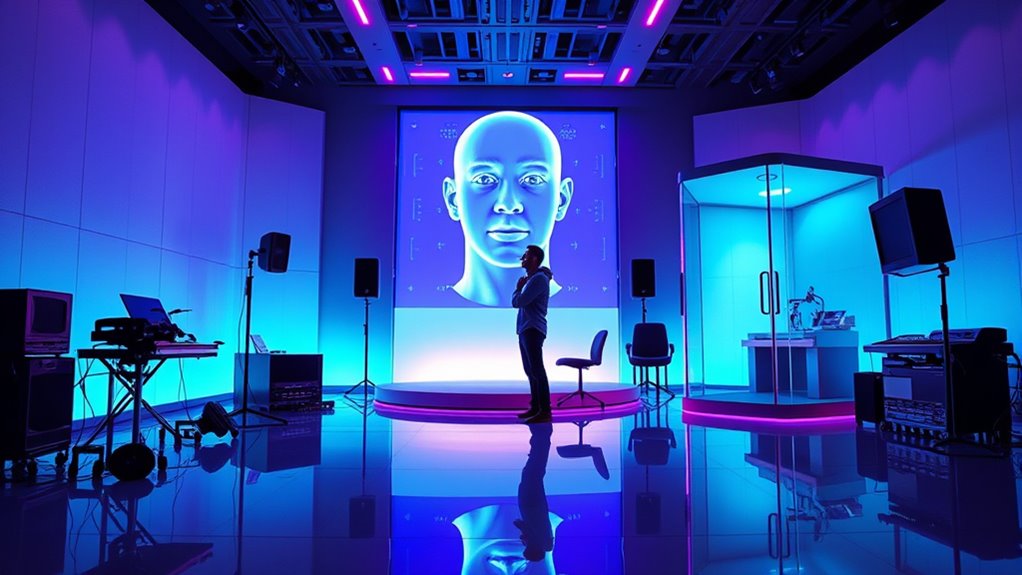

Voice cloning and AI actors raise significant ethical questions about ownership, authenticity, and consent. If you use digital voices without proper licensing or permission, you risk infringing on rights and causing legal disputes. Emotional authenticity is also a concern, as AI may struggle to evoke genuine human feelings, risking audience disconnection. Additionally, misuse like deepfakes or recreating deceased actors can be disrespectful or illegal. Exploring these issues allows you to better understand the complex moral landscape of AI in entertainment.
Key Takeaways
- Unauthorized voice cloning infringes on intellectual property rights and can lead to legal disputes.
- Ethical use requires transparency and obtaining consent, especially when recreating deceased or private individuals.
- AI actors may lack genuine emotional authenticity, risking audience disconnection and diminishing storytelling quality.
- Proper licensing and legal frameworks are essential to prevent exploitation and ensure creator control.
- Deepfakes and misuse pose significant ethical risks, emphasizing the need for clear boundaries and responsible AI deployment.
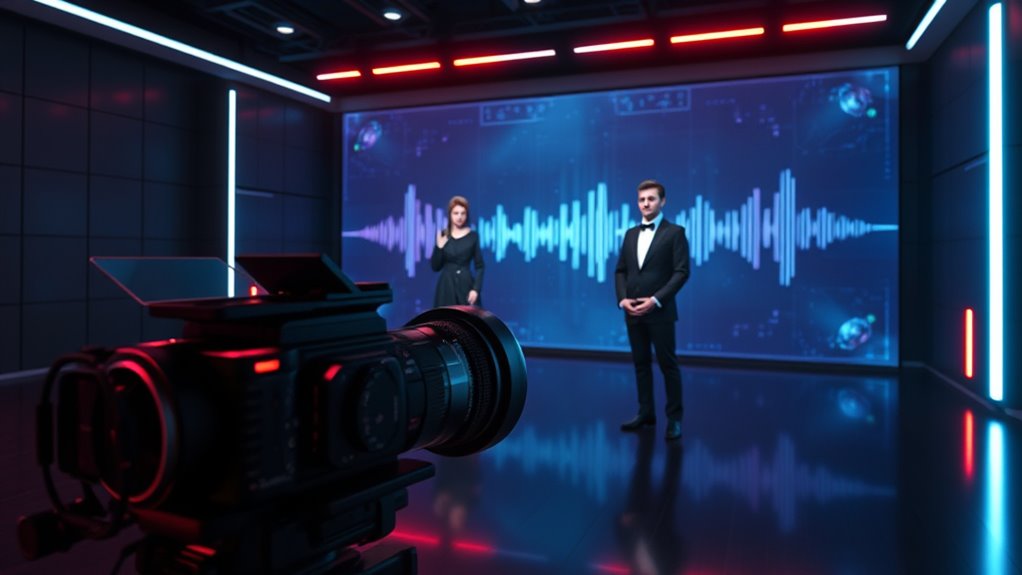
Voice cloning and AI actors are revolutionizing the entertainment industry by enabling the creation of realistic digital voices and characters. This technological leap offers incredible possibilities, but it also raises significant ethical questions. When you start using AI to replicate someone’s voice or personality, you must consider intellectual property rights. Who owns the digital version of a voice once it’s cloned? If an actor’s voice is used without proper authorization, it could infringe upon their rights and lead to legal disputes. Protecting intellectual property becomes complex as digital voices can be replicated endlessly, making it harder to control how they’re used or misused. You need to navigate licensing agreements carefully to ensure artists and voice owners retain control over their creations. Without clear legal frameworks, creators risk losing income or having their work exploited without compensation. Additionally, the challenge of maintaining authentic emotional expression in AI performances raises questions about whether digital actors can truly replace human nuance. Beyond legal concerns, there’s the matter of emotional authenticity. When AI actors are employed in movies, games, or virtual interactions, you might wonder if they can truly evoke the same emotional depth as human performers. While AI can simulate facial expressions and even tone of voice, capturing genuine emotion remains a challenge. If the digital performance lacks emotional authenticity, audiences could feel disconnected or skeptical about the story being told. As someone involved in producing or consuming content, you should ask if the AI-generated performance can genuinely resonate with viewers on a human level. Authenticity is essential for creating compelling stories, and if AI falls short, it could diminish the emotional impact of a scene or character. Furthermore, there’s a risk of misuse, such as deepfakes or unauthorized recreations of deceased actors. These issues highlight the importance of consent and transparency. If you’re a creator, you need to establish clear boundaries and ethical standards about how AI voices are used. For example, recreating a deceased actor’s voice without permission can be deeply disrespectful and legally questionable. As a consumer, you should be aware of how these digital voices are created and deployed, questioning whether their use aligns with ethical standards.
Frequently Asked Questions
How Can Voice Cloning Impact Traditional Acting Careers?
Voice cloning can considerably impact your acting career by challenging voice authenticity and emotional expression. As AI-generated voices become more realistic, you might find your unique voice less in demand, especially in commercials or animations. This technology can save time and costs, but it also risks replacing traditional actors. To stay relevant, focus on honing your emotional expression and authentic delivery, which AI still struggles to replicate convincingly.
What Legal Rights Do Voice Clones Have?
Think of voice clones as digital doubles with a legal blueprint. They don’t automatically have rights like humans, but their creators hold the intellectual property and ownership rights. You need clear agreements to define who controls the clone’s use and rights. Without those, the clone’s voice remains a tool, not a person. Protect your creations by establishing legal boundaries now, or risk losing control of your voice’s digital future.
Can Voice Cloning Be Used Maliciously Without Consent?
Yes, voice cloning can be used maliciously without consent, leading to serious issues like identity theft and unauthorized impersonation. You might find your voice being mimicked to deceive others, commit fraud, or spread false information. This misuse can damage your reputation and privacy. It’s important to be aware of these risks, advocate for stricter regulations, and use technology responsibly to prevent malicious applications of voice cloning.
How Does AI Actor Training Affect Human Actors’ Opportunities?
Think of AI actor training as a double-edged sword; it can open new doors or close traditional ones. You might find fewer industry employment opportunities because AI can replicate performances quickly, reducing demand for human actors. However, it also pushes you to focus on skill development, like improvisation and emotional nuance, that AI can’t easily mimic. Embracing this shift helps you stay relevant in an evolving industry landscape.
What Measures Are in Place to Prevent Misuse of Voice Cloning Technology?
To prevent misuse of voice cloning technology, strict privacy concerns are addressed through robust consent protocols. You should guarantee that individuals give clear permission before their voices are used, and companies implement verification processes to confirm consent. Additionally, regulations and industry standards are in place to monitor and restrict unauthorized voice cloning, helping protect personal privacy and prevent malicious applications. These measures aim to safeguard your rights and promote responsible technology use.
Conclusion
As you navigate the world of voice cloning and AI actors, remember the cautionary tales of Pandora’s box—once opened, it’s hard to close. While these technologies offer incredible possibilities, they also challenge your notions of authenticity and consent. It’s up to you to approach them with wisdom and restraint, ensuring you don’t unwittingly release unintended consequences. Like Icarus soaring too close to the sun, you must balance innovation with ethical vigilance.