AI in movies and music creates realistic digital characters, from virtual actors to reanimated historical figures, allowing for new storytelling possibilities. It also enhances sound quality by restoring old recordings, adjusting effects in real-time, and improving audio clarity and emotional impact. This technology reduces costs and risks, making productions more immersive and authentic. If you want to discover how these innovations are shaping entertainment’s future, there’s plenty more to explore.

Get the latest gadgets delivered free with Prime
- Fast, free delivery on millions of items
- Prime Video, Amazon Music and more included
- Member-only deals all year
Key Takeaways
- AI creates digital characters and virtual actors, enabling realistic, customizable performances and resurrecting historical figures.
- It enhances sound quality through real-time analysis, audio restoration, and immersive effects, improving overall audio fidelity.
- AI reduces production costs and risks by automating complex tasks like CGI, stunt safety, and sound editing.
- It enables more nuanced storytelling with emotionally expressive, lifelike digital personas and advanced soundscapes.
- Overall, AI broadens creative possibilities while streamlining production, making entertainment more immersive and authentic.

Have you ever wondered how artificial intelligence is transforming movies and music? It’s a fascinating shift, one that’s changing the way creators produce and audiences experience entertainment. AI-driven innovations are making waves, especially in areas like virtual actors and sound engineering. These advancements are not only expanding what’s possible but also enhancing the quality and realism of the final product.
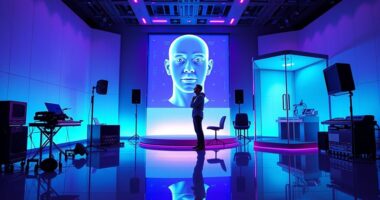
Virtual actors are a prime example of AI’s impact. Instead of relying solely on human performers, studios now use AI to create digital characters that can act, speak, and express emotions just like real actors. These virtual actors can be customized to fit specific roles without the constraints of physical limitations or scheduling conflicts. They’re particularly useful in scenes that require dangerous stunts or extensive CGI, reducing risks and costs. Furthermore, virtual actors can be seamlessly integrated into live-action footage, making it difficult for viewers to distinguish between real and digital. This technology allows filmmakers to resurrect historical figures or create entirely new characters, opening endless creative possibilities. As AI learns from vast datasets, these virtual personas become more lifelike and expressive, blurring the line between reality and digital artistry. Additionally, advancements in AI learning from datasets enable virtual characters to become even more realistic and emotionally engaging. The integration of deep learning techniques has further accelerated these developments, allowing virtual actors to adapt and improve their performances over time. The ongoing refinement of AI-generated content ensures that digital characters continue to become more convincing and emotionally resonant. Moreover, ongoing research into machine learning is helping these virtual entities develop more nuanced behaviors and interactions, making them increasingly indistinguishable from human performers.
AI creates digital actors that can perform, express, and adapt, expanding creative possibilities while reducing risks and costs.
Sound engineering is another area where AI is elevating the entertainment experience. Traditional sound design involves painstaking manual work, from mixing multiple tracks to balancing audio levels. Now, AI tools analyze audio in real time, automatically adjusting sound effects, dialogue, and music to optimize clarity and emotional impact. This results in a more immersive experience for viewers and listeners. AI-driven sound engineering can also simulate acoustics of different environments, making scenes feel more authentic regardless of where they’re shot. Moreover, AI’s ability to analyze and restore audio enhances the restoration process of old recordings, breathing new life into classic music and movies. It can identify and remove background noise, enhance vocals, and improve overall sound quality far faster than manual methods. This not only saves time but also ensures a higher standard of audio fidelity.
Through virtual actors and advanced sound engineering, AI is fundamentally reshaping how movies and music are created. These tools give creators new ways to tell stories with more realism and emotional depth while streamlining production processes. As AI continues to evolve, you can expect even more innovative uses that will deepen your connection to entertainment, making it more immersive, authentic, and enthralling than ever before.
virtual actor digital character creation
As an affiliate, we earn on qualifying purchases.
As an affiliate, we earn on qualifying purchases.
Frequently Asked Questions
How Does AI Influence the Emotional Impact of Movies and Music?
AI influences the emotional impact of movies and music by enhancing emotional authenticity, making scenes and melodies feel more genuine and relatable. It personalizes content to suit your preferences, deepening your connection to the story or song. As a result, your engagement heightens, and you experience a more profound emotional response. AI tools help creators craft more immersive and emotionally resonant experiences, ensuring you feel more connected and invested in the entertainment.
Are There Ethical Concerns With Ai-Generated Movie Scripts and Song Lyrics?
While AI-generated scripts and lyrics offer exciting possibilities, you should consider ethical concerns like algorithm bias and preserving creative authenticity. You might worry about AI unintentionally perpetuating stereotypes or diluting human originality. Ensuring transparency and diversity in AI training helps maintain integrity. Ultimately, balancing innovation with ethical standards allows you to enjoy AI’s benefits without compromising the authenticity and fairness essential to genuine storytelling and artistry.
Can AI Accurately Replicate an Artist’s Unique Style in Music or Film?
AI can mimic an artist’s style, but it often struggles with true artistic authenticity and creative originality. While it can replicate certain patterns, it lacks the nuanced emotions and personal experiences that define an artist’s unique voice. You might find AI-generated work impressive, but it rarely captures the depth and authenticity that come from genuine human creativity. So, AI falls short of fully replicating an artist’s true, original style.
What Are the Legal Rights of Creators When AI Is Used to Produce Content?
Your creative rights are like a guarded treasure chest, holding the keys of intellectual property and moral rights. When AI produces content, you retain ownership of your original ideas, but the legal landscape can blur, making it tricky to protect your moral rights—the integrity and attribution of your work. Laws vary by jurisdiction, so staying informed helps you defend your artistic legacy against unauthorized use or misrepresentation.
How Does AI Affect Employment Opportunities in the Entertainment Industry?
AI impacts employment opportunities in the entertainment industry by automating tasks that were once manual, leading to more automation jobs. You might find some talent displacement as AI tools generate content or perform roles traditionally held by humans, especially in editing, animation, or music production. While automation creates new roles, it also challenges you to adapt, learn new skills, and stay relevant in a rapidly evolving industry.
Conclusion
As you explore AI’s role in movies and music, you’ll see it’s both creating new art and enhancing what already exists. From CGI dragons to AI-generated melodies, you’re witnessing a cultural renaissance, like the invention of the printing press. Embrace these innovations, but remember to keep your human touch — after all, no robot can truly capture the soul of a song or the magic of a film. The future’s yours to shape!
Fall Picks
fall essentials
As an affiliate, we earn on qualifying purchases.