

You might think of a bear market as just another financial term, but its origins tell a more complex story. Emerging from 18th century London, the phrase reflects a gritty reality tied to short selling and the psychological turmoil of investors. As you explore its backstory, you'll uncover how this term captures the essence of fear and loss in the market. The details might surprise you.
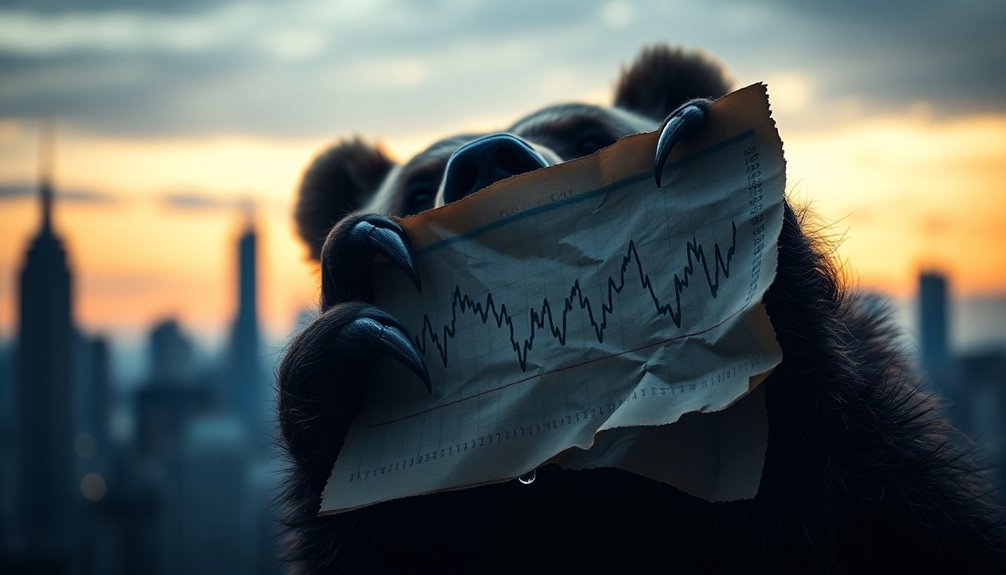
When you hear the term "bear market," it's easy to picture a prolonged period of declining stock prices that can shake even the most seasoned investors. Typically defined as a drop of more than 20%, bear markets can stem from negative investor sentiment and a weakening economy. These markets can last anywhere from weeks to decades, with cyclical bear markets being shorter and secular ones potentially stretching over 10 to 20 years. This volatility often coincides with economic recessions and heightened unemployment, making the term particularly daunting.
The origins of the term "bear market" date back to the 18th century in London's financial district. It's believed to relate to short selling practices, where investors bet on falling prices. In Thomas Mortimer's 1761 book, "Every Man His Own Broker," the term gained traction. The metaphor of a bear attacking—swiping downwards—perfectly encapsulates the essence of market declines. Interestingly, just as bears strike downward, investors watch their portfolios shrink during these challenging times.
Historical bear markets illustrate the brutality behind this term. One of the earliest significant bear markets occurred after the Mississippi/South Sea Bubble in 1719, resulting in an astounding 89% decline. Fast forward to the Great Depression, where the Dow Jones Industrial Average plummeted by 89% over several years, leaving countless investors in despair.
More recently, the dot-com bubble bursting led to a bear market from 2000 to 2002, with the S&P 500 dropping by nearly half. The 2007-2009 financial crisis triggered another severe bear market, during which the S&P 500 fell by over 51%. Even the COVID-19 pandemic caused a brief but intense bear market, lasting about a month.
Despite the psychological toll these markets can take, they also present unique opportunities. Savvy investors often look for undervalued stocks or may employ short selling strategies. Government interventions, like interest rate adjustments, can either trigger or exacerbate these markets, complicating the landscape further. Bear markets often lead to cautious investor sentiment and reduced trading, reflecting the overall market mood during these times.
Historically, bear markets last around 9.6 months, making them generally shorter than their bull counterparts.
In essence, while the term "bear market" might evoke fear, understanding its origins and characteristics can empower you as an investor. The brutal backstory behind this term serves as a reminder of the cyclical nature of the market and the potential for recovery.