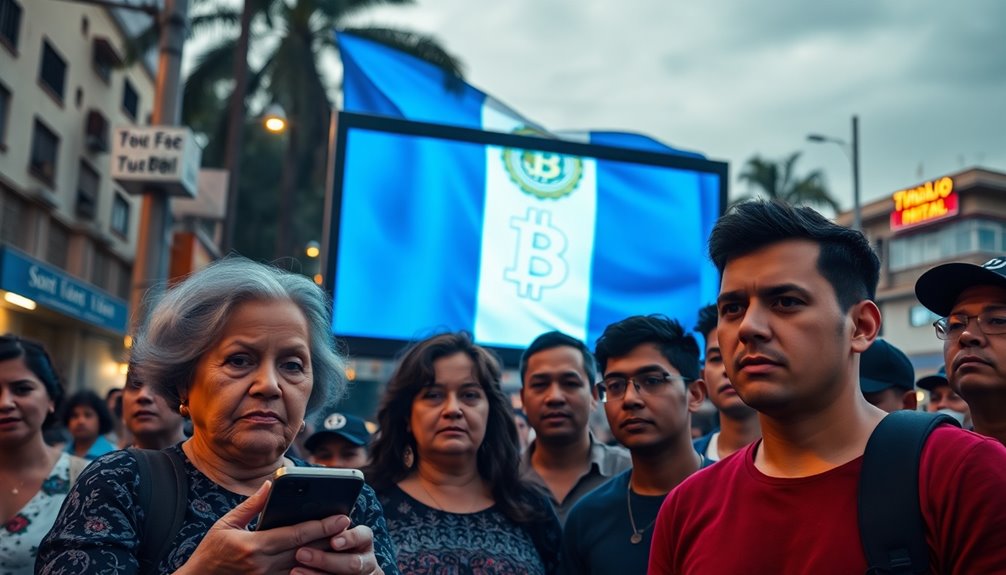

You've likely heard about the recent changes to El Salvador's Bitcoin Law, and the implications are quite significant. By shifting Bitcoin's status to "voluntary legal tender," it raises questions about its initial intent. With businesses no longer required to accept it and restrictions on tax payments, the landscape is shifting. This brings a host of uncertainties that could impact both the economy and public perception. What does this mean for the future of cryptocurrency in the nation?
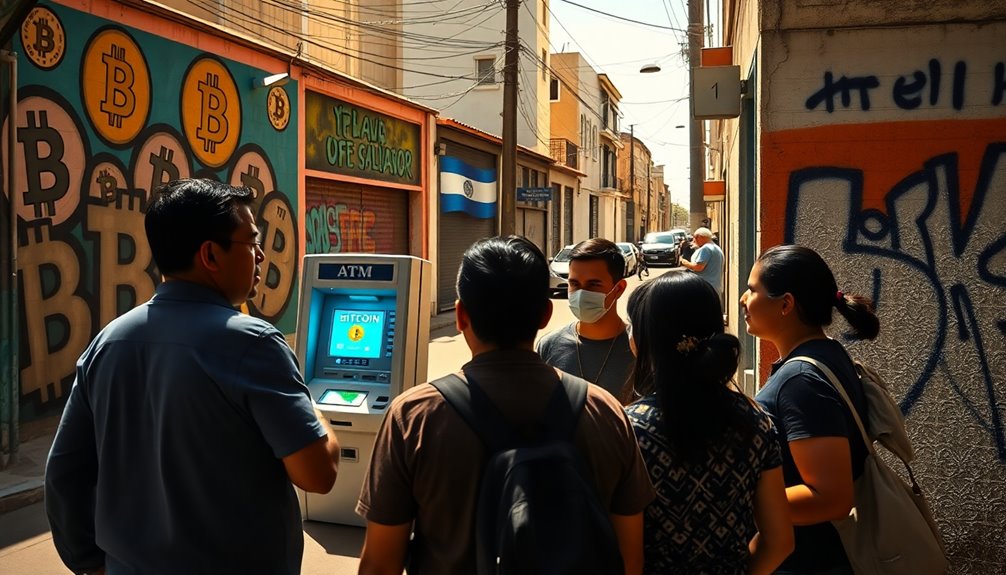
Since Bitcoin became legal tender in El Salvador on September 7, 2021, the country has navigated a complex landscape of legal, economic, and social challenges. The initial excitement surrounding the adoption sparked hopes of increased financial inclusion and reduced remittance fees for the unbanked population. However, as time passed, you might've noticed that the reality didn't quite match those expectations.
The Bitcoin Law mandated businesses to accept Bitcoin alongside the U.S. dollar, but by 2024, only a small percentage of businesses complied, and 92% of Salvadorans chose not to use it for transactions. In fact, following the law's implementation, more Salvadorans had Bitcoin wallets than traditional bank accounts, illustrating the challenges faced in achieving widespread adoption.
The government's strategy included launching the Chivo wallet, which offered incentives like $30 in Bitcoin to encourage usage. Yet, technical issues plagued the wallet, leading to public skepticism. As you might expect, such challenges eroded trust and made many businesses hesitant to adopt Bitcoin. With the U.S. dollar remaining the dominant currency in El Salvador, the anticipated benefits of Bitcoin adoption didn't materialize as hoped.
Amidst these concerns, the government made significant amendments to the Bitcoin Law to comply with a $1.4 billion loan agreement with the IMF. This included changing Bitcoin's status from mandatory to "voluntary legal tender," meaning businesses no longer had to accept it.
This shift raises questions about the future of Bitcoin's legal standing in the country, as it's now classified differently and can't be used for tax payments or settling government debts.
Despite these setbacks, the government continues to show interest in Bitcoin by purchasing it to maintain its reserves. This ongoing involvement indicates that Bitcoin is still part of El Salvador's financial strategy, though the vagueness of the IMF's conditions casts uncertainty on future purchases.
As you consider the landscape, it's clear that the government's commitment to Bitcoin might waver, especially with the Chivo wallet's future being uncertain.
Public perception remains skeptical. Many Salvadorans are wary of Bitcoin's volatility, and the challenges businesses face in adopting it have led to limited acceptance. As you look at the situation, it's evident that while the initial vision for Bitcoin in El Salvador sparked enthusiasm, the ongoing legal and economic shifts suggest a rocky road ahead for the cryptocurrency in this Central American nation.

Trezor Model One – The Original Cryptocurrency Hardware Wallet, Bitcoin Security, Store & Manage 1000's of Coins&Tokens, Easy-to-Use Interface, Quick & Simple Setup (Black)
All-in-one hardware wallet for easy crypto security, storage & use
As an affiliate, we earn on qualifying purchases.
As an affiliate, we earn on qualifying purchases.

Cryptocurrency Essentials for Beginners: Simple Guide to Set Up a Digital Wallet, Learn to Protect Your Money, Avoid Costly Mistakes & Scams to Confidently Invest With Any Budget
As an affiliate, we earn on qualifying purchases.
As an affiliate, we earn on qualifying purchases.

Bitkey Bitcoin Hardware Wallet – The Most Secure Way to Buy, Store and Manage Bitcoin
BITCOIN EXCLUSIVE: Bitkey is designed from the ground up exclusively for Bitcoin, offering a dedicated hardware wallet solution…
As an affiliate, we earn on qualifying purchases.
As an affiliate, we earn on qualifying purchases.

CASEMATIX IPX7 Waterproof Collectible Currency Graded Banknote Case Compatible with PCGS and PMG Money Holders and More, Graded Currency Sleeve Storage Box With 4 Album Dividers
[CASEMATIX 10” COLLECTIBLE GRADED CURRENCY BANKNOTE CASE]: Our graded banknote holder features a tough hard-shell plastic exterior that…
As an affiliate, we earn on qualifying purchases.
As an affiliate, we earn on qualifying purchases.