

You might find it intriguing how the IMF's influence is reshaping El Salvador's approach to Bitcoin. With a $1.4 billion loan agreement in play, the country's once bold crypto initiatives are facing a significant overhaul. As new regulations emerge, questions about the future of digital assets in El Salvador arise. What does this mean for the government's role in cryptocurrencies and the broader economic landscape?
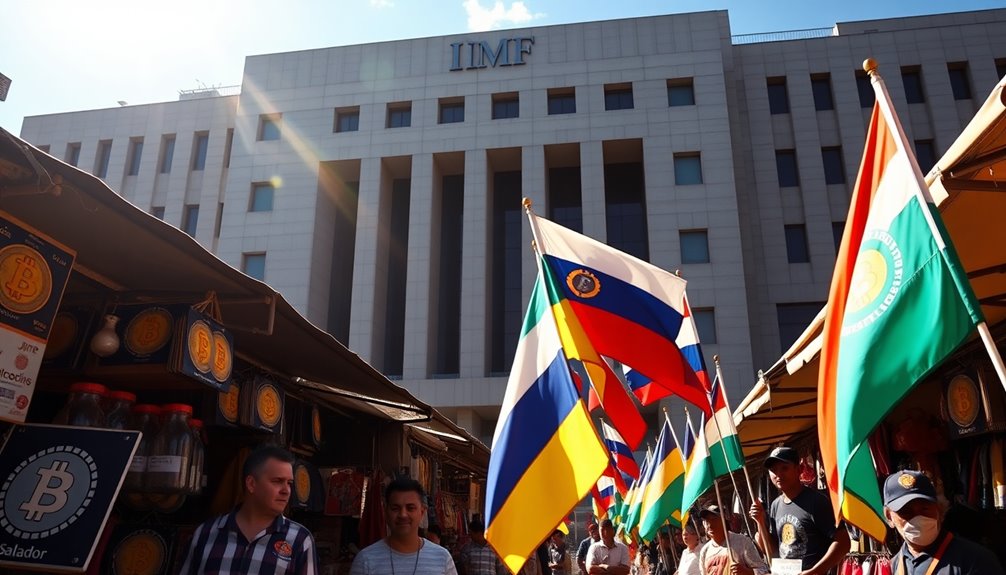
As El Salvador navigates its economic challenges, the recent agreement with the International Monetary Fund (IMF) reshapes its Bitcoin strategy. The IMF's approval of a $1.4 billion loan under the Extended Fund Facility (EFF) offers a lifeline to boost economic growth and address macroeconomic issues. However, this agreement comes with significant restrictions that directly impact your country's Bitcoin strategy.
You'll see mandatory Bitcoin use rolled back, and government involvement in cryptocurrency activities significantly limited. The EFF aims to improve your nation's primary balance by 3.5% over three years, with medium-term growth projections between 2.5% to 3%. Additionally, the program targets reducing debt to 81% of GDP by 2029. This financial backing is expected to catalyze over $3.5 billion in additional support throughout the program period.
Yet, amid these ambitious goals, Bitcoin's adoption is still low, with only about 8% of the population using it for transactions. Though Bitcoin remains legal tender, businesses no longer have to accept it, allowing them to opt for voluntary participation. This flexibility arises from the high price volatility and the public's lack of trust, which have stymied Bitcoin's circulation as a payment method.
The IMF has further restricted the public sector from accumulating Bitcoin, preventing government purchases and mining activities. This shift aims to align regulations with international practices while phasing out the government-backed Chivo Bitcoin wallet by July 2025. You'll need to adhere to transparency requirements, disclosing all Bitcoin holdings and releasing audited reports. Enhanced regulation and supervision of digital assets is expected to strengthen market confidence and compliance with international standards.
The financial sector currently shows no exposure to Bitcoin, with negligible tax payments in crypto. These changes reflect the IMF's broader conditions, which are crucial for accessing the full loan and potential additional funding. Despite the challenges, the EFF program aims to reduce gross financing needs and stabilize the economy.
Legislative reforms are already underway, making Bitcoin acceptance voluntary and mandating tax payments in U.S. dollars instead. As you move forward, the hope is that these reforms will bolster investor confidence and ensure economic stability, even as El Salvador learns to navigate the complexities of its Bitcoin strategy under the watchful eye of the IMF.
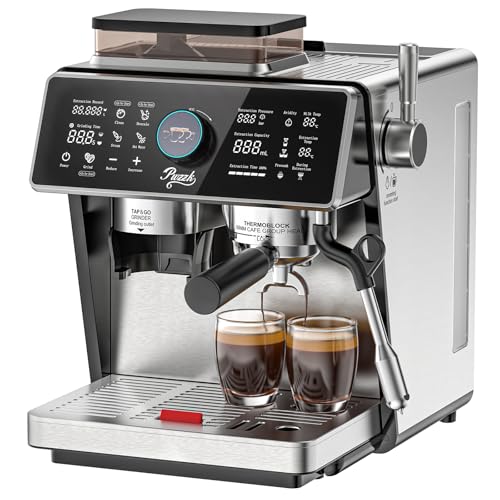
PwZzk Dual Boiler Semi-Automatic Espresso Machine with Built-in Grinder, 58mm Portafilter, TFT Display & Milk Frother Steam Wand – Professional Coffee Maker for Home Barista
【Smart TFT Display & Precision Control】Large TFT screen with dual digital indicators shows extraction pressure, temperature, and shot...
As an affiliate, we earn on qualifying purchases.
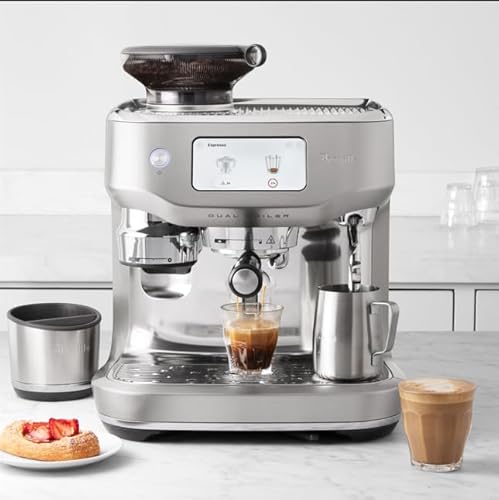
Breville Oracle Dual Boiler Espresso Machine
Dual mode choices include Auto for ease and convenience, and Manual for complete control.
As an affiliate, we earn on qualifying purchases.

Breville Oracle Espresso Machine BES980XL, Brushed Stainless Steel
The Breville Oracle fully automatic delivers third wave specialty coffee at home using the 4 keys formula; It...
As an affiliate, we earn on qualifying purchases.
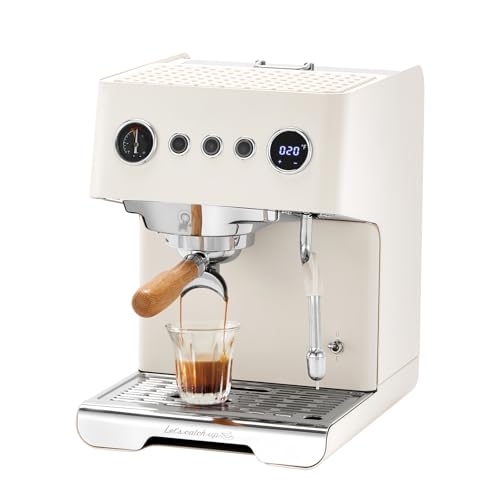
Gemilai G3028A Espresso Machine, 15 Bar Professional Coffee Maker with Adjustable Pressure & Automatic Milk Frother, Dual PID & 550ml Boiler, 57oz Tank, Stainless Steel for Cappuccino, Latte White
Integrated Boiler & Group Head Design: The G3028A Espresso Machine features a 550ml brew boiler, Hybrid group head,...
As an affiliate, we earn on qualifying purchases.