
TL;DR
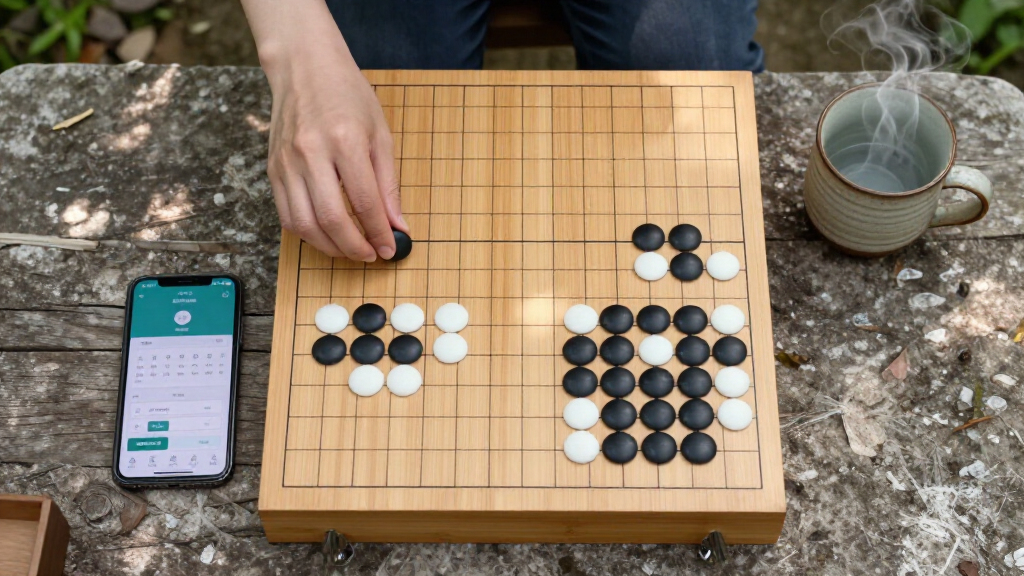
Grandmaster Shin successfully defeated the AI program KataGo in a Go match by employing a two-stone handicap. This marks a rare instance of a human overcoming advanced AI with a modest advantage, raising questions about AI limitations and human skill.
Grandmaster Shin has defeated the AI program KataGo in a game of Go by employing a two-stone handicap, marking a significant milestone in human-AI competitive play. The victory, confirmed by sources familiar with the match, suggests that even highly advanced AI systems may have limitations when faced with strategic handicaps, and it underscores the enduring strength of human intuition and skill in complex games.
The match took place in July 2023 and was closely watched by the Go community and AI researchers alike. Shin, a recognized human grandmaster, faced off against KataGo, an AI program renowned for its strength and advanced algorithms. According to reports, Shin was allowed a two-stone handicap—meaning he could place two stones on the board before the AI made its moves. Despite the AI’s formidable capabilities, Shin managed to secure a win, a rare feat given KataGo’s dominance in the field.
Sources from the match indicate that Shin’s victory was confirmed by multiple observers and was not a fluke or a casual game. This result challenges prevailing assumptions that AI systems like KataGo are unbeatable in Go, especially when playing without handicaps. The match has sparked discussions about the limitations of AI, the importance of human strategic thinking, and the potential for human-AI collaboration or competition in the future.
Grandmaster Shin Overcomes AI KataGo With a Two-Stone Handicap
A recognized human grandmaster has defeated KataGo, one of the strongest open-source Go engines, by placing two stones before the AI’s first move — a rare milestone in human–AI competitive play that challenges assumptions of AI invincibility.
“Even highly advanced AI systems may have limitations when faced with strategic handicaps — human intuition still has a place on the board.”
— Match observers, July 2023Why Shin’s Victory Matters
Exploitable Weaknesses
Even the strongest AI systems can show vulnerabilities when handicapped or confronted with human strategic ingenuity in imperfect scenarios.
Intuition Endures
The result underscores the enduring strength of human intuition and skill in complex games where perfect play is not always achievable.
Reassessing Robustness
The AI community may reassess strategic reasoning and adaptability — especially for real-world applications beyond the Go board.
The Anatomy of the Upset
Shin places two stones on the board before KataGo makes its first move.
Shin leverages the early advantage with deep, intuitive strategic thinking.
KataGo’s formidable algorithms struggle to fully recover the early deficit.
Victory confirmed by multiple observers — not a fluke or casual game.
A Decade of AI Dominance in Go
Systems like AlphaGo and KataGo have revolutionized Go over the past decade, defeating top human players and setting new standards. Most human–AI matches, however, involved no handicaps or large AI advantages — making Shin’s modest two-stone win genuinely noteworthy.
What Remains Uncertain
| Question | Status | Outlook |
|---|---|---|
| Was the victory an isolated incident or a broader vulnerability in KataGo? | ~ Unclear | Researchers continue to analyze the match and its significance. |
| Could similar strategies challenge other AI programs? | ~ Untested | Further testing against other engines is needed to replicate results. |
| Will developers refine algorithms to close the weakness? | ✓ Likely | AI developers may address potential weaknesses revealed by the game. |
| Will more handicap matches be organized? | ✓ Expected | Organizers may arrange matches with varied handicaps to probe limits. |
| Does this translate to humans beating AI in other domains? | ✗ Not directly | Domain-specific; AI retains advantages in many other areas. |
The Debate, Answered
It challenges assumptions of AI invincibility in Go — especially against a program as advanced as KataGo — achieved with only a modest handicap.
Even the strongest systems may have exploitable weaknesses in imperfect or handicapped scenarios, prompting research into AI robustness.
It remains uncertain whether Shin’s success was unique or transferable. Further matches and testing are required to know.
Experts will dissect Shin’s strategies, and more handicap matches are likely to be organized to map AI vulnerabilities.
Implications for AI and Human Strategic Skills
This victory is significant because it demonstrates that even the most advanced AI systems may have exploitable weaknesses, especially when handicapped or faced with human strategic ingenuity. It raises questions about the robustness of AI algorithms in complex, imperfect scenarios and suggests that human players can still hold their own against AI with clever handicaps. For the broader AI community, the result may prompt a reassessment of AI capabilities in strategic reasoning and adaptability, especially in real-world applications where perfect play is not always possible.
As an affiliate, we earn on qualifying purchases.
Background on AI in Go and Recent Developments
AI systems like AlphaGo and KataGo have revolutionized the game of Go over the past decade, defeating top human players and setting new standards for strategic play. KataGo, in particular, is considered one of the strongest open-source AI programs, capable of competing at professional levels. However, most matches between humans and AI have involved either no handicaps or large advantages for the AI, making Shin’s victory with a two-stone handicap noteworthy. Historically, even top human players have struggled to beat AI programs without significant handicaps or when playing under equal conditions.
The recent match adds to a growing body of evidence that AI, while powerful, may not be infallible and that human strategic thinking still has a place in the game. It also echoes past instances where humans have challenged AI in various domains, often with surprising results, emphasizing the ongoing debate about the limits of artificial intelligence in complex decision-making tasks.
Remaining Questions About AI Limitations and Future Matches
It is not yet clear whether Shin’s victory was an isolated incident or indicative of a broader vulnerability in KataGo or similar AI systems. Details about the specific strategies used by Shin, and whether similar results could be replicated against other AI programs, remain to be seen. Additionally, the long-term implications for AI development in Go and other strategic games are still uncertain, as researchers continue to analyze the match and its significance.
Next Steps for Human-AI Go Competitions and Research
Following this match, experts are expected to analyze Shin’s strategies in detail and explore whether similar handicaps could challenge other AI systems. Organizers may consider arranging more matches with various handicaps to better understand AI vulnerabilities. Meanwhile, AI developers might refine their algorithms to address potential weaknesses revealed by this game. The broader community will watch for further experiments and competitive events that test the limits of AI in complex strategic environments.
Key Questions
How significant is Shin’s victory over KataGo?
Shin’s win is considered significant because it challenges assumptions about AI invincibility in Go, especially against a highly advanced program like KataGo, when facing a modest handicap.
Could this result be replicated against other AI systems?
It remains uncertain whether Shin’s success was a unique case or if similar strategies could challenge other AI programs. Further testing is needed.
What does this mean for AI development in strategic games?
This result suggests that even the strongest AI systems may have exploitable weaknesses, especially in imperfect or handicapped scenarios, prompting ongoing research into AI robustness.
Will there be more matches like this in the future?
It is likely that more human-AI matches with various handicaps will be organized to better understand AI limitations and enhance strategic AI development.
Does this mean humans can still beat AI in other areas?
This victory highlights that human strategic thinking can still outperform AI in specific contexts, but it does not necessarily translate to other domains where AI may have advantages.
Source: Hacker News