
TL;DR

Get the latest gadgets delivered free with Prime
- Fast, free delivery on millions of items
- Prime Video, Amazon Music and more included
- Member-only deals all year
The University of Chicago and Toyota have signed a multi-year agreement to study quantum technologies for future mobility, sustainable transportation and secure vehicle systems. Toyota plans to provide up to $1 million a year, with the first phase supporting five research areas and up to eight UChicago graduate students.
The University of Chicago and Toyota have signed a multi-year research agreement to explore quantum technologies for future mobility, sustainable transportation and secure vehicle systems. Toyota plans to provide up to $1 million in annual funding to support joint projects, including work involving UChicago graduate students and industry researchers.
The collaboration will start with five areas: quantum communication, sensing, materials discovery, theoretical modeling and prediction, and electronic properties. The initial projects will draw heavily on faculty and resources at UChicago’s Pritzker School of Molecular Engineering. The parties say they intend to build a broader joint research portfolio over the course of the agreement.
The work is aimed at foundational questions rather than announced products. Researchers will investigate whether quantum sensing could improve how vehicles detect environmental conditions, whether quantum communication approaches could help protect data transmitted among vehicles and infrastructure, and whether computational methods can help identify materials for energy storage and quantum devices. These are research goals and potential applications; the announcement does not report that any technology is ready for deployment.
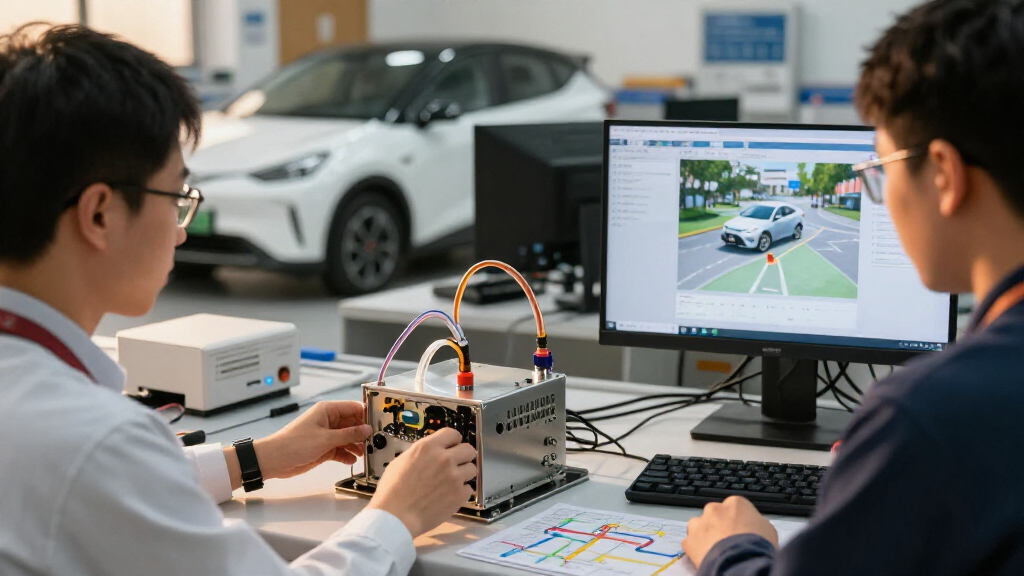
The first phase is expected to fund up to eight UChicago graduate students in theoretical and experimental laboratories. The partners also plan to coordinate the initial work through a joint steering committee with representatives from UChicago and the Toyota Research Institute of North America. UChicago says two Toyota researchers are already visiting the laboratories of David Awschalom and Giulia Galli.
Research Aims at Vehicle Sensing and Security
The agreement links academic research in quantum science with Toyota’s engineering experience, giving researchers a route to examine transportation problems that may not be addressed by current technologies. If the work produces practical results, more precise sensing, protected data links or new materials could eventually inform vehicle systems and energy storage. The announcement, however, sets out research directions, not a timetable for commercial use.
The arrangement also creates a workforce pathway: students are expected to work on projects shaped by industrial research needs. That could expose them to the constraints of translating laboratory findings into engineering applications while giving Toyota access to academic research and talent. The scale of the planned funding is defined as up to $1 million annually; the announcement does not specify the final amount allocated to each project or student.
Products Worth Considering

DJI Mic 3 Wireless Microphone Kit (2 Transmitters, 1 Receiver, Charging Case)

EcoFlow Delta 3 Ultra 3072Wh Portable Power Station – 3600W AC Output

Samsung 27-inch Odyssey G5 QHD Gaming Monitor (G51F)
As an affiliate, we earn on qualifying purchases.
Five Research Areas Set the Scope
The initiative brings together UChicago researchers working in quantum science and Toyota teams focused on advanced research and mobility. UChicago identifies Awschalom, director of the Chicago Quantum Institute and a molecular engineering professor, as the initiative’s lead researcher. Galli, also a molecular engineering professor, leads work on theoretical science.
The announcement frames the collaboration as a long-term effort. For example, Galli said computational modeling could help examine energy-storage systems over a 20-year horizon and predict materials with electronic properties relevant to quantum sensing. That period describes the research challenge she discussed, not a promised date for a finished technology or vehicle application.
““By pairing academic discovery with industrial insights, we can accelerate the timeline for bringing quantum technologies out of the lab and into real-world transportation systems.””
— David Awschalom, director of the Chicago Quantum Institute and the initiative’s lead researcher
Applications Remain at Research Stage
The announcement does not disclose the agreement’s full duration, the total funding commitment, or how the annual amount will be divided among projects. It also does not identify specific milestones, publication plans, or criteria for judging progress. While Toyota plans to provide up to $1 million per year, the wording does not establish that the maximum will be spent every year.
It remains unclear whether the research will yield technologies suitable for vehicles, when any potential applications might be tested, or how they would compare with existing systems. Claims about improved sensing, secure communications and materials are presented as possibilities the teams will investigate. No performance results or deployment commitments were included in the announcement.
Initial Projects and Student Roles
The partners’ next step is to coordinate the initial five research projects through their joint steering committee and carry out work across UChicago’s theoretical and experimental labs. The first phase is set to support up to eight graduate students, while Toyota researchers are visiting the Awschalom and Galli labs. The announcement does not give a start date or a schedule for public results.
Further details on project assignments, funding levels and research milestones will clarify how the broad partnership translates into specific work. Until then, the agreement marks a commitment to investigate possible transportation uses of quantum science, not a promise of near-term changes to vehicles or mobility services.
Key Questions
What have the University of Chicago and Toyota agreed to do?
They signed a multi-year research agreement to explore quantum technologies for future mobility, sustainable transportation and secure vehicle systems.
How much funding is Toyota providing?
Toyota plans to provide up to $1 million annually. The announcement does not state the exact amount that will be provided in each year or how it will be divided.
What will the researchers study?
The five areas are quantum communication, sensing, materials discovery, theoretical modeling and prediction, and electronic properties. Potential uses include vehicle sensing, data protection and energy-storage materials.
Will the research lead to new vehicles soon?
No deployment timeline or product commitment was announced. The work is described as research into possible applications, and the announcement provides no results showing that a technology is ready for vehicles.
How are students involved?
The first phase is expected to fund up to eight UChicago graduate students in theoretical and experimental labs, where they will work on projects connected to industry research challenges.
Source: thequantuminsider.com