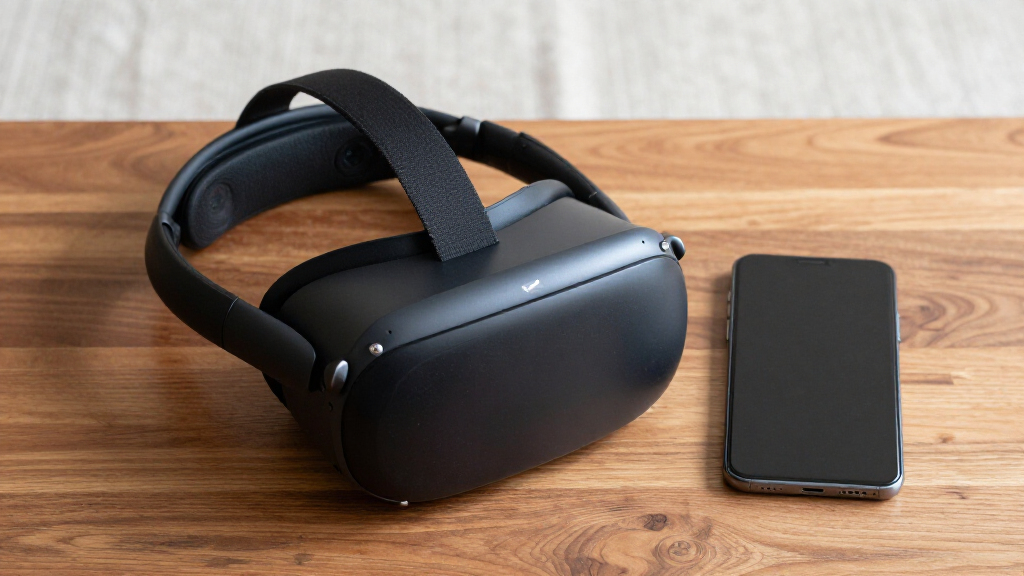

Enhancing VR Experiences With Power-Efficient Tone Mapping In Augmented Reality

TL;DR

Researchers have developed a low-power tone mapping method for augmented reality devices, improving visual quality without draining batteries. This advancement could enhance user experiences in AR applications.

Researchers have unveiled a novel power-efficient tone mapping algorithm designed specifically for augmented reality devices. This development aims to improve visual fidelity in AR experiences while significantly reducing energy consumption, addressing a key challenge in wearable and mobile AR hardware.

The new technique, called LowPowAR, optimizes tone mapping processes to balance high-quality visuals with minimal power use. According to an anonymous researcher involved in the project, this approach adapts tone mapping dynamically based on device power constraints, ensuring extended battery life without sacrificing image clarity.

Initial tests show that devices implementing LowPowAR can achieve up to a 30% reduction in power consumption during intensive AR sessions, compared to traditional tone mapping methods. The algorithm is compatible with existing AR hardware and software frameworks, making it adaptable for current and future devices.

At a glance
reportWhen: announced recently, ongoing development
The developmentA new power-efficient tone mapping technique for augmented reality has been introduced, aiming to improve visual quality while conserving device energy.
Enhancing VR Experiences With Power-Efficient Tone Mapping In Augmented Reality
LowPowAR
AR Graphics / Energy-Aware Rendering

Enhancing VR Experiences With Power-Efficient Tone Mapping In Augmented Reality

A proposed adaptive tone-mapping method aims to preserve image clarity while cutting the energy required for intensive augmented-reality rendering—potentially unlocking longer, more comfortable immersive sessions.

LowPowAR Technique
Dynamic Power response
Comparable Claimed fidelity
Ongoing Validation stage
01 / The Core Advance

Better pixels, smaller power bill

Tone mapping converts rendered brightness and color into a range the display can reproduce. In wearable AR, that work must happen continuously, making even modest efficiency gains meaningful for battery life, heat and comfort.

Adaptive Control

Responds to device limits

LowPowAR reportedly adjusts tone-mapping behavior according to current power constraints instead of applying one fixed processing strategy.

Visual Continuity

Protects image clarity

The objective is to retain fidelity comparable to traditional methods while using fewer energy-intensive operations during demanding sessions.

Practical Integration

Targets existing stacks

The technique is described as compatible with current AR hardware and software frameworks, although broad platform validation is still needed.

02 / Traceability Chain

From scene light to longer sessions

The proposed process connects real-time scene rendering with power-aware decisions, altering tone mapping before the final image reaches the display.

Step 01

Capture scene

AR sensors and graphics create a high-dynamic-range view.

Step 02

Read power state

The system evaluates available device energy and constraints.

Step 03

Adapt mapping

Processing intensity is dynamically tuned to the power budget.

Step 04

Render display

Brightness and contrast are mapped into the screen’s range.

Step 05

Extend use

Lower demand may reduce drain, heat and session interruptions.

03 / Reported Signal

A promising early efficiency gap

Initial testing reportedly measured as much as a 30% power reduction against traditional tone mapping. The figures below normalize the conventional method to an index of 100.

Relative power demand

Traditional
100
LowPowAR
70

Illustrative normalized comparison based on the reported maximum reduction. It is not a universal benchmark across devices, workloads or environments.

04 / Method Comparison

What changes in the rendering pipeline?

LowPowAR’s differentiator is not simply lower image quality. Its stated goal is adaptive resource use: spending less energy while preserving the visual experience users expect.

Evaluation area Traditional tone mapping LowPowAR approach Evidence status
Power awareness ~ Usually fixed processing Dynamic adjustment ✓ Core design claim
Energy demand Baseline index: 100 Reported as low as 70 ~ Early testing
Visual fidelity Established reference quality Claimed comparable quality ~ Wider tests needed
Existing framework compatibility ✓ Broadly established Designed for integration ✗ Adoption unconfirmed
Long-term stability Platform dependent Not yet demonstrated broadly ✗ Unresolved
05 / Impact & Open Questions

Where the gain matters most

Power-efficient rendering could be especially valuable wherever users need continuous overlays, hands-free operation and dependable battery life outside controlled lab conditions.

High potential

Gaming and immersive media

Longer sessions, fewer battery interruptions and more consistent visual quality during graphically intensive experiences.

High potential

Industrial training

Extended guided workflows could become more practical on lightweight headsets with limited battery capacity.

Needs validation

Fieldwork and maintenance

Technicians may benefit from persistent overlays, but outdoor brightness and changing environments require robust testing.

Open question

Consumer availability

Commercial deployment depends on hardware compatibility, integration effort, industry uptake and repeatable real-world results.

01 Field testing

Evaluate performance across multiple devices, power states and lighting conditions.

02 Industry integration

Measure implementation cost inside existing engines, headsets and mobile stacks.

03 Application tuning

Refine the method for glasses, enterprise tools, gaming and prolonged field use.

Evidence checkpoint

The 30% figure is an “up to” result from initial testing, not a guaranteed saving. Hardware diversity, workloads, environmental brightness, thermal limits and integration choices may materially affect real-world performance.

Impact of Power-Efficient Tone Mapping on AR Hardware

This advancement addresses a critical bottleneck in augmented reality technology: balancing high-quality visuals with battery life. By reducing power demands, LowPowAR could enable longer AR sessions, improve user experience, and expand the practicality of AR in fields like gaming, training, and industrial applications. Extended battery life is particularly vital for wearable AR devices, where hardware size and energy capacity are limited.

Arcshell Rechargeable Long Range Two-Way Radios with Earpiece Headsets 3 Pack Arcshell AR-6 Walkie Talkies Li-ion Battery and Charger Included

Arcshell Rechargeable Long Range Two-Way Radios with Earpiece Headsets 3 Pack Arcshell AR-6 Walkie Talkies Li-ion Battery and Charger Included

  • Hands-Free VOX Operation: Allows voice-activated communication for multitasking
  • Versatile Professional Use: Suitable for construction, hospitality, security, and more
  • Rechargeable Battery Included: Long-lasting Li-ion batteries with USB-C charging

As an affiliate, we earn on qualifying purchases.

As an affiliate, we earn on qualifying purchases.

Background on AR Power Challenges and Visual Fidelity

Augmented reality devices require real-time rendering of complex visuals, which traditionally demands significant power. Existing tone mapping techniques often increase energy consumption, limiting session lengths and user comfort. Recent efforts have focused on optimizing visual algorithms to conserve energy, but achieving both high visual quality and power efficiency has remained challenging. The introduction of LowPowAR represents a significant step toward resolving this issue, building on prior research into energy-aware graphics processing.

“Our algorithm dynamically adjusts tone mapping based on device power levels, enabling longer AR sessions without compromising visual quality.”

— an anonymous researcher

Unresolved Questions About Compatibility and Performance

It is not yet clear how widely LowPowAR will be adopted across different AR hardware platforms or how it performs under diverse real-world conditions. Details about long-term stability, integration challenges, and user experience improvements remain to be fully tested and validated in broader deployments.

Next Steps for Validation and Industry Adoption

Researchers plan to conduct extensive field testing of LowPowAR across various AR devices and scenarios. Industry partners are expected to evaluate integration potential and performance benefits. Further development may focus on refining the algorithm for specific applications such as AR glasses, enterprise tools, and mobile devices.

Key Questions

How does LowPowAR improve power efficiency in AR devices?

It dynamically adjusts tone mapping processes to reduce energy consumption while maintaining high visual quality, extending device battery life during AR sessions.

Will this technology be available for consumer AR products soon?

While initial results are promising, widespread adoption depends on further validation, industry integration, and hardware compatibility, which may take several years.

Does this technique affect the visual quality of AR images?

According to developers, LowPowAR maintains comparable visual fidelity to traditional methods while significantly reducing power use.

What types of AR applications will benefit most from this development?

Applications requiring prolonged AR use, such as gaming, industrial training, and fieldwork, are expected to benefit most from enhanced power efficiency.

Are there any limitations or challenges remaining?

Further testing is needed to confirm performance across diverse devices and environments. Integration challenges and long-term stability are still being evaluated.

Source: rss

You May Also Like

AI Ethics and Regulations

Harnessing AI ethics and regulations is crucial for responsible innovation, but understanding how they shape our future remains an ongoing journey.

9 Best Wi-Fi 7 Routers For Faster Home Networks In 2026

Discover the nine best Wi-Fi 7 routers in 2026, including top picks like TP-Link Archer BE550, for improved speed, coverage, and value in modern homes.

Learning A Few Things About Running SQLite

A detailed overview of essential practices and considerations for effectively managing SQLite databases, based on recent insights.

Is VR Sustainable Relying On Mods?

This analysis examines whether virtual reality can be sustainable by depending on user-created modifications, highlighting current debates and uncertainties.