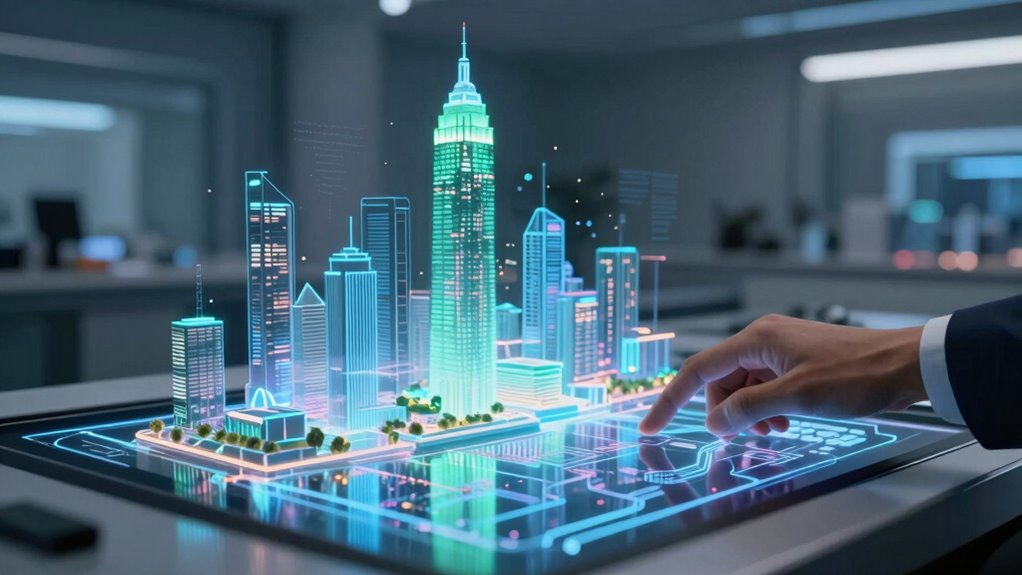
Digital twins let you create virtual models of physical systems that continuously reflect their real-time state through integrated data. By running simulations and testing scenarios virtually, you can optimize operations, detect issues early, and plan maintenance proactively. This approach helps extend assets’ lifespan, reduce downtime, and improve efficiency. As you explore further, you’ll discover how these models drive smarter decisions and transform industries with innovative solutions.

Get the latest gadgets delivered free with Prime
- Fast, free delivery on millions of items
- Prime Video, Amazon Music and more included
- Member-only deals all year
Key Takeaways
- Digital twins enable real-time monitoring and simulation, allowing for proactive adjustments to optimize system performance.
- They integrate diverse data sources to provide comprehensive insights into asset health and operational efficiency.
- Virtual models allow testing of scenarios and maintenance strategies without disrupting physical assets.
- They facilitate predictive analytics to detect failures early and schedule maintenance proactively.
- Digital twins enhance decision-making, reduce downtime, and support innovation across industries.
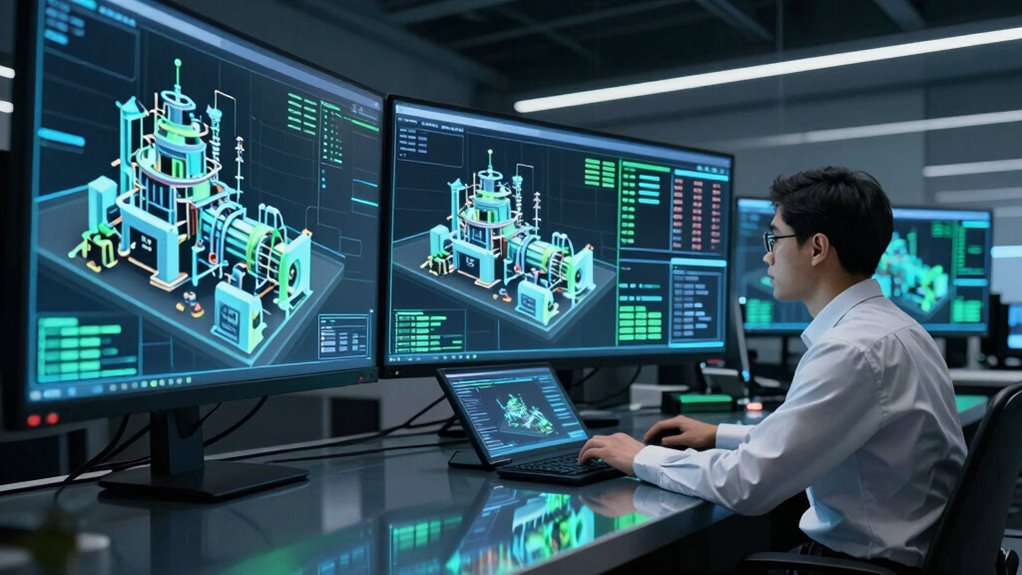
Have you ever wondered how industries are transforming their operations with technology? One of the most groundbreaking innovations is the development of digital twins. These virtual models replicate physical assets, processes, or systems, allowing you to simulate and analyze performance without interfering with the real thing. At the core of this technology is real-time monitoring, which provides continuous data streams from the physical system to its digital counterpart. This constant flow of information guarantees that your digital twin reflects the current state of the actual asset, enabling you to spot issues early and optimize performance effectively.
Digital twins mirror real assets in real time, enabling early issue detection and performance optimization.
Data integration plays a crucial role in making digital twins powerful tools for operational excellence. By combining diverse data sources—sensor readings, maintenance logs, environmental conditions—you create an extensive picture of your system’s health. This integrated data allows you to identify patterns, correlations, and anomalies that might go unnoticed with traditional monitoring approaches. When data from different sources is seamlessly integrated into the digital twin, it becomes possible to run detailed simulations and predictive analyses, helping you anticipate failures before they happen or identify opportunities for efficiency improvements. Additionally, data accuracy is vital to ensure the reliability of these insights. Incorporating advanced analytics can further enhance the predictive capabilities of digital twins, making them even more effective.
Using digital twins, you get a dynamic, interactive model that evolves alongside your physical system. This means you can test various scenarios virtually, such as adjusting operational parameters or scheduling maintenance, without risking real-world consequences. By simulating these changes, you gain insights into potential outcomes, empowering you to make informed decisions that improve reliability and reduce costs. For instance, if a piece of machinery shows signs of wear, your digital twin can analyze the impact of different maintenance strategies, guiding you toward the most effective approach.
Furthermore, digital twins facilitate proactive maintenance strategies by leveraging real-time data and predictive analytics. Instead of waiting for equipment to fail, you can schedule repairs during planned downtime, minimizing disruptions. This proactive approach not only enhances efficiency but also extends the lifespan of assets. As you gather more data and refine your models, your digital twin becomes increasingly precise, providing even greater value in optimizing operations. Real-time monitoring is essential in ensuring these virtual models stay accurate and responsive to changing conditions.
In essence, digital twins transform how you manage complex systems by merging real-time monitoring with data integration. They give you a virtual eye on your physical assets, allowing you to simulate, analyze, and optimize in ways that were once impossible. This technology empowers you to operate more efficiently, reduce downtime, and drive innovation across your industry.
Products Worth Considering

LG UltraGear 32GX850A-B 32-inch 4K UHD Glossy OLED Gaming Monitor

LG UltraGear 34GX90SA-W 34-inch WQHD Curved OLED Gaming Monitor

LG UltraGear 32GS60QC-B 32-inch Curved QHD Gaming Monitor (180Hz, 1ms, 1000R, AMD FreeSync, HDR10)
As an affiliate, we earn on qualifying purchases.
Frequently Asked Questions
How Do Digital Twins Ensure Data Security and Privacy?
You guarantee data security and privacy in digital twins by implementing strong data encryption, making your data unreadable to unauthorized users. You also set up strict access controls, so only authorized personnel can view or modify sensitive information. Regular security audits and monitoring help you detect potential threats early. By combining these measures, you protect your virtual models and the real systems they represent from cyber threats and data breaches.
What Industries Benefit Most From Digital Twin Technology?
You’ll find industries like manufacturing, healthcare, and urban planning benefit most from digital twin technology. They use virtual integration to connect real-world systems with digital models, enabling precise data visualization. This helps them monitor processes, predict issues, and optimize performance proactively. By adopting digital twins, these industries improve efficiency, reduce costs, and enhance decision-making, making their operations more agile and responsive to changing conditions.
How Cost-Effective Are Digital Twins for Small Businesses?
Digital twins can be a game-changer for small businesses, offering cost savings that feel almost too good to be true. While initial investments might seem steep, the long-term benefits outweigh costs, making them highly cost-effective. You gain real-time insights, optimize operations, and prevent costly mistakes. This technology transforms your business into a well-oiled machine, delivering investment benefits that could redefine your growth trajectory and competitiveness.
What Are the Limitations of Digital Twin Accuracy?
You might find digital twin accuracy limited by issues like sensor calibration errors, which can cause data inaccuracies, and data synchronization problems, leading to outdated or mismatched information. These factors can reduce the model’s reliability, especially if sensors aren’t regularly calibrated or if data streams aren’t properly synchronized. To improve accuracy, you need consistent calibration and real-time data integration, ensuring your digital twin reflects the actual system as closely as possible.
How Do Digital Twins Evolve With Ongoing System Changes?
Digital twins evolve with ongoing system changes through real-time synchronization, continuously updating their models to reflect current conditions. This allows you to monitor performance and identify issues promptly. By leveraging this dynamic data, you can implement predictive maintenance strategies, preventing failures before they happen. As systems change, your digital twin stays accurate, helping you optimize operations, reduce downtime, and improve overall efficiency.
Conclusion
You now see how digital twins revolutionize real systems by providing real-time insights and predictive capabilities. With over 70% of manufacturers adopting digital twins, industries are experiencing up to a 25% increase in efficiency. Embracing this technology means you’re not just monitoring systems; you’re actively optimizing them. So, as virtual models become more sophisticated, your ability to make smarter, faster decisions will only grow—making digital twins an essential tool for future success.