To support your gut health, focus on fiber-rich foods like fruits, vegetables, and whole grains, which feed beneficial bacteria. Incorporate fermented foods such as yogurt, kefir, sauerkraut, and kimchi to introduce good microbes that balance your microbiome. Adding digestive enzymes can improve digestion and nutrient absorption. By combining these strategies, you can boost your immunity and overall resilience. Keep exploring to discover how these elements work together for a healthier gut.
Key Takeaways
- Dietary fiber nourishes beneficial gut bacteria and produces short-chain fatty acids that support gut lining health.
- Fermented foods like yogurt, kefir, and kimchi introduce beneficial microbes that enhance microbiome diversity.
- The microbiome, composed of trillions of microorganisms, regulates digestion, immune function, and overall gut health.
- Digestive enzymes help break down foods efficiently, reducing discomfort and improving nutrient absorption.
- Combining fiber, fermentation, and enzymes creates a balanced, resilient microbiome for optimal gut function.
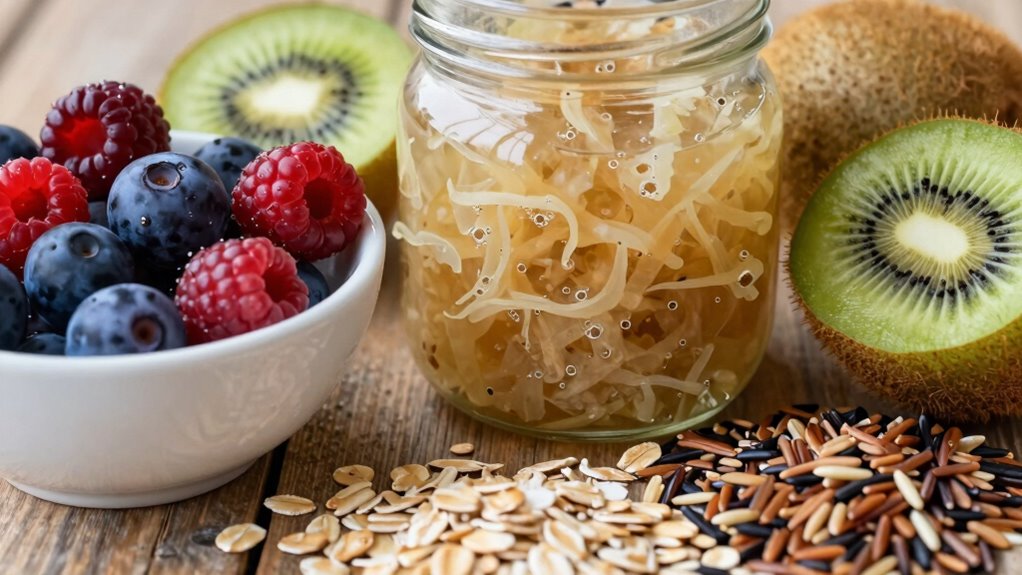
Have you ever wondered why gut health is so important? It’s because your digestive system isn’t just about breaking down food; it’s about supporting your overall well-being. When your gut functions properly, you feel more energetic, your immune system gets a boost, and your mood can improve. One way to maintain a healthy gut is by incorporating probiotic foods into your diet. These foods, like yogurt, kefir, sauerkraut, and kimchi, introduce beneficial bacteria that help balance your microbiome—the collection of trillions of microorganisms living in your intestines. These good bacteria play an essential role in digesting food, producing essential nutrients, and even regulating your immune response. Additionally, a diverse microbiome is crucial for microbiome diversity, which can be supported by eating a variety of fiber-rich foods.
Supporting your gut with probiotic foods boosts digestion, immunity, and overall well-being.
Complementing probiotic foods, digestive enzymes are another indispensable element for gut health. They help break down complex foods into simpler molecules, making nutrients easier to absorb. Without enough digestive enzymes, you might experience bloating, gas, or discomfort after meals. Incorporating enzyme-rich foods—such as pineapple and papaya—or taking supplements can support your digestion and ease the workload on your gut. When your digestive system functions smoothly, it reduces the likelihood of food intolerances and promotes better nutrient absorption, which is fundamental for overall health. Supporting microbiome health through these practices can also help prevent dysbiosis, an imbalance in gut bacteria linked to various health issues. Understanding the microbiome’s role in overall health emphasizes the importance of nurturing this complex community within your body. This balance is vital for maintaining overall digestive health.
Fiber also plays a significant role in gut health. It acts as food for your microbiome, especially the beneficial bacteria that thrive on fermenting it. By eating fiber-rich foods like fruits, vegetables, whole grains, and legumes, you feed your microbiome and support its diversity. This fermentation process produces short-chain fatty acids, which help maintain the integrity of your gut lining, reduce inflammation, and bolster your immune defenses. A balanced microbiome, nourished by fiber, keeps your digestion regular and prevents issues like constipation or diarrhea.
All these elements—probiotic foods, digestive enzymes, and fiber—work together to create a resilient and balanced gut. When you prioritize foods that support your microbiome and digestion, you’re not just improving your gut health; you’re boosting your overall vitality. Pay attention to how your body responds to different foods and consider adding probiotic foods and enzyme-rich options to your diet. Maintaining a healthy gut isn’t complicated; it’s about making mindful choices that nurture your microbiome and support your body’s natural processes. The more you understand and care for your gut, the better you’ll feel every day.
As an affiliate, we earn on qualifying purchases.
Frequently Asked Questions
How Quickly Can Gut Health Improvements Be Seen?
You can start noticing gut health improvements within a few days to weeks, especially if you focus on increasing diet diversity and incorporating probiotics. Consuming a variety of fiber-rich foods boosts microbiome diversity quickly, while probiotics can support beneficial bacteria growth within a few days. Consistent changes, like eating diverse foods and timing probiotic intake properly, accelerate your gut health progress, making improvements more noticeable sooner.
Can Gut Health Affect Mental Health?
Yes, gut health can profoundly affect your mental health through the gut-brain connection. When your gut microbiome is balanced, it produces neurotransmitters like serotonin, which influence mood and stress levels. Poor gut health may lead to anxiety or depression. By maintaining a healthy gut through fiber-rich foods and fermented products, you support the microbiome, thereby positively impacting your mental health and overall well-being.
Are All Fibers Equally Beneficial for the Microbiome?
Not all fibers are equally beneficial for your microbiome. You should focus on diet diversity and include various fiber sources like fruits, vegetables, whole grains, and legumes. Different fibers feed different beneficial bacteria, promoting a healthier balance. By diversifying your fiber intake, you support fermentation processes that produce helpful compounds, which ultimately enhance your gut health and overall well-being.
How Do Antibiotics Impact Gut Bacteria Long-Term?
Antibiotics can cause long-term damage to your gut bacteria, reducing gut flora diversity and potentially leading to antibiotic resistance. This disruption may weaken your immune system and affect digestion. Even after finishing antibiotics, it can take months for your microbiome to recover fully. To support gut health, consider eating probiotic-rich foods and fiber, which help restore beneficial bacteria and promote gut flora diversity.
What Are Signs of an Imbalanced Gut Microbiome?
Your gut might be throwing signals if you notice bloating, irregular bowel movements, or frequent infections. Think of an imbalanced microbiome as a garden overrun by weeds—your body struggles to stay healthy. You can restore harmony with dietary diversity and probiotic supplements, which help reintroduce beneficial bacteria. Pay attention to these signs, and you’ll nurture your gut’s ecosystem back to health, ensuring it functions like a well-tuned orchestra.
Conclusion
Taking care of your gut is like tending to a delicate garden—you need the right nutrients, a touch of fermentation, and a thriving microbiome to help everything flourish. By embracing fiber-rich foods and understanding fermentation’s role, you’re planting seeds for better digestion, immunity, and overall well-being. Remember, a happy gut isn’t just a small part of you; it’s the root from which your health blossoms, turning everyday choices into vibrant life.