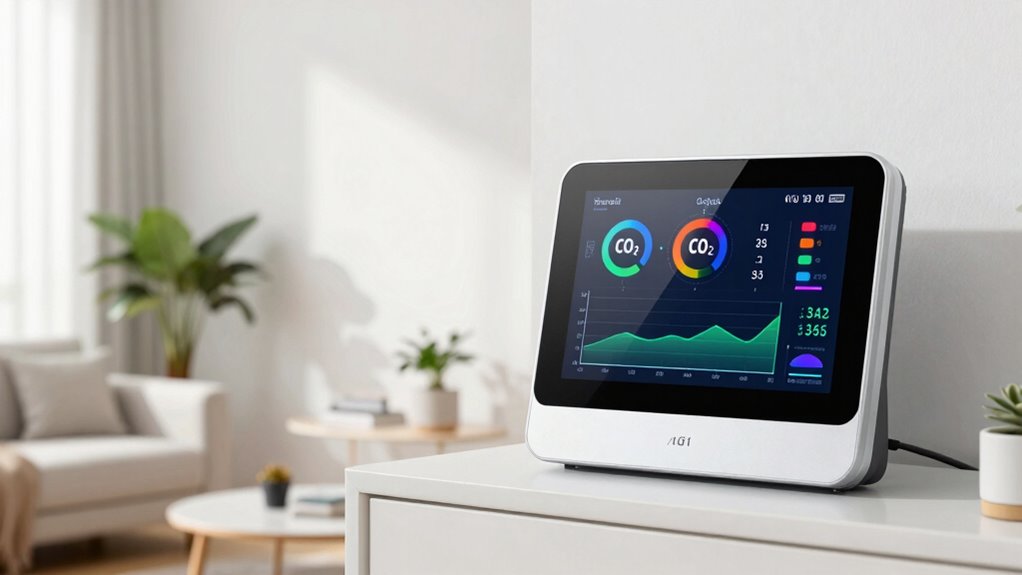
To improve your home air quality, focus on key metrics like particulate matter (PM2.5 and PM10), VOC levels, humidity, and CO2 levels. These indicators show how clean and fresh your environment is and whether ventilation is effective. High PM or VOCs can harm your health, while proper humidity and CO2 levels promote comfort and well-being. By understanding these measurements, you’ll better know what actions to take for a healthier space—discover more tips to optimize your air quality.
Key Takeaways
- Measure particulate matter levels (PM2.5 and PM10) to assess airborne particle pollution.
- Monitor VOC levels to detect harmful volatile organic compounds.
- Track humidity (30-50%) to prevent mold growth and dust mites.
- Check CO2 levels to evaluate ventilation efficiency.
- Use real-time data to identify pollutant fluctuations and optimize air quality management.
Have you ever wondered how the air inside your home affects your health and well-being? The truth is, the quality of your indoor air can have a significant impact on your comfort, energy levels, and even your immune system. Many people overlook this, assuming that if their home looks clean, the air must be fine. But in reality, pollutants like dust, pet dander, volatile organic compounds (VOCs), and other airborne toxins can accumulate quickly, especially in poorly ventilated spaces. That’s why understanding the key metrics that matter in home air quality is so important.
Indoor air quality directly impacts your health, comfort, and energy—monitor and improve it for a safer, healthier home environment.
One way to naturally improve your indoor environment is by incorporating indoor plants. Not only do they add a touch of greenery and a calming aesthetic, but certain plants are also effective at filtering out airborne toxins. For example, spider plants, snake plants, and peace lilies can absorb benzene, formaldehyde, and other VOCs, contributing to fresher air. However, relying solely on indoor plants isn’t enough; you should also consider the air purifier selection carefully. An air purifier with a HEPA filter can trap tiny particles like dust, pet dander, and mold spores, dramatically reducing allergens in your home. When choosing an air purifier, pay attention to its CADR (Clean Air Delivery Rate) to ensure it can handle the size of your space efficiently. A higher CADR means faster removal of pollutants, making your air safer and cleaner.
Beyond the presence of indoor plants and air purifiers, you need to keep an eye on other critical metrics. Air quality monitors measure levels of particulate matter (PM2.5 and PM10), VOCs, humidity, and carbon dioxide (CO2). Monitoring these metrics in real-time helps you understand how your indoor environment fluctuates throughout the day. For instance, high CO2 levels often indicate poor ventilation, which can cause fatigue and headaches. Similarly, elevated PM levels can aggravate asthma and allergies. Maintaining ideal humidity (between 30-50%) is essential for preventing mold growth and reducing dust mites, two common indoor pollutants. Proper ventilation is crucial for diluting indoor pollutants, ensuring that fresh air continuously replaces stale indoor air and reducing the buildup of harmful substances. In addition, regular maintenance of HVAC systems can significantly improve air quality by filtering out contaminants before they circulate indoors. Incorporating air quality monitoring devices can further assist in maintaining a healthy indoor environment by providing continuous feedback.
Ultimately, improving your home’s air quality involves a combination of strategies. Regularly airing out your space, choosing the right indoor plants, and investing in an effective air purifier tailored to your needs can make a noticeable difference. Keep track of the key metrics, and you’ll gain a clearer picture of what’s happening in your environment. This awareness allows you to take targeted actions, ensuring your indoor air stays healthy and safe for you and your loved ones. Good air quality isn’t just about comfort — it’s about supporting your overall health and well-being every single day.
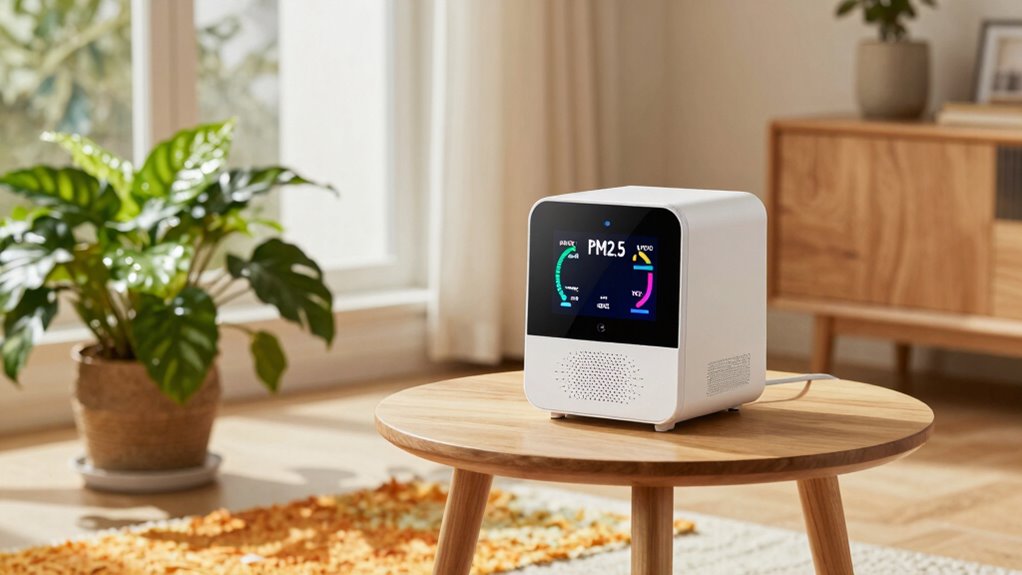
air quality monitor with PM2.5 and VOC detection
As an affiliate, we earn on qualifying purchases.
As an affiliate, we earn on qualifying purchases.
Frequently Asked Questions
How Often Should I Test My Home’s Air Quality?
You should test your home’s air quality at least every three to six months. Using air quality sensors can help you monitor changes in real-time, so you know when to test more frequently. If you notice unusual odors, allergies, or symptoms like headaches, increase testing frequency. Regular testing guarantees your indoor environment stays healthy, and addressing issues early keeps your air safe and clean for everyone.
Can Air Purifiers Eliminate All Indoor Pollutants?
Air purifiers can’t eliminate all indoor pollutants, but they considerably improve air quality. Different air purifier types, like HEPA filters and activated carbon filters, target specific pollutants—HEPA for particles and allergens, carbon for odors and gases. To maximize pollutant removal, use the right purifier for your needs and keep it well-maintained. Remember, combining air purifiers with good ventilation offers the best protection against indoor pollutants.
What Are the Health Risks of Poor Indoor Air Quality?
Poor indoor air quality can cause health problems like allergies, asthma, and respiratory issues. You might experience sneezing, coughing, or headaches. Indoor allergens such as dust, mold, and pet dander worsen these symptoms. To reduce risks, improve ventilation, which helps remove pollutants and brings in fresh air. Regular cleaning and using air purifiers can also help, but ventilation improvements are key to maintaining healthier indoor environments.
How Do Humidity Levels Affect Indoor Air Quality?
Think of humidity levels as the heartbeat of your home’s air. When humidity control slips, it’s like a garden overrun with weeds—mold begins to grow unseen, lurking in damp corners. Keeping humidity balanced prevents mold and keeps your air fresh. Proper humidity levels create an invisible shield, making it harder for mold spores and dust mites to thrive, ensuring your indoor environment stays healthy and comfortable for you and your family.
Are There Affordable Ways to Improve Home Air Quality?
Yes, you can improve your home air quality with affordable solutions. Adding indoor plants is a simple, cost-effective way to naturally filter toxins and boost humidity. Regularly ventilate your space, open windows when weather permits, and clean air filters to remove dust and allergens. These small, budget-friendly steps make a noticeable difference in creating healthier indoor air, making your home more comfortable and safer without breaking the bank.
Conclusion
Remember, while some air quality factors are more noticeable, others are like quiet whispers in the background. By paying attention to the right metrics, you can gently guide your home toward a healthier atmosphere. Think of it as fine-tuning a delicate instrument—small adjustments can make a big difference. Keep your senses tuned in, and you’ll create a space where freshness naturally blossoms, quietly nurturing your well-being every day.