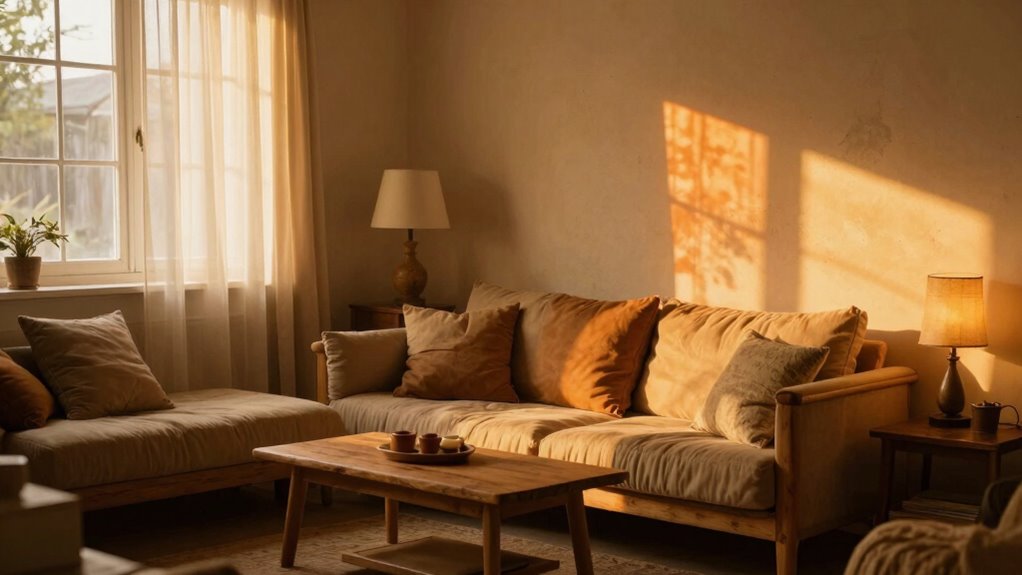

Understanding color temperature shows that warm lighting isn’t wrong; it’s a tool to create specific moods and atmospheres. Warm light, with lower Kelvin values, evokes comfort and coziness, while cooler light enhances clarity and freshness. Both serve different purposes in photos, videos, or spaces. By recognizing how warm lighting impacts perception, you can intentionally craft inviting environments or visuals. Keep exploring, and you’ll discover even more ways to use warm light creatively and effectively.
Key Takeaways
- Warm lighting (below 3500K) creates cozy, inviting atmospheres and is ideal for certain scenes or spaces.
- ‘Warm’ light enhances visual comfort and isn’t outdated; it plays a vital role in shaping mood.
- Color temperature guides intentional lighting choices, showing that warm light can be purposefully used.
- Proper white balance adjustment ensures warm lighting appears accurately in photos and videos.
- Both warm and cool lights have specific uses; neither is inherently wrong—it’s about intentional application.

Understanding color temperature is essential because it influences how colors appear in your photos, videos, and even your living space. When you grasp the concept, you can intentionally create specific lighting ambiance and adjust your camera settings to achieve the mood you want. Color temperature is measured in Kelvin (K), and it determines whether light appears warm, like a cozy sunset, or cool, like a cloudy day. Warm lighting, usually below 3500K, has a yellow or orange hue, while cool lighting, above 5000K, has a bluish tint. Recognizing these differences helps you make smarter choices when setting up your shots or designing your environment.
Understanding color temperature helps you create the perfect mood in photos, videos, and living spaces with warm or cool lighting.
When you’re working with cameras, understanding color temperature allows you to fine-tune your camera settings to match the lighting conditions. Most cameras have an automatic white balance feature that adjusts for different color temperatures, but it’s often better to manually set white balance for more accurate results. If you’re shooting indoors with warm incandescent bulbs, setting your camera to a lower Kelvin value can help preserve the cozy feel without washing out the scene. Conversely, if you’re outdoors on a bright, sunny day, choosing a higher Kelvin setting can prevent the image from appearing too yellow or orange. This control over camera settings ensures your photos reflect the true lighting ambiance, whether you want a warm, inviting atmosphere or a crisp, cool look.
People often think “warm” light is less desirable or that cool light is more professional, but that’s not true. Warm lighting can evoke feelings of comfort, intimacy, and relaxation, making it perfect for certain scenes or living spaces. Cool lighting, on the other hand, can bring clarity, freshness, and a modern touch, ideal for workspaces or minimalist designs. The key is knowing when to embrace warm tones and when to opt for cooler ones. Instead of viewing warm light as wrong or outdated, see it as a tool you can use intentionally to shape your visual narrative or create a specific lighting ambiance.
In essence, understanding color temperature isn’t about strict rules; it’s about giving you the freedom to craft the mood you desire. Whether you’re adjusting your camera settings or designing a space, knowing the qualities of warm and cool light helps you make more informed choices. Recognizing the visual impact of light can help you better understand how different lighting conditions influence the overall atmosphere of your environment. Additionally, understanding the properties of light allows you to select the right lighting for different situations, enhancing both aesthetic appeal and functionality. Being aware of how lighting ambiance affects viewer perception can help you craft more compelling images or environments. When you see warm light as an asset rather than a mistake, you unlock new possibilities to express yourself through photography, videography, and interior design. It’s all about using color temperature intentionally—warm isn’t wrong; it’s just another way to tell your story.

MayJazz M 3 Color Temperature LED Light Bulb A19 2700K-5000K-4000K,3CCT Color Changing Light Bulbs,Energy Saving 9W(60W Equivalent) LED Bulb,810LM,e 26 Base for Bedroom,Living Room,2 Pack
【3 Color Temperature Light Bulb】Compared with traditional light bulbs that use dials to adjust color temperature, this light…
As an affiliate, we earn on qualifying purchases.
As an affiliate, we earn on qualifying purchases.
Frequently Asked Questions
How Does Color Temperature Affect Mood and Perception?
Color temperature greatly influences your mood and perception through color psychology and environmental ambiance. Warm tones, like reds and yellows, create feelings of comfort, intimacy, and energy, while cool tones, such as blues and greens, promote calmness and focus. By adjusting color temperature, you shape the environment’s ambiance, affecting how you feel and perceive your surroundings—making spaces more inviting or soothing based on your desired emotional response.
What Tools Are Best for Measuring Color Temperature Accurately?
Think of tools as your trusty compass in a sea of light; they guide you toward color consistency and measurement accuracy. To measure color temperature accurately, use a calibrated spectrometer or a digital colorimeter. These devices provide precise readings, helping you maintain consistent lighting conditions and avoid color shifts. Investing in quality tools guarantees your lighting stays true, creating an environment where everything looks just right, every time.
Can Color Temperature Be Adjusted on Standard Light Bulbs?
You can’t typically adjust the color temperature on standard light bulbs directly. However, with an LED bulb, you might find models that offer adjustable color temperature settings, allowing you to switch from warm to cool light. Incandescent options usually emit a fixed warm glow, but smart LED bulbs give you the flexibility to change the color temperature to suit your mood or task.
How Does Color Temperature Influence Photography and Videography?
Color temperature influences photography and videography by affecting how your camera perceives and reproduces colors. It impacts white balance and overall color calibration, ensuring your images look natural. When you adjust for different lighting conditions, you control whether tones appear warm or cool. Properly managing color temperature helps you achieve accurate skin tones and consistent visuals, making your shots more professional and true to life.
Are There Health Implications Related to Different Color Temperatures?
Different color temperatures can impact your health by affecting sleep disruption and your circadian rhythm. Exposure to blue light from cooler, higher color temperatures, especially in the evening, can suppress melatonin production, making it harder to fall asleep. To protect your health, try using warmer lighting at night and limiting screen time, which helps maintain your circadian rhythm and reduces sleep disturbances.

TJOY 24 Pack A19 LED Light Bulbs Soft Warm White 2700K, 60 Watt Equivalent, Efficient 9W, E26 Standard Base, Non Dimmable Energy Saving Warm Light Lamp Bulb, 800LM 120V, for Home, Bedroom, Living Room
60W Incandescent Replacement Bulb: A19 LED bulbs are more energy efficient than incandescent bulbs but generate less heat….
As an affiliate, we earn on qualifying purchases.
As an affiliate, we earn on qualifying purchases.
Conclusion
Just like a master painter chooses the perfect hue to set the mood, understanding color temperature helps you craft the right atmosphere in your photos and spaces. Remember, “warm” isn’t wrong—it’s a tool to evoke feelings and tell stories. So, next time you see a cozy glow or a cool, crisp light, think of it as your palette’s secret weapon. Embrace the spectrum, and let your creativity shine brighter than ever.

JJC Hand-held Professiona White Balance Filter, Universal White Balance Handheld Disc for Digital Photography DSLR, Easy to Use, Consistent Accurate Color, for Lens Filter Diameter up to 95mm
This JJC WB-F1 Handheld White Balance Filter DISC Provides consistent, accurate color
As an affiliate, we earn on qualifying purchases.
As an affiliate, we earn on qualifying purchases.

64.4” Slim Floor Lamp for Living Room with Magnetic Remote and Foot Switch, Dimmable Standing Tall Lamp Mood for Bedroom Nursery, 3 Color Temperatures, 1-Hour Timer,900LM Bulb Included,Beige E06LD05W1
Magnetic Remote & Foot Control: GOEBLESON floor lamps for living room comes with a remote and a foot…
As an affiliate, we earn on qualifying purchases.
As an affiliate, we earn on qualifying purchases.