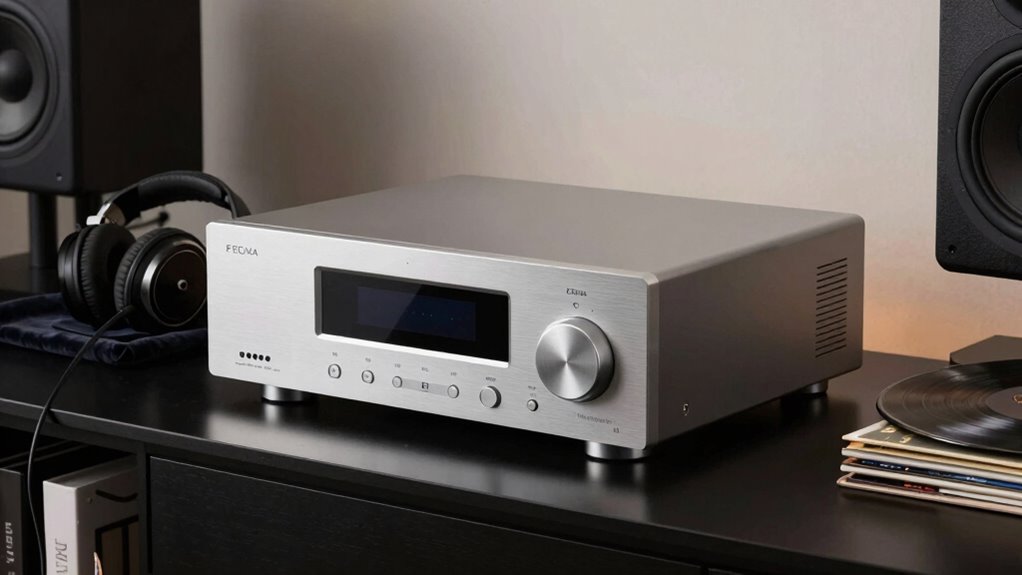

A premium hi-fi CD player should match your system and listening habits, not just offer an elaborate feature list. I’d put the Denon DCD-900NE at the top for its balance of stereo playback and USB support; the Marantz CD 60 is a stronger fit for buyers prioritizing a dedicated premium deck, while the Yamaha CD-C603 suits listeners who want several discs ready to play. The main tradeoffs are between a single-disc design and a changer, built-in conversion and a transport that relies on your DAC, and full-size components and portable convenience. Features such as USB playback, ripping, and streaming matter only if they fit your setup. Read on for the full breakdown and a guide to choosing the right kind of player.

Get the latest gadgets delivered free with Prime
- Fast, free delivery on millions of items
- Prime Video, Amazon Music and more included
- Member-only deals all year
Complete the kit



Key Takeaways
- The Denon DCD-900NE is the strongest all-round fit here for buyers who want a traditional stereo CD player with USB playback without moving to a specialist transport.
- Premium can mean different things: the Marantz CD 60 emphasizes a dedicated hi-fi component role, while the Kaiboer DMP-K8 combines CD playback with network streaming.
- Disc capacity is a practical dividing line. The Onkyo DX-C390-B and Integra CDC-3.4 hold six discs, while the Yamaha CD-C603 offers five-disc convenience; none is as compact or simple as a single-disc deck.
- Transport models shift responsibility to the rest of the system. The SMSL PL200T options make most sense when the buyer already has a suitable external DAC and wants digital connectivity.
- Portable and multifunction models serve narrower needs: the Fosi Audio Merak adds ripping, while the SHANLING EC Zero T and TEAC PD-301-X prioritize portability or a smaller, more flexible playback setup.
| Onkyo DX-C390-B 6-Disc CD Carousel Changer, Black |  | Best for Multi-Disc Listening | Disc capacity: 6 discs (product details also contain a conflicting disc count) | Supported media: Audio CD, MP3 CD, CD-R/RW | Digital outputs: Optical and coaxial | VIEW ON AMAZON | See Our Full Breakdown |
| Yamaha CD-S303 Single CD Player, Black |  | Best for USB Library Playback | Disc capacity: 1 | Disc compatibility: CD-R/RW | USB audio formats: MP3, WMA, LPCM, AAC, FLAC | VIEW ON AMAZON | See Our Full Breakdown |
| Fosi Audio Merak Portable CD Player with CD Ripping |  | Best Compact Player for Headphones and Ripping | DAC: CS43131 | Amplifier: TPA6120 | Maximum playback resolution: PCM 16-bit/96 kHz | VIEW ON AMAZON | See Our Full Breakdown |
| Kaiboer DMP-K8 Hi-Fi CD Player and Network Streamer |  | Best Premium All-in-One Source | Connectivity: Wi-Fi; USB, HDMI, and optical connectivity listed | Streaming: AirPlay, DLNA; Amazon Music, TIDAL, and Qobuz listed | Memory: 8GB DDR4 | VIEW ON AMAZON | See Our Full Breakdown |
| Denon DCD-600NE CD Player, Silver |  | Best for Straightforward Stereo CD Playback | Disc capacity: 1 | Supported formats: CD, CD-R/RW, MP3, WMA | Audio processing: AL32 Processing | VIEW ON AMAZON | See Our Full Breakdown |
| Denon DCD-900NE CD Player, Silver |  | Best Overall | Brand and model: Denon DCD-900NE | Disc capacity: 1 | Supported formats: CD, CD-R/RW, MP3, WMA, FLAC, DSD | VIEW ON AMAZON | See Our Full Breakdown |
| SHANLING EC Zero T Portable HiFi CD Player with R2R DAC and Dual JAN6418 Tubes |  | Best for Headphone Enthusiasts | Brand and model: SHANLING EC Zero T | DAC and tubes: R2R DAC; dual JAN6418 tubes | Connectivity: Bluetooth 5.3; CD and USB DAC input | VIEW ON AMAZON | See Our Full Breakdown |
| TEAC PD-301-X Slot-In CD Player with FM Tuner and USB Playback (Silver) |  | Best Compact System Hub | Brand and model: TEAC PD-301-X | Disc capacity: 1 | Media and supported audio: Audio CD; MP3 | VIEW ON AMAZON | See Our Full Breakdown |
| Integra CDC-3.4 6-Disc CD Carousel Changer |  | Best for Multi-Disc Listening | Brand and model: Integra CDC-3.4 | Disc capacity: 6 | Digital-to-analog converters: Dual Wolfson 24-bit/192 kHz | VIEW ON AMAZON | See Our Full Breakdown |
| Marantz CD 60 CD Player (Black) |  | Best for Direct Headphone Listening | Brand and model: Marantz CD 60 (CD60) | Number of discs: 1 | Audio channels: 2 | VIEW ON AMAZON | See Our Full Breakdown |
| Denon DCD-900NE CD Player with USB Playback |  | Best Overall for Disc and USB Flexibility | Brand and model: Denon DCD-900NE | Supported media: CD, CD-R/RW, USB | Supported formats: MP3, WAV, FLAC, WMA, DSD | VIEW ON AMAZON | See Our Full Breakdown |
| S.M.S.L PL200T MQA-CD Digital Transport and CD Player |  | Best for MQA and DAC-Based Systems | Brand and model: S.M.S.L PL200T | Media format: Audio CD | MQA-CD decoding: Full decoding with 8× unfolding | VIEW ON AMAZON | See Our Full Breakdown |
| Yamaha CD-C603 5-Disc CD Changer with USB Playback |  | Best for Multi-Disc Listening | Brand and model: Yamaha CD-C603BL | Disc capacity: 5 CDs | USB formats: MP3, WMA, AAC, WAV, FLAC | VIEW ON AMAZON | See Our Full Breakdown |
| SMSL PL200T CD Transport with USB Input | | Best for External-Clock Hi-Fi Systems | Model: SMSL PL200T | Disc capacity: 1 | MQA support: MQA-CD with full MQA decoding | VIEW ON AMAZON | See Our Full Breakdown |
| hi fi cd player premium | Disc capacity | Connectivity | Brand and model |
|---|---|---|---|
| Onkyo DX-C390-B 6-Disc CD Caro | 6 discs (product details also contain a conflicting disc count) | — | — |
| Yamaha CD-S303 Single CD Playe | 1 | USB | — |
| Fosi Audio Merak Portable CD P | — | — | — |
| Kaiboer DMP-K8 Hi-Fi CD Player | — | Wi-Fi; USB, HDMI, and optical connectivity listed | — |
| Denon DCD-600NE CD Player | 1 | Auxiliary, RCA | — |
| Denon DCD-900NE CD Player | 1 | USB, optical output | Denon DCD-900NE |
| SHANLING EC Zero T Portable Hi | — | Bluetooth 5.3; CD and USB DAC input | SHANLING EC Zero T |
| TEAC PD-301-X Slot-In CD Playe | 1 | RCA, coaxial, optical | TEAC PD-301-X |
| Integra CDC-3.4 6-Disc CD Caro | 6 | Infrared, DB9, RS232 | Integra CDC-3.4 |
| Marantz CD 60 CD Player | — | Auxiliary, USB | Marantz CD 60 (CD60) |
| Denon DCD-900NE CD Player with | — | — | Denon DCD-900NE |
| S.M.S.L PL200T MQA-CD Digital | — | — | S.M.S.L PL200T |
| Yamaha CD-C603 5-Disc CD Chang | 5 CDs | — | Yamaha CD-C603BL |
| SMSL PL200T CD Transport with | 1 | — | — |
More Details on Our Top Picks
Onkyo DX-C390-B 6-Disc CD Carousel Changer, Black
I’d choose the Onkyo DX-C390-B when uninterrupted listening matters more than a compact, single-disc layout. Its six-disc carousel lets you swap as many as five discs while playback continues, a practical advantage over the Yamaha CD-S303 and Denon DCD-600NE, which each handle one disc at a time. It also accepts MP3 CDs and CD-R/RW media, with optical and coaxial outputs for connecting to an external DAC or receiver.
The tradeoff is a larger, more mechanically involved component, and the listed details conflict about disc capacity, so I’d verify the exact model specification before buying. Its 24-bit/192 kHz conversion and VLSC circuitry are useful features, but they don’t make this the pick for USB libraries or streaming. Choose it for a disc collection and long listening sessions; skip it if shelf space or modern file access takes priority.
Pros:- Can change up to five discs during playback
- Plays audio CDs, MP3 CDs, and CD-R/RW discs
- Optical and coaxial digital outputs support connection to external audio equipment
- Offers 40-track programming and multiple repeat modes
Cons:- Larger than the single-disc Yamaha CD-S303 and Denon DCD-600NE
- Product details give conflicting disc-capacity information
- Power requirements vary by regional model
Best for: Listeners with a sizable CD collection who want to queue several albums and change discs without stopping playback.
Not ideal for: Buyers seeking USB playback, network streaming, or a compact component; the carousel takes up more space and focuses on physical discs.
- Disc capacity:6 discs (product details also contain a conflicting disc count)
- Supported media:Audio CD, MP3 CD, CD-R/RW
- Digital outputs:Optical and coaxial
- DAC:24-bit/192 kHz
- Dynamic range:96 dB
- Track programming:40 tracks
- Dimensions:17.13 × 17 × 5.16 in
- Weight:6.8 kg
Our verdict“Choose the Onkyo if you want a premium-style home CD player built around multi-disc listening rather than USB playback or streaming.”
Yamaha CD-S303 Single CD Player, Black
The Yamaha CD-S303 is the most straightforward fit here for someone who wants a conventional hi-fi CD player that can also play files from a USB memory device. It supports MP3, WMA, LPCM, AAC, and FLAC over USB, giving it a broader file-based role than the disc-focused Denon DCD-600NE. A high-performance DAC and Pure Direct feature suit a simple stereo setup, while the included remote makes everyday playback easier.
That flexibility has limits: this is still a single-disc player, and the listed connectivity is USB rather than a broader streaming platform like the Kaiboer DMP-K8. It also lacks a headphone jack, so private listening calls for a separate headphone solution. I’d put it ahead of the Denon for USB file variety, but not for buyers who want multiple discs loaded or network services in the same component.
Pros:- Plays a range of USB audio formats, including FLAC and LPCM
- Supports CD-R/RW discs
- Pure Direct feature and high-performance DAC suit a focused stereo setup
- Includes a remote control
Cons:- Single-disc capacity means changing albums requires handling the disc
- No headphone jack for direct private listening
- USB playback does not provide the network streaming offered by the Kaiboer DMP-K8
Best for: Stereo listeners who play CDs and keep a collection of compatible FLAC, AAC, or other supported files on USB memory.
Not ideal for: Buyers who want a headphone jack, a multi-disc changer, or built-in network streaming.
- Disc capacity:1
- Disc compatibility:CD-R/RW
- USB audio formats:MP3, WMA, LPCM, AAC, FLAC
- Connectivity:USB
- Output level:2 ± 0.3 V (1 kHz, 0 dB)
- Dimensions:17.12 × 10.25 × 3.38 in
- Weight:7.7 lb
- Warranty:2-year manufacturer warranty
Our verdict“Pick the Yamaha if you want one uncomplicated hi-fi component for CDs and supported USB music files, without needing streaming or multi-disc loading.”
Fosi Audio Merak Portable CD Player with CD Ripping
The Fosi Audio Merak takes a different route from the full-size Yamaha and Denon players: it is a compact CD source with a headphone output and a way to make WAV copies of discs. Its CS43131 DAC and TPA6120 amplifier are paired with a 3.5 mm headphone jack, LINE, and optical outputs, so it can serve a desk setup or feed other audio gear. The OLED display and anti-shock playback also make its portable format more practical than a bare-bones transport.
Its ripping feature comes with a specific limitation: WAV extraction requires a FAT32 USB drive no larger than 32 GB, even though USB playback supports drives up to 128 GB. Unlike the Denon DCD-600NE, it has no stated full-size home component format, and it has no built-in speakers. I’d choose it for compact listening and disc archiving, not as the centerpiece of a traditional hi-fi rack.
Pros:- Compact 1.2 lb design with 3.5 mm headphone, LINE, and optical outputs
- Rips CDs to 16-bit/44.1 kHz WAV
- Supports USB drive playback up to 128 GB
- OLED display and anti-shock playback aid portable use
Cons:- Has no built-in speakers
- CD ripping requires a FAT32 USB drive up to 32 GB
- Its compact format is less suited to a traditional full-size component system than the Denon DCD-600NE
Best for: Desk listeners and headphone users who want a small CD player with direct headphone output and occasional WAV ripping.
Not ideal for: Buyers building a conventional full-size stereo rack or anyone expecting built-in speakers or unrestricted CD ripping to large USB drives.
- DAC:CS43131
- Amplifier:TPA6120
- Maximum playback resolution:PCM 16-bit/96 kHz
- Outputs:3.5 mm headphone jack, LINE, optical
- Supported audio formats:AAC, CDDA, MP3, WAV, WMA
- USB playback capacity:Up to 128 GB
- CD ripping:16-bit/44.1 kHz WAV; FAT32 USB drive up to 32 GB
- Dimensions and weight:6 × 5.9 × 1.2 in; 1.2 lb
Our verdict“Choose the Merak for compact headphone listening and limited WAV ripping, but choose a full-size component for a traditional hi-fi rack.”
Kaiboer DMP-K8 Hi-Fi CD Player and Network Streamer
The Kaiboer DMP-K8 is the broadest-featured source in this group: it combines CD playback with Wi-Fi streaming, AirPlay, DLNA, and stated support for services including Amazon Music, TIDAL, and Qobuz. That makes it a more ambitious system hub than the Yamaha CD-S303, which adds USB file playback but not the same network role. Its 64GB of built-in storage and two drive bays, with expansion listed up to 8TB, also suit listeners building a local library alongside streaming.
This breadth brings a tradeoff: it depends on software and service support, and the product details give no date for future software updates. It also lacks a headphone jack, unlike the Fosi Audio Merak, and its larger feature set may be unnecessary if you only play CDs. I’d shortlist it for a digital-first system, while buyers seeking a simpler, dedicated disc player should look at the Denon or Yamaha instead.
Pros:- Combines CD playback with Wi-Fi streaming, AirPlay, and DLNA
- Lists support for Amazon Music, TIDAL, and Qobuz
- 64GB built-in storage plus drive bays and expansion listed up to 8TB
- Provides USB, HDMI, and optical connectivity
Cons:- No headphone jack
- Software update support date is unknown
- More features and software dependence than a dedicated player such as the Denon DCD-600NE
Best for: Digital music enthusiasts who want one component for CD playback, network services, and expandable local music storage.
Not ideal for: Buyers who mainly want a straightforward CD player, need direct headphone listening, or prefer a product with clearly stated software update support.
- Connectivity:Wi-Fi; USB, HDMI, and optical connectivity listed
- Streaming:AirPlay, DLNA; Amazon Music, TIDAL, and Qobuz listed
- Memory:8GB DDR4
- Built-in storage:64GB eMMC
- Expandable storage:Up to 8TB
- Drive bays:2.5-inch SATA and M.2
- Supported audio:Up to 768 kHz/32-bit and DSD512
- Dimensions:8.7 × 3.1 × 11 in
Our verdict“Choose the DMP-K8 if you want a CD player to anchor a streaming and local-library system, rather than a simple disc-only setup.”
Denon DCD-600NE CD Player, Silver
The Denon DCD-600NE is a focused choice for a traditional stereo system: it plays CDs, CD-R/RW discs, and MP3 or WMA files, with AL32 Processing, Pure Direct Mode, and a vibration-resistant design. Compared with the Yamaha CD-S303, it gives up USB file playback but keeps its purpose centered on discs and a simple two-channel setup. Pure Direct disables the display and digital output, which can suit listeners who want those circuits inactive during playback.
This is not the most versatile premium option in the group. It loads one disc at a time, has no headphone jack, and offers less file flexibility than Yamaha’s USB-capable model or the Kaiboer DMP-K8 streamer. The listed connections are auxiliary and RCA, so buyers should match it to their intended system before choosing. I’d favor it for uncomplicated CD listening, not for digital-library management or headphones.
Pros:- Plays CDs, CD-R/RW, MP3, and WMA
- AL32 Processing is designed for detailed, faithful reproduction
- Pure Direct Mode disables the display and digital output
- Vibration-resistant design
Cons:- Single-disc capacity
- No headphone jack
- Less flexible for USB libraries than the Yamaha CD-S303 and lacks streaming found on the Kaiboer DMP-K8
Best for: Stereo-system owners who primarily play CDs and CD-R/RW discs and want a dedicated, no-frills home component.
Not ideal for: Listeners who need USB playback, network streaming, direct headphone output, or a multi-disc changer.
- Disc capacity:1
- Supported formats:CD, CD-R/RW, MP3, WMA
- Audio processing:AL32 Processing
- Playback feature:Pure Direct Mode
- Connectivity:Auxiliary, RCA
- Channels:2
- Weight:4.3 kg
- Color:Silver
Our verdict“Choose the Denon for dedicated stereo CD playback if you do not need USB, streaming, or headphone connectivity.”
Denon DCD-900NE CD Player, Silver
The Denon DCD-900NE is my strongest all-round pick here for a premium home system: it handles CDs and recordable discs, then adds USB playback for high-resolution FLAC and DSD. That broader file support gives it an advantage over the TEAC PD-301-X, whose listed USB playback is limited to MP3. Denon’s AL32 Processing Plus and vibration-reducing design are intended to preserve a clean, faithful signal, while optical output makes it easy to connect to a separate DAC or amplifier. The tradeoff is a straightforward, single-disc deck rather than a convenience-focused changer like the Integra CDC-3.4. It also lacks a headphone jack, so private listening requires a separate headphone amp or a receiver with a headphone output.
Pros:- Plays CDs and CD-R/RW discs alongside MP3 and WMA files
- USB playback supports FLAC up to 192 kHz/24-bit and DSD
- AL32 Processing Plus is designed for faithful audio reproduction
- Optical output supports connection to an external DAC or compatible system
Cons:- No headphone jack for direct private listening
- Single-disc capacity lacks the convenience of a carousel changer
Best for: Listeners building a two-channel home system who want one CD player for discs and high-resolution files stored on USB.
Not ideal for: Buyers who need a built-in headphone output or want to leave several CDs loaded for uninterrupted listening.
- Brand and model:Denon DCD-900NE
- Disc capacity:1
- Supported formats:CD, CD-R/RW, MP3, WMA, FLAC, DSD
- USB FLAC playback:Up to 192 kHz/24-bit
- USB DSD playback:2.8 MHz and 5.6 MHz
- Connectivity:USB, optical output
- Audio channels:2
- Weight:4 kg
Our verdict“Choose the DCD-900NE for a versatile premium CD source with useful high-resolution USB playback, provided you do not need a headphone jack or multi-disc loading.”
SHANLING EC Zero T Portable HiFi CD Player with R2R DAC and Dual JAN6418 Tubes
The SHANLING EC Zero T takes a different route from the home-focused Denon DCD-900NE: it combines CD playback with an R2R DAC, dual JAN6418 tubes, and built-in headphone outputs. Its 3.5 mm and balanced 4.4 mm connections make it a self-contained listening source, while Bluetooth 5.3 transmission and CD ripping add flexibility the Denon does not offer. Coaxial and optical outputs also let it join a larger system when needed. This breadth comes with a portability compromise: at 2.3 lb, it is more carryable than a full component deck but not a pocket-sized player, and its battery is rated for about eight hours. Choose it for personal listening and varied connections; skip it if a simple, stationary CD source is the priority.
Pros:- R2R DAC and dual JAN6418 tubes distinguish its headphone-focused design
- Provides 3.5 mm and 4.4 mm headphone/line outputs
- Supports Bluetooth 5.3 transmission, CD ripping, and USB DAC input
- Rechargeable 5500 mAh battery is rated for about eight hours
Cons:- At 2.3 lb, it is heavy for a portable CD player
- About eight hours of stated battery life may require frequent charging for extended use
- Its many functions and outputs may be unnecessary for a simple home CD setup
Best for: Headphone listeners who want a portable CD source with both single-ended and balanced outputs, plus Bluetooth and ripping features.
Not ideal for: Buyers seeking a lightweight everyday carry player or a basic home deck with fewer functions and no battery to manage.
- Brand and model:SHANLING EC Zero T
- DAC and tubes:R2R DAC; dual JAN6418 tubes
- Connectivity:Bluetooth 5.3; CD and USB DAC input
- Outputs:3.5 mm and 4.4 mm headphone/line, coaxial, optical
- Balanced output power:Up to 1220 mW at 32 Ω
- CD ripping:Supported
- Battery:5500 mAh; about 8 hours
- Dimensions and weight:6.22 × 5.91 × 1.1 inches; 2.3 lb
Our verdict“Pick the EC Zero T if headphone listening, balanced output, and portable use matter more than low weight or a straightforward home-only design.”
TEAC PD-301-X Slot-In CD Player with FM Tuner and USB Playback (Silver)
The TEAC PD-301-X is the practical pick for a compact setup that should handle more than CDs. Its slot-in loading avoids a tray, while the FM tuner and USB memory playback add everyday listening options that the Denon DCD-900NE does not provide in the same way. RCA, coaxial, and optical outputs make it adaptable to older stereos and digital-input systems. The key limitation is format breadth: the supplied specifications list MP3 for USB playback, while Denon supports high-resolution FLAC and DSD. This makes the TEAC less compelling for listeners building a premium file-based source. It also has no headphone jack, so direct private listening calls for another component.
Pros:- Slot-in mechanism suits users who prefer a compact, tray-free design
- Built-in FM tuner adds radio listening without another source component
- USB memory playback supports MP3 files
- RCA, coaxial, and optical outputs cover several system connections
Cons:- Listed USB audio support is limited to MP3
- No headphone jack for direct listening
- Single-disc capacity offers less convenience than the Integra CDC-3.4 changer
Best for: Small-system owners who want a slot-loading CD player with FM radio and straightforward USB MP3 playback.
Not ideal for: Listeners who want high-resolution USB formats such as FLAC or DSD, or who need headphones connected directly to the player.
- Brand and model:TEAC PD-301-X
- Disc capacity:1
- Media and supported audio:Audio CD; MP3
- Connectivity:RCA, coaxial, optical
- Additional features:FM radio; USB memory playback
- Audio channels:2
- Weight:2.1 kg
- Warranty:1 year manufacturer
Our verdict“Choose the PD-301-X for a compact CD-and-radio source with useful connection choices, but look to the Denon if high-resolution USB playback matters.”
Integra CDC-3.4 6-Disc CD Carousel Changer
If changing discs interrupts your listening, the Integra CDC-3.4 offers a clear convenience advantage over single-disc players such as the Marantz CD 60. Its six-disc carousel lets you swap five discs while another plays, and direct disc and track access make a loaded selection easier to manage. A steel-and-aluminum anti-resonant chassis, dual Wolfson 24-bit/192 kHz converters, and VLSC noise reduction give it a more substantial component brief than a basic changer. The tradeoff is size and system fit: at 21 inches wide, it needs generous shelf space, and its listed connections are infrared, DB9, and RS232 rather than the familiar analog and optical outputs offered by several alternatives here. This is a specialized choice for compatible home systems, not a universal premium CD source.
Pros:- Six-disc carousel reduces the need to change discs between listening sessions
- Five discs can be swapped while one continues playing
- Dual Wolfson 24-bit/192 kHz converters and VLSC noise reduction are specified
- Direct disc and track access plus random playback provide useful control
Cons:- Large 21 × 17.1 × 9.8-inch chassis needs substantial shelf space
- Listed connectivity may not suit systems expecting standard audio outputs
- No headphone jack for direct personal listening
Best for: Listeners with a compatible home system who want several CDs loaded at once and value uninterrupted album or playlist sessions.
Not ideal for: Buyers with limited shelf space or systems that need conventional RCA, coaxial, or optical connections from the player.
- Brand and model:Integra CDC-3.4
- Disc capacity:6
- Digital-to-analog converters:Dual Wolfson 24-bit/192 kHz
- Audio channels:2
- Supported audio format:MP3
- Connectivity:Infrared, DB9, RS232
- Dimensions:21 × 17.1 × 9.8 inches
- Weight:15.2 lb
Our verdict“Choose the CDC-3.4 when six-disc convenience is the priority and your system supports its listed connections; otherwise, a single-disc player is easier to integrate.”
Marantz CD 60 CD Player (Black)
The Marantz CD 60 is the premium-leaning choice for listeners who want a full-size CD player that can also drive headphones directly. Its 3.5 mm headphone output avoids the extra box needed with the Denon DCD-900NE, and a selectable digital filter gives owners a way to tailor playback rather than relying on a fixed presentation. USB playback supports DSD and PCM, making it a more capable file source than the TEAC PD-301-X as described in the supplied data. There is a documentation caveat, though: the listing names one disc but does not specify supported disc formats, and it leaves USB format details incomplete. That makes the DCD-900NE the clearer choice for buyers who want confirmed CD-R/RW and FLAC support; Marantz suits those who value a headphone output and filter choice.
Pros:- Built-in 3.5 mm headphone output supports direct private listening
- USB playback is listed for DSD and PCM
- Selectable digital filter offers a playback setting to adjust
- Remote control and power cord are included
Cons:- Supplied listing does not specify supported disc formats beyond one disc
- USB audio format and resolution limits are not fully detailed
- Single-disc design lacks the loading convenience of the Integra CDC-3.4
Best for: Home listeners who want a premium-style single-disc player with direct headphone listening and USB playback for DSD or PCM files.
Not ideal for: Buyers who need clearly documented CD-R/RW compatibility, detailed USB format limits, or multiple-disc capacity.
- Brand and model:Marantz CD 60 (CD60)
- Number of discs:1
- Audio channels:2
- Connectivity:Auxiliary, USB
- USB audio support:DSD, PCM
- Headphone jack:3.5 mm
- Dimensions:17.4 × 15.59 × 15.59 inches
- Included items:Power cord, remote control
Our verdict“Choose the CD 60 if direct headphone listening and a selectable filter outweigh the need for more complete format documentation.”
Denon DCD-900NE CD Player with USB Playback
I’d put the Denon DCD-900NE near the top for buyers who want a premium single-disc player that handles both a CD collection and files on a USB drive. Its support for FLAC, WAV, and DSD, alongside AL32 Processing Plus and 192 kHz/32-bit conversion, makes it more versatile than the disc-focused Yamaha CD-C603 if high-resolution USB playback matters more than holding several CDs at once. The vibration-resistant construction is a practical advantage for a component living in a shared hi-fi rack. The tradeoff is a straightforward one: it plays one disc at a time, and there’s no headphone jack, so private listening requires another component. I’d choose it as a flexible source for a stereo system, not as an all-in-one listening station.
Pros:- Plays CDs, CD-R/RW discs, and a broad range of USB audio formats
- USB playback supports FLAC, WAV, and DSD files
- AL32 Processing Plus and 192 kHz/32-bit D/A conversion
- Vibration-resistant construction for a hi-fi component setup
Cons:- Single-disc design lacks the convenience of the five-disc Yamaha CD-C603
- No headphone jack for direct private listening
- Requires two AAA batteries
Best for: Stereo-system owners who want one premium player for CDs, recordable discs, and high-resolution files from USB.
Not ideal for: Listeners who want a multi-disc changer, a built-in headphone connection, or a player that works directly with headphones.
- Brand and model:Denon DCD-900NE
- Supported media:CD, CD-R/RW, USB
- Supported formats:MP3, WAV, FLAC, WMA, DSD
- USB connectivity:USB playback
- D/A conversion:192 kHz/32-bit
- Processing:AL32 Processing Plus
- Disc capacity and channels:1 disc; 2 channels
- Dimensions and weight:17.1 x 12.9 x 4.2 in; 14 lb
Our verdict“Choose the DCD-900NE if you want a conventional premium CD player with useful USB-format support, but skip it if you need a changer or headphone output.”
S.M.S.L PL200T MQA-CD Digital Transport and CD Player
The S.M.S.L PL200T suits a different kind of premium setup from the Denon DCD-900NE: it is built around digital connections and external components, rather than offering a simple player-to-stereo path. Its full MQA-CD decoding and outputs including AES/EBU and I²S give DAC-focused systems more connection choices than the Yamaha CD-C603’s RCA and optical outputs. USB audio support up to 32-bit/768 kHz and DSD512 broadens its role beyond disc playback, while the anti-vibration system and remote add practical touches. The catch is central to its design: you need a separate DAC or amplifier to hear it through a sound system. I’d pick it for a component-rich setup, not for someone seeking a standalone, beginner-friendly CD player.
Pros:- Fully decodes MQA-CDs with 8× unfolding
- USB audio support up to 32-bit/768 kHz and DSD512
- Digital outputs include coaxial, optical, AES/EBU, I²S, and USB
- Offers built-in, USB, or DC power options and includes a remote
Cons:- Requires a separate DAC or amplifier for sound-system playback
- No headphone jack
- Single-disc capacity offers less unattended playback than the Yamaha CD-C603
Best for: Hi-fi owners with an external DAC who want MQA-CD decoding, multiple digital output options, and high-resolution USB audio support.
Not ideal for: Listeners without a DAC or compatible audio system, and anyone who expects a built-in headphone jack or direct analog playback.
- Brand and model:S.M.S.L PL200T
- Media format:Audio CD
- MQA-CD decoding:Full decoding with 8× unfolding
- USB audio support:Up to 32-bit/768 kHz and DSD512
- Digital outputs:Coaxial, optical, AES/EBU, I²S, USB
- Clock inputs:44.1 kHz and 10 MHz
- Power options:Built-in power supply, USB, or DC input
- Disc capacity and weight:1 disc; 1.62 kg
Our verdict“Choose the PL200T if your premium system already centers on an external DAC and MQA support; choose the Denon DCD-900NE for a simpler player with more direct everyday use.”
Yamaha CD-C603 5-Disc CD Changer with USB Playback
If uninterrupted album rotation matters more than advanced transport features, the Yamaha CD-C603 is the clear multi-disc choice here. It holds five CDs, and PlayXchange lets you replace four discs while the fifth keeps playing—useful for long listening sessions without repeated stops. USB playback adds common formats such as FLAC and WAV, with support up to 96 kHz/24-bit for those files. Compared with the single-disc Denon DCD-900NE, the Yamaha prioritizes capacity and convenience over higher-resolution USB specifications and DSD support. It also has both RCA and optical outputs, but its large 22-inch-wide footprint needs room in a rack. I’d choose it for a listener with a sizable CD library, not someone building a compact, format-first system.
Pros:- Five-disc capacity reduces interruptions between albums
- PlayXchange allows four discs to be changed while one continues playing
- USB playback supports MP3, WMA, AAC, WAV, and FLAC
- RCA and optical outputs provide analog and digital connection options
Cons:- Large 22 x 20.2 x 8.82-inch dimensions require substantial shelf space
- USB WAV/FLAC support tops out at 96 kHz/24-bit, below the Denon DCD-900NE’s stated conversion specification
- No headphone jack
Best for: CD collectors who want several albums loaded at once and value continued playback while changing most of the discs.
Not ideal for: Owners of narrow hi-fi shelves or listeners who want DSD playback, MQA decoding, or a compact single-disc source.
- Brand and model:Yamaha CD-C603BL
- Disc capacity:5 CDs
- USB formats:MP3, WMA, AAC, WAV, FLAC
- USB WAV/FLAC resolution:Up to 96 kHz/24-bit
- Outputs:RCA, optical
- Channels:2
- Dimensions and weight:22 x 20.2 x 8.82 in; 12.3 lb
- Warranty:2 years
Our verdict“Choose the CD-C603 for convenient five-disc listening and USB playback, but pick the Denon DCD-900NE if a smaller single-disc player with broader high-resolution file support better fits your system.”
SMSL PL200T CD Transport with USB Input
This SMSL PL200T listing is aimed at listeners assembling a digital front end around an external DAC, especially one with support for dedicated clocking. Its optical, coaxial, I²S, and AES/EBU outputs provide several ways to connect, while the listed 44.1 kHz and 10 MHz clock inputs set it apart from the Denon DCD-900NE, which is presented as a player with its own 192 kHz/32-bit conversion. USB input supports audio up to 32-bit/768 kHz and DSD512, and the P.A.S.S. servo system and shock absorber are intended to limit vibration effects. This specialization comes with a firm compromise: there is no headphone jack, and digital outputs require an external DAC. I’d reserve it for a system where those connections will be used.
Pros:- Supports MQA-CD and full MQA decoding
- Digital outputs include optical, coaxial, I²S, and AES/EBU
- USB input supports up to 32-bit/768 kHz and DSD512
- P.A.S.S. servo system and shock absorber are designed to reduce vibration
Cons:- Requires an external DAC for playback through its digital outputs
- No headphone jack
- Clock inputs and multiple digital interfaces may add little value in a basic stereo setup
Best for: Experienced hi-fi owners with an external DAC who want multiple digital outputs and clock inputs for a carefully matched digital setup.
Not ideal for: Beginners seeking a straightforward CD player, anyone without an external DAC, or listeners who need direct headphone playback.
- Model:SMSL PL200T
- Disc capacity:1
- MQA support:MQA-CD with full MQA decoding
- USB input resolution:Up to 32-bit/768 kHz and DSD512
- Digital outputs:Optical, coaxial, I²S, AES/EBU
- Clock inputs:44.1 kHz word clock; 10 MHz standard or atomic clock
- Clock input impedance:50 Ω or 75 Ω
- Headphone jack:None
Our verdict“Choose this PL200T for an external-DAC system that can use its clocking and output options; for a more self-contained premium player, the Denon DCD-900NE is the more direct fit.”

How We Picked
I compared these players by the job they are built to do: straightforward CD playback, multi-disc listening, portable use, digital transport duties, or a combination of CD and streaming. I gave greater weight to clear system fit, useful connectivity, ease of operation, and the practical value of features than to an impressive-sounding specification in isolation. A player that needs an external DAC can be a smart choice for an existing digital system, but it is a less direct recommendation for someone seeking a complete stereo component.
The ranking favors options that make sense for a broad range of hi-fi buyers, then assigns more specialized models to the needs they serve best. The Denon DCD-900NE ranks highly because its traditional component format and USB playback offer a balanced starting point. The Marantz CD 60 and Kaiboer DMP-K8 address buyers seeking a more dedicated or feature-rich system, while changers, portable players, and transports rank according to their narrower strengths and compromises. Where two listings describe the same model, I treat them as one design rather than implying a meaningful performance difference.
Factors to Consider When Choosing Hi Fi Cd Player Premium
Before choosing a premium CD player, I’d start with how it will connect to your system and how you actually play discs. These broader questions can prevent paying for features you won’t use—or buying a transport when you need a complete player.
Choose a complete player or a digital transport
A complete CD player can send audio to an amplifier through its own conversion stage, while a transport sends a digital signal to a separate DAC. A transport can fit neatly into a system that already has a DAC you like, but it adds another component and another connection to manage. A common mistake is treating a transport as a complete standalone hi-fi source without checking how it will connect to the amplifier. Before buying, map the signal path from disc to speakers and confirm that every required input and cable is covered. Pay more for a transport only when its digital outputs and controls suit the DAC and system you already own. If you want a simple setup, a conventional player is usually the less complicated choice.
Decide whether a changer will change your routine
A multi-disc carousel reduces the need to swap discs during longer listening sessions, but it takes up more space and adds mechanical complexity compared with a single-disc deck. That convenience matters most when you regularly listen to albums back-to-back or want a ready-to-play selection. It matters less if you choose each album deliberately and rarely play more than one at a time. Check the changer’s dimensions and access requirements before planning a shelf; loading mechanisms can need more room than the front panel suggests. Don’t assume a larger disc capacity means better sound; capacity is a usability feature, not a guarantee of higher audio quality. Choose a changer for the listening habit it supports, not simply because it holds more discs.
Match connections to the amplifier and other sources
Look at the actual inputs on your amplifier or receiver before comparing player features. A digital output is useful if you plan to use an external DAC, but it does not replace the analog connection needed when the player’s own DAC handles playback. USB can mean playback from storage, a computer connection, or another function, so verify exactly what files and devices the model supports. Features such as a tuner or network streaming are valuable only if they replace equipment you would otherwise add. For a simple stereo system, fewer relevant connections can be easier to use than a long feature list. I’d spend more on connectivity only when it solves a real mismatch or reduces the number of boxes in the system.
Treat build, placement, and servicing as part of the purchase
A premium component needs a stable, ventilated place in your rack and enough clearance to load discs or reach controls. Compact and portable designs solve space problems, but their format may involve different controls, power needs, or system connections than a full-width component. A changer has moving parts and a larger mechanism, while a single-disc player avoids the carousel but still depends on a reliable disc-loading system. Check the manufacturer’s support and warranty information in your region, especially if you plan to keep the player for many years. Also consider remote-control access and display readability from your listening position; small usability irritations can matter more than a feature you rarely use. Avoid placing any player where heat from an amplifier is trapped around it.
Pay for features you will use, not a premium label
Premium status does not automatically mean a clear improvement in your system; the value depends on the player’s role, construction, and connection to the rest of your components. USB playback, disc ripping, tube stages, and streaming each add a different kind of convenience or character, but none is necessary for playing standard CDs. Think about whether you want one reliable source, a library-management tool, or a device that handles several formats. A frequent mistake is buying a feature-rich player before checking whether another component already performs the same job. Spending more makes the most sense when it improves a capability you use often or fits a system upgrade you have already planned. Otherwise, a simpler deck may leave more room in the system—and in your budget—for speakers, amplification, or a DAC that better suits your priorities.
Frequently Asked Questions
Should I choose the Denon DCD-900NE or the Marantz CD 60 for a stereo system?
I’d start with the role you want the player to fill rather than assuming the more premium positioning is automatically the better match. The Denon DCD-900NE is the more balanced choice in this roundup for someone who wants a traditional CD player with USB playback. The Marantz CD 60 is the more focused option for a buyer prioritizing a dedicated premium hi-fi component. Check the connections you need and compare both against your amplifier and DAC, since system compatibility matters more than brand pairing alone. If you mainly want dependable disc playback and flexible USB use, the Denon is the clearer starting point; if you are building around a dedicated player, the Marantz merits closer attention.
Do I need an external DAC to use an SMSL PL200T?
That depends on the exact PL200T listing and how you plan to connect it. A digital transport sends a digital signal onward, so it generally needs a DAC or another component with a compatible digital input to produce analog audio for an amplifier. The product names in this roundup describe both a transport with USB input and a digital transport/CD player, so verify the included outputs and playback functions before ordering. Don’t assume a USB input means the unit can connect directly to any amplifier or computer in the way you expect. If you want the fewest components, a conventional player with analog outputs is a simpler route.
Is a multi-disc changer a better choice than a single-disc player for everyday listening?
A changer is better when leaving several albums loaded saves you effort during longer listening sessions. It does not inherently improve CD sound, and its larger size and loading mechanism may be a poor match for a compact rack or a listener who changes albums often. The Yamaha CD-C603 holds five discs, while the Onkyo DX-C390-B and Integra CDC-3.4 are six-disc changers, so the choice also involves capacity and system fit. Check shelf depth, loading access, and whether the changer’s controls suit how you select music. If you usually listen to one album at a time, a single-disc deck is the more direct choice.
Can I use the Fosi Audio Merak or SHANLING EC Zero T as my main home CD player?
Either could serve as a source if its outputs, power arrangement, and controls work with your home system, but both take a different approach from a full-size stereo component. The Fosi Audio Merak stands out for portable playback and CD ripping, which may appeal if moving music between formats is part of your routine. The SHANLING EC Zero T combines portable HiFi playback with an R2R DAC and tube elements, making it a more specialized listening choice. Before using either as your main source, check how it connects to your amplifier and whether its size and operation suit regular rack use. For a straightforward permanent setup, a conventional Denon, Yamaha, or Marantz component may be easier to integrate.
Are the two Denon DCD-900NE listings different models?
The two listings name the Denon DCD-900NE, with one specifically calling out USB playback. That wording alone does not establish a different hardware version or a change in sound quality. Compare the full manufacturer specifications, included accessories, and regional model information rather than treating the listing titles as proof of a distinct model. The same caution applies to the two SMSL PL200T entries, which use different descriptions of the transport and USB features. If the specifications match, choose based on the exact seller listing and the connectivity information it confirms.
Conclusion
For most buyers seeking a premium hi-fi source that remains straightforward to integrate, I’d choose the Denon DCD-900NE as best overall. The Yamaha CD-S303 is my best-value pick for someone who wants a focused single-disc player without paying for changer or streaming functions, while the Marantz CD 60 is best for a dedicated premium stereo setup. Newcomers should begin with a conventional player such as the Yamaha CD-S303 or Denon DCD-900NE, then confirm the amplifier connections before buying. For specific needs, I’d pick the Yamaha CD-C603 or Onkyo DX-C390-B for multi-disc convenience, the Fosi Audio Merak for portable playback and ripping, and an SMSL PL200T transport only when an external DAC is already part of the plan. Let your system, space, and listening habits decide; the most elaborate feature set is not automatically the best fit.