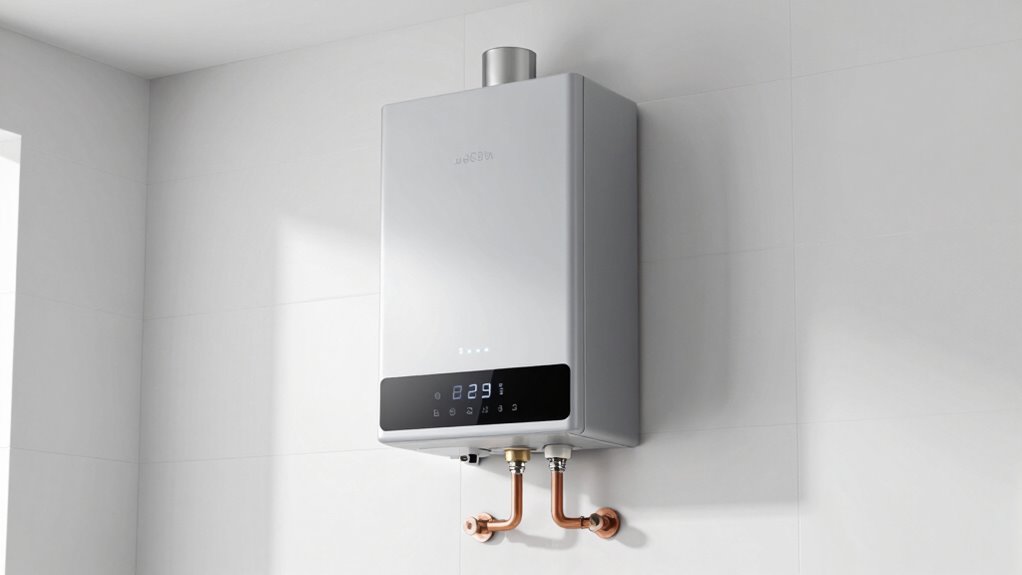
Installing a tankless water heater often requires a significant electrical upgrade because these units demand high power, sometimes up to 30 kilowatts. You might need to upgrade your electrical panel or wiring to handle the increased load, ensuring safety and code compliance. Proper evaluation of your current system is essential before installation. If you want to learn how to safely upgrade your electrical system and what costs to expect, keep exploring the details below.
Key Takeaways
- Tankless water heaters often require higher electrical capacity, possibly necessitating panel upgrades for safe operation.
- Proper load calculation ensures your existing electrical system can support the heater’s demand without overload.
- Modern units may need dedicated circuits with appropriate breaker sizes, aligning with local electrical codes.
- Upgrading your electrical system enhances safety, prevents fire hazards, and ensures long-term reliability of the heater.
- Consulting a licensed electrician is essential to assess your system, plan upgrades, and ensure code compliance.
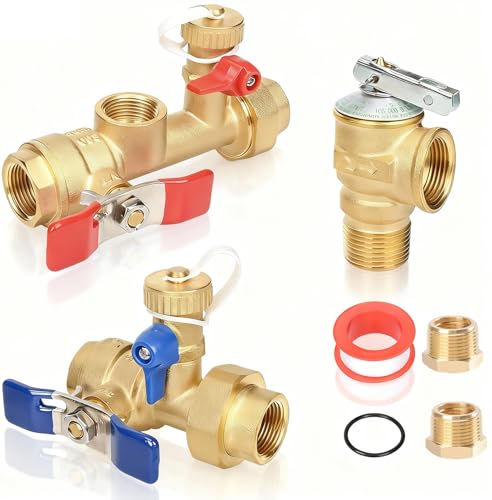
Upgrade 3/4 Inch IPS Isolator Tankless Water Heater Service Valve Kit with 2Pcs 3/4" NPT to 1/2" FNPT Brass Fitting, Tankless Water Heater Flushing Valve Kit with Pressure Relief Valve, Clean Brass
- Premium Lead-Free Brass Construction: Durable, CSA certified, leak-proof brass
- All-in-One Service Valve Kit: Includes hot/cold valves, relief, drain, safety caps
- High-Flow Full-Port Ball Valves: Maximizes water flow and system efficiency
As an affiliate, we earn on qualifying purchases.
As an affiliate, we earn on qualifying purchases.
Is a Tankless Water Heater Right for Your Home?
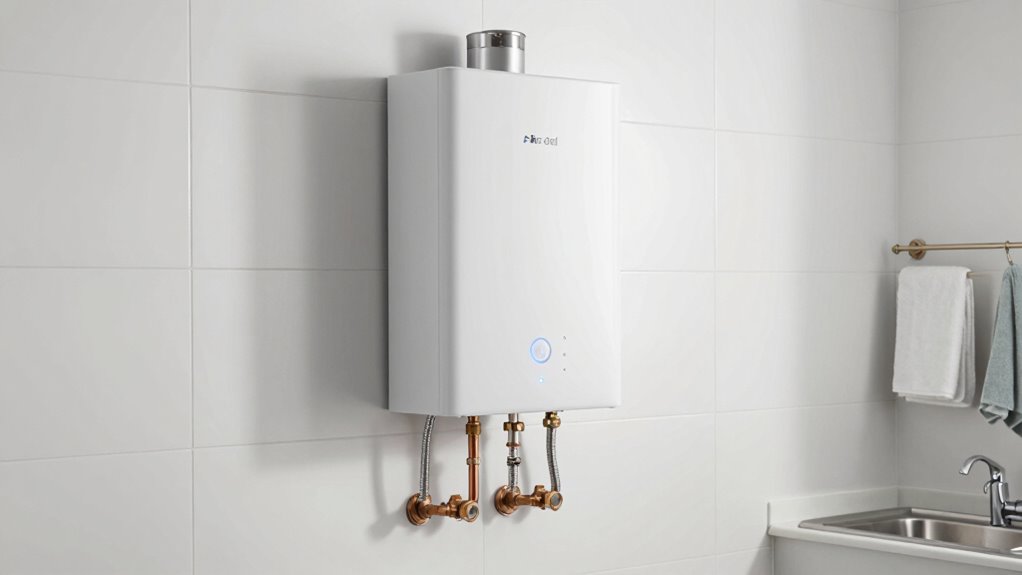
Deciding whether a tankless water heater is right for your home depends on your household’s hot water needs and energy goals. If you prioritize water conservation, a tankless system can markedly reduce standby energy loss because it heats water on demand instead of storing it continuously. This performance upgrade makes it more energy-efficient, especially if your household uses hot water sporadically. Additionally, tankless units can have a longer lifespan compared to traditional tank systems, providing greater long-term value. Some models also incorporate smart technology to optimize energy usage and maintenance alerts, further enhancing efficiency. Considering environmental impact can help you determine the most sustainable heating solution for your home. Properly sizing and installing a tankless system can also prevent potential issues such as cold water sandwich, ensuring consistent hot water delivery. However, if you have high simultaneous hot water demands, a tankless unit might require multiple models or larger capacity, which can increase upfront costs. Consider your water usage patterns and energy efficiency goals to determine if a tankless water heater aligns with your household needs. Overall, it offers an eco-friendly, efficient alternative to traditional tank systems, especially for those committed to reducing energy consumption.
How Much Electricity Does a Tankless Water Heater Need?
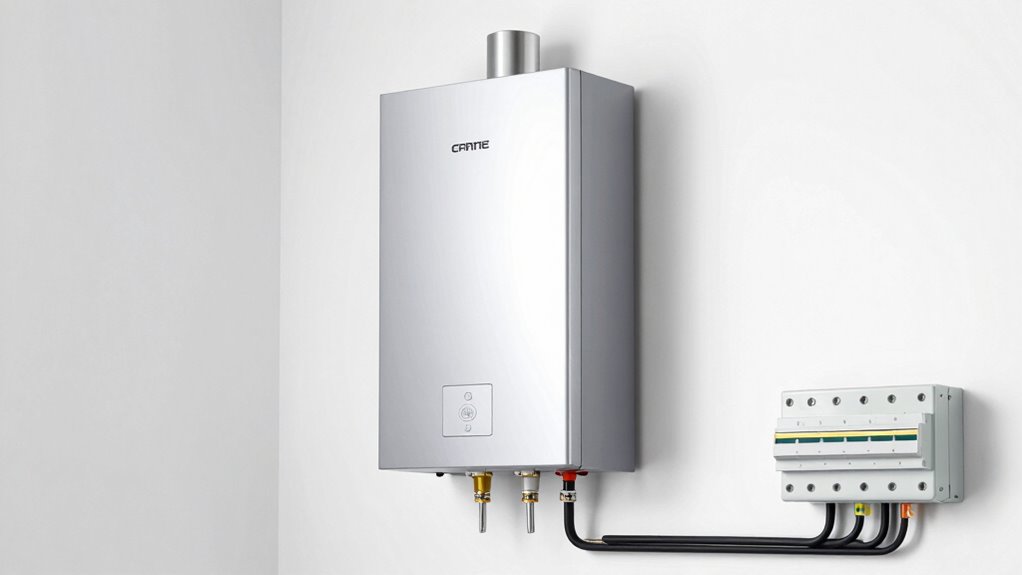
A typical tankless water heater consumes between 15 and 30 kilowatts of electricity during operation, depending on its size and hot water demand. Your unit’s energy consumption directly influences its power requirements, which can vary based on flow rate and temperature increase needs. Larger or high-demand models will have higher energy consumption and may require more robust electrical connections. Properly evaluating the power requirements helps you determine if your existing electrical system can support the heater. If your hot water needs are extensive, you might need a dedicated circuit with sufficient amperage to handle the load. Additionally, understanding the regional electrical standards ensures compliance and safe installation practices. Properly evaluating the energy consumption ensures safe, efficient operation without overloading your electrical system, avoiding potential hazards or costly upgrades. To ensure safe operation, it’s also important to consider the electrical panel capacity and whether your current setup can accommodate the additional load. Conducting a comprehensive electrical assessment can help identify potential issues before installation. Moreover, knowing the electrical wiring specifications is crucial for a safe and compliant setup.
Does Your Electrical System Need an Upgrade?
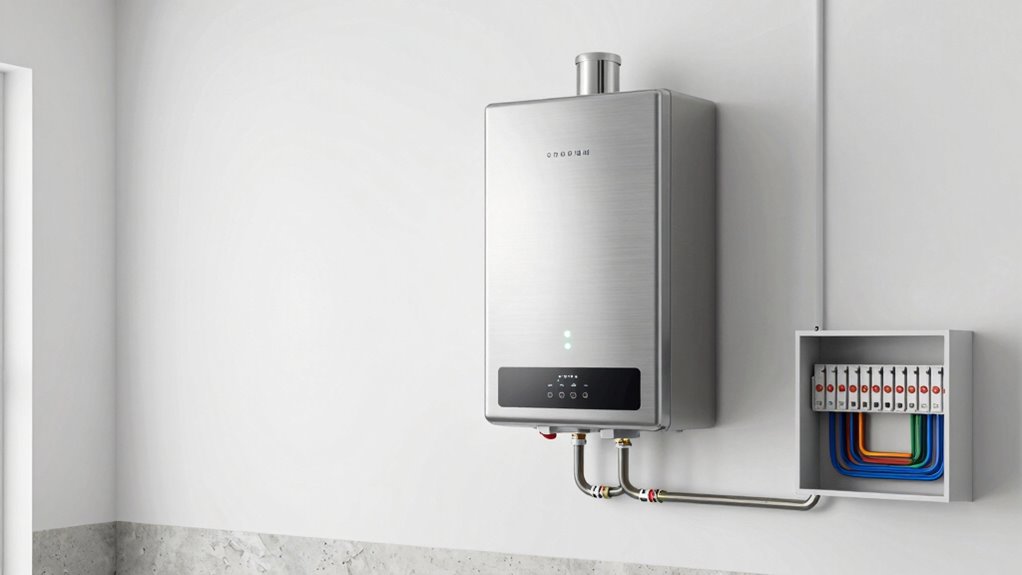
If your existing electrical system isn’t equipped to handle the power demands of a tankless water heater, you’ll need to contemplate an upgrade. Insufficient capacity can compromise electrical safety, increasing the risk of overloads or fires. Modern tankless units often require a dedicated circuit and higher amperage, which your current system may lack. Without proper upgrading, you’re also more vulnerable to power surges that can damage your appliances or cause outages. Ensuring your electrical system can support the new load not only protects your home but also enhances safety. Additionally, system capacity is crucial to ensure your system meets the specific requirements of new appliances. It’s wise to consult a licensed electrician to perform a system assessment before proceeding. Proper electrical wiring is essential to accommodate these upgrades safely and effectively. Being aware of electrical load requirements can help prevent unexpected issues and ensure a smooth installation process. Don’t ignore the importance of a professional assessment—upgrading might be necessary to prevent hazards and ensure your tankless water heater functions efficiently and safely.
What Electrical Codes Do You Need to Follow?
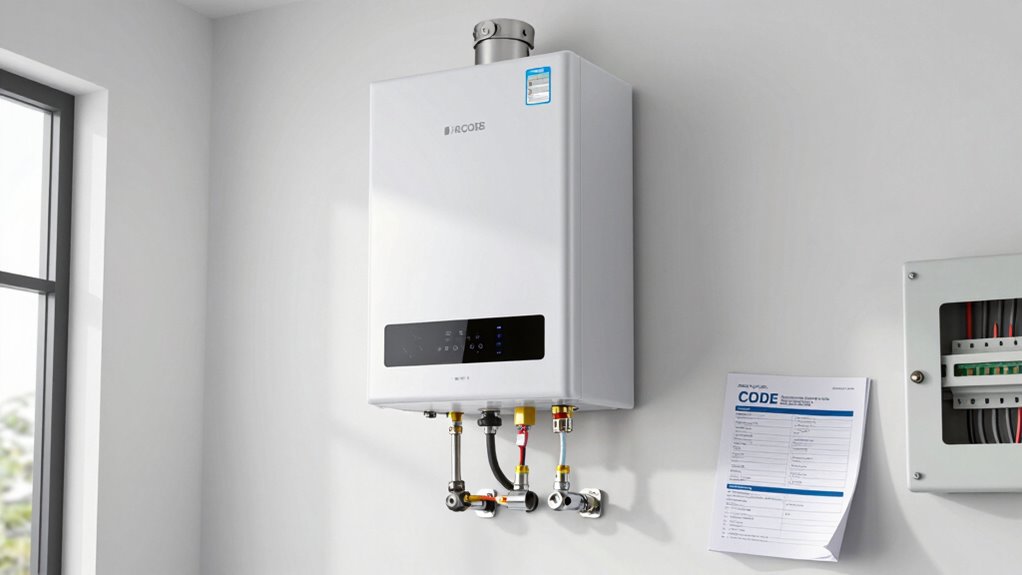
When installing a tankless water heater, following the right electrical codes is vital to guarantee safety and compliance. You must adhere to local electrical codes, which specify wiring standards for proper installation. These codes dictate the correct wire gauge, breaker size, and grounding requirements to prevent electrical hazards. Make sure your wiring meets the National Electrical Code (NEC) standards, which provide detailed guidelines for safely powering high-demand appliances like tankless water heaters. Proper adherence ensures your system is safe, efficient, and up to code, reducing risks of fires or electrical shocks. Additionally, understanding electrical code compliance helps ensure your installation meets all safety requirements. Always check with your local authority or a licensed electrician to confirm you’re following the correct electrical codes and wiring standards specific to your area. Familiarity with electrical safety standards can further safeguard your installation process. Ensuring your installation meets these standards can also help avoid potential code violations during inspections or future upgrades. Regularly consulting local electrical regulations can provide additional guidance tailored to your region.
How to Check If Your Electrical Panel Can Support a Tankless Water Heater
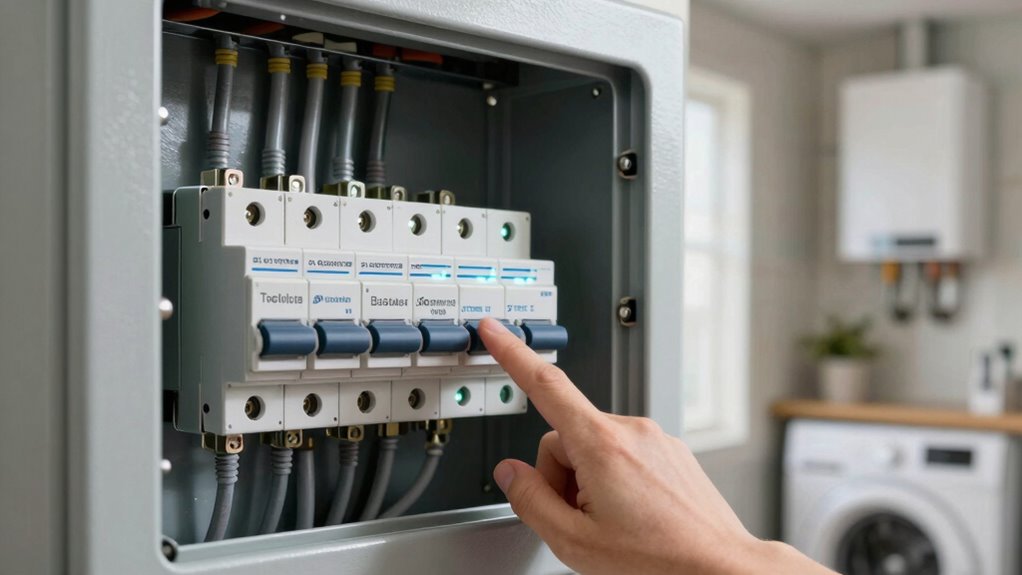
Before installing a tankless water heater, you need to verify that your electrical panel can accommodate its power demands. Start by inspecting your electrical wiring to ensure it’s capable of supporting the additional load. Check the main circuit breaker’s amperage rating—most tankless units require at least a 200-amp panel. Look for dedicated circuit breakers for appliances with high power needs; these should be able to handle the heater’s startup surge. Turn off the power and examine the panel labels and breaker sizes. If your existing wiring or circuit breakers aren’t rated for the added load, you may need to upgrade your electrical panel to safely support a tankless water heater. Additionally, considering the smart lock and office gear for secure spaces can help ensure your home’s security during electrical upgrades. It’s also advisable to consult a licensed electrician to accurately assess your electrical capacity and ensure compliance with safety standards. Ensuring your electrical system has adequate power capacity can prevent potential hazards and optimize the efficiency of your new heater. Understanding the electrical load calculation can further assist in determining whether your current system can handle the upgrade, especially when integrating energy-efficient appliances into your home system.
What Electrical Upgrades Might Be Necessary?
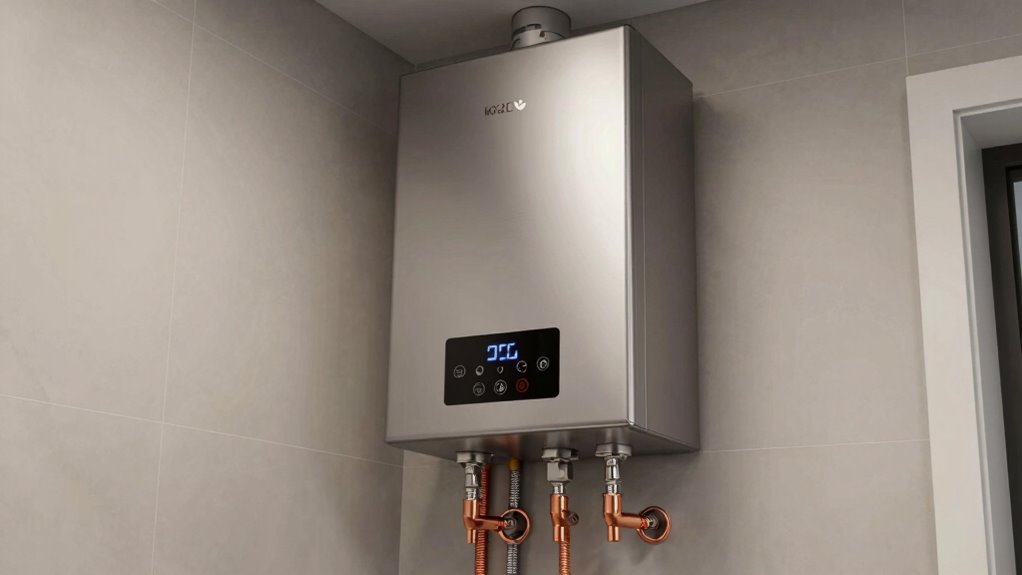
You might need to upgrade your electrical panel if it doesn’t have enough capacity for a tankless water heater. The wiring and circuit requirements also need to be verified to guarantee safety and proper operation. Addressing these electrical needs now can help avoid future complications.
Electrical Panel Capacity
Installing a tankless water heater often requires evaluating your electrical panel’s capacity to handle the increased load. Your electrical panel must have enough circuit capacity to support the new unit without overloading. If your current panel is outdated or already near its maximum, you might need an upgrade to guarantee safety and efficiency. Check the amperage rating of your panel and the circuits feeding your existing appliances. A higher-capacity panel provides the necessary headroom for the tankless heater’s power demands. Failing to assess this could lead to tripped breakers or electrical hazards. In many cases, upgrading your electrical panel is a straightforward solution that ensures your home’s electrical system can safely support the additional load from your new tankless water heater.
Wiring and Circuit Needs
Wiring and circuit needs are critical considerations when adding a tankless water heater, as the unit typically draws a substantial amount of power. Making certain circuit compatibility and wiring safety prevents electrical hazards and performance issues. You might need to:
- Upgrade your existing circuit breaker to handle the increased load.
- Install dedicated wiring to support the high amperage demand.
- Check that wiring gauge meets safety standards to avoid overheating.
These steps help ensure your electrical system can safely support the heater’s power requirements. Failing to address wiring safety can lead to shorts or fires. Consulting a qualified electrician guarantees that your wiring meets local codes and that your circuit is properly prepared for the new load. Proper wiring and circuit upgrades are essential for safe, efficient operation.
How to Calculate the Electrical Load for Your New Water Heater
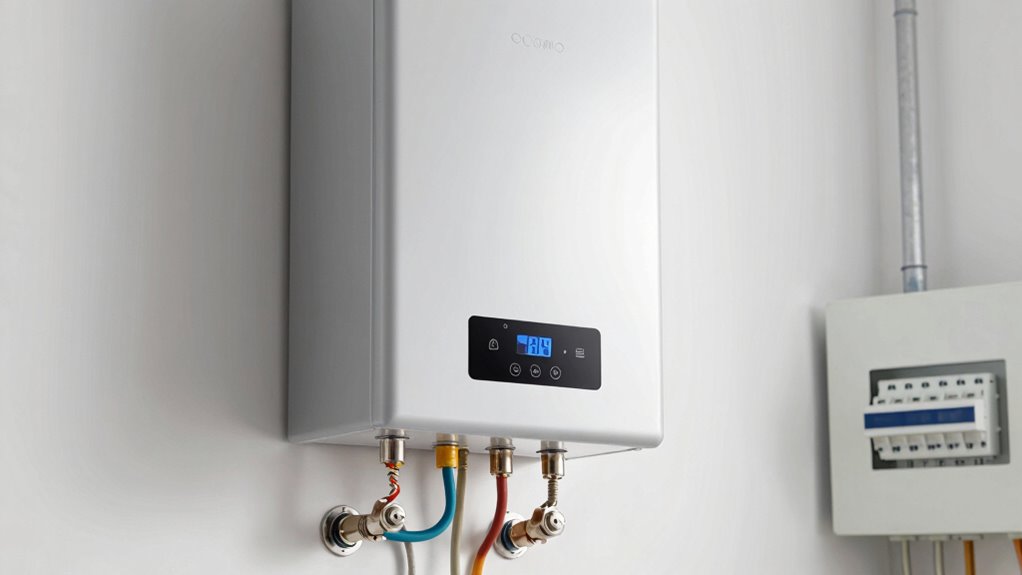
Calculating the electrical load for your new tankless water heater is a crucial step to guarantee your home’s electrical system can handle the demand. Start by checking the unit’s wattage and voltage specifications, which directly impact the load calculation. Add these figures to your existing electrical demands to ensure your system remains energy efficient and safe. If your water heater requires a higher amperage, it may necessitate an upgraded circuit or breaker during the installation process. Properly calculating the load helps prevent overloads and ensures smooth operation. Keep in mind, a more energy-efficient model might reduce overall power requirements, making the installation process easier and more cost-effective. Taking these steps now ensures your new water heater functions reliably without risking electrical issues.
How to Find and Hire an Electrician for Your Upgrade

Finding a qualified electrician is a crucial step to guarantee your tankless water heater upgrade is done safely and correctly. To do this, start by:
- Checking that they have proper local licensing to ensure they meet your area’s electrical safety standards.
- Asking for references or reviews to verify their experience with similar electrical upgrades.
- Confirming they follow current electrical safety codes and use quality materials for long-lasting results.
Always prioritize electricians who are knowledgeable about local licensing requirements and prioritize electrical safety. A licensed professional will handle your upgrade responsibly, reducing risks of code violations or hazards. Don’t settle for unqualified help—your home’s safety depends on working with someone who understands the nuances of electrical work for tankless water heaters.
What Are the Costs of Electrical Upgrades vs. Installing a Tankless Water Heater
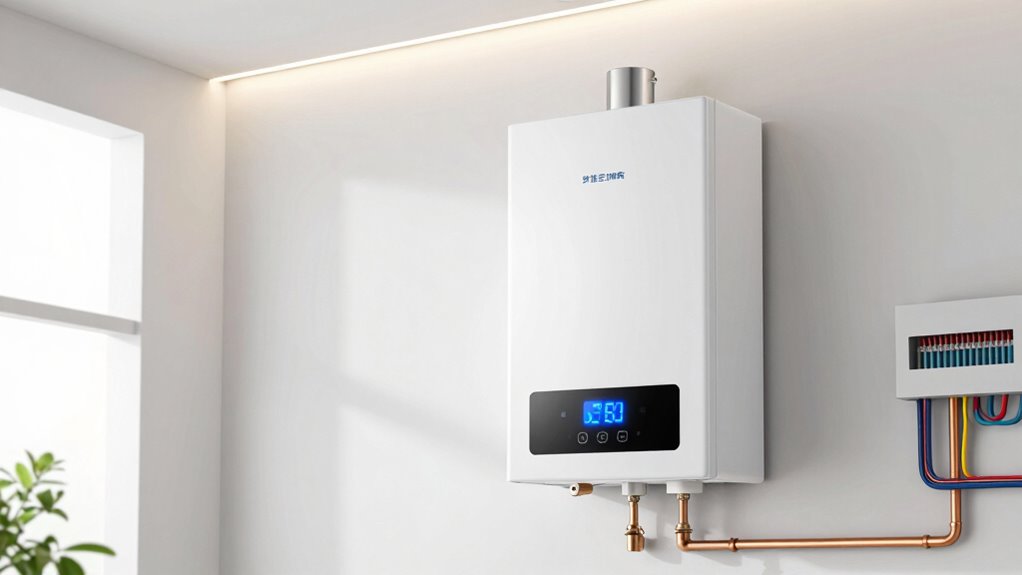
Installing a tankless water heater often involves more than just the unit itself; upgrading your electrical system may be necessary to handle its power demands. When considering the cost comparison, the electrical requirements typically represent a significant upfront expense. Upgrades can range from a few hundred dollars for basic panel enhancements to over a thousand for a complete electrical system overhaul. These costs vary depending on your existing wiring and the size of the tankless unit. While installing the heater itself might be straightforward, the electrical upgrade ensures your home can safely support it. Keep in mind that neglecting these electrical requirements can lead to inefficiencies or safety hazards, making the upgrade an essential part of your overall investment.
Tips to Prepare Your Home for a Tankless Water Heater Installation
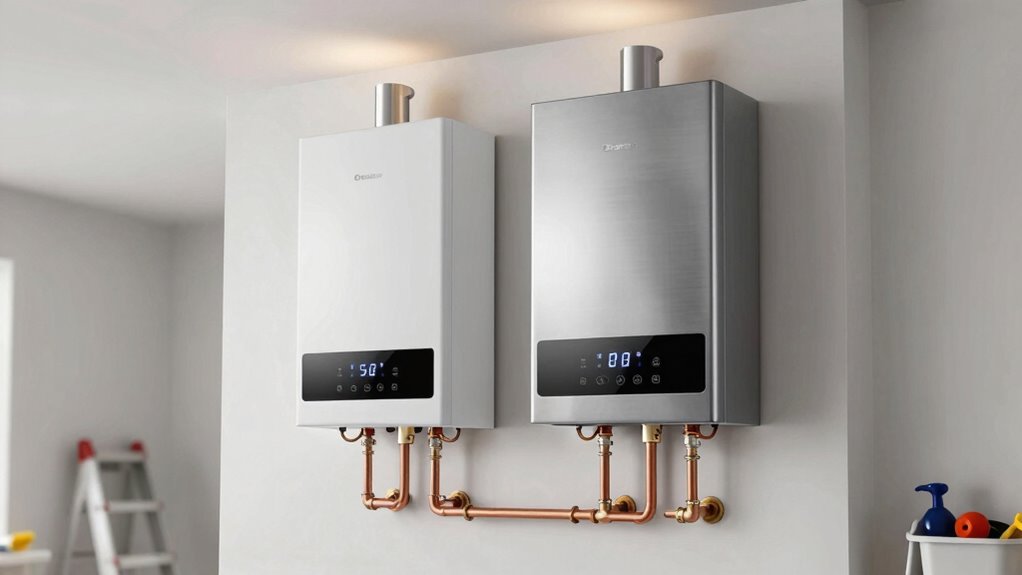
Preparing your home for a tankless water heater guarantees a smooth and safe installation process. To do this, consider these key steps:
Ensure a safe, hassle-free tankless water heater install by preparing your home in advance.
- Check your plumbing considerations to ensure your existing pipes can handle the increased demand and proper flow.
- Upgrade your electrical system if needed, especially if your current setup can’t support the new unit’s power requirements.
- Plan for water heater maintenance by providing easy access for inspections and future servicing.
Frequently Asked Questions
What Are Common Electrical Issues Encountered During Installation?
When installing a tankless water heater, you might face electrical issues like wiring compatibility problems or insufficient circuit breaker capacity. You need to verify your existing wiring can handle the new unit’s power demands and that your circuit breaker can support its load. If these elements aren’t properly checked and upgraded if necessary, it could lead to electrical tripping or damage, delaying installation and affecting safety.
How Long Does an Electrical Upgrade Typically Take?
You might find that an electrical upgrade takes anywhere from a few hours to a full day, depending on your home’s existing wiring and circuit capacity. Coincidentally, upgrading electrical wiring and ensuring sufficient circuit capacity often happen simultaneously, streamlining the process. If your electrical system is older or has limited capacity, it could extend the upgrade time. Ultimately, a professional assessment helps determine the exact timeframe for your specific setup.
Are There Energy Efficiency Incentives for Electrical Upgrades?
Yes, there are energy efficiency incentives for electrical upgrades. You might qualify for financial incentives or rebate programs offered by local utilities or government agencies. These programs aim to encourage energy-saving improvements like upgrading to tankless water heaters or modern electrical systems. By taking advantage of these rebates, you can reduce your upfront costs and enjoy long-term savings on energy bills. Check with your utility provider for available incentives in your area.
Can Existing Circuits Handle Simultaneous Water Heater and Appliance Use?
You’ll likely find that your existing circuits can’t handle simultaneous water heater and appliance use, especially if your home’s electrical system is outdated. About 70% of homes need electrical upgrades to meet new power requirements. Check your circuit capacity first; if it’s below the needed amperage, you’ll need an upgrade to safely support both your tankless water heater and appliances running at the same time.
What Safety Precautions Should I Consider During Electrical Upgrades?
You should prioritize grounding requirements and guarantee your electrical system is properly grounded to prevent shocks. Update your circuit breakers to handle the increased load safely, especially if installing a tankless water heater. Always turn off power before working on any electrical components, and consider consulting a licensed electrician to verify all safety measures are in place. Proper grounding and updated circuit breakers minimize risks and ensure your upgrade is both safe and compliant.
Conclusion
Upgrading your electrical system for a tankless water heater can boost efficiency and save space, but it’s essential to verify your panel can handle the load. Did you know that installing a tankless unit can reduce water heating costs by up to 30%? By understanding your electrical needs and working with a qualified electrician, you’ll make a smart investment that pays off in comfort and savings. Don’t overlook the electrical upgrade—it’s the hidden key to a seamless tankless experience.