

In today’s interconnected world, geopolitical tensions and trade sanctions can quickly alter market dynamics, impacting your business operations and supply chains. You need to stay vigilant about diplomatic shifts that can introduce tariffs, restrictions, or even disruptions. By monitoring political developments and diversifying sources, you can better navigate this uncertainty. Understanding how sanctions and diplomatic relations interact helps you adjust strategies promptly. Keep exploring to discover more ways to manage these complex global influences effectively.
Key Takeaways
- Monitor geopolitical developments to anticipate policy shifts impacting trade flows and supply chain stability.
- Diversify markets and suppliers to reduce vulnerability to sanctions and diplomatic disruptions.
- Maintain flexibility in logistics, sourcing, and market strategies to adapt quickly to changing conditions.
- Understand the strategic use of sanctions and diplomatic relations to inform risk management decisions.
- Strengthen diplomatic ties and build resilient networks to mitigate uncertainties caused by geopolitical tensions.
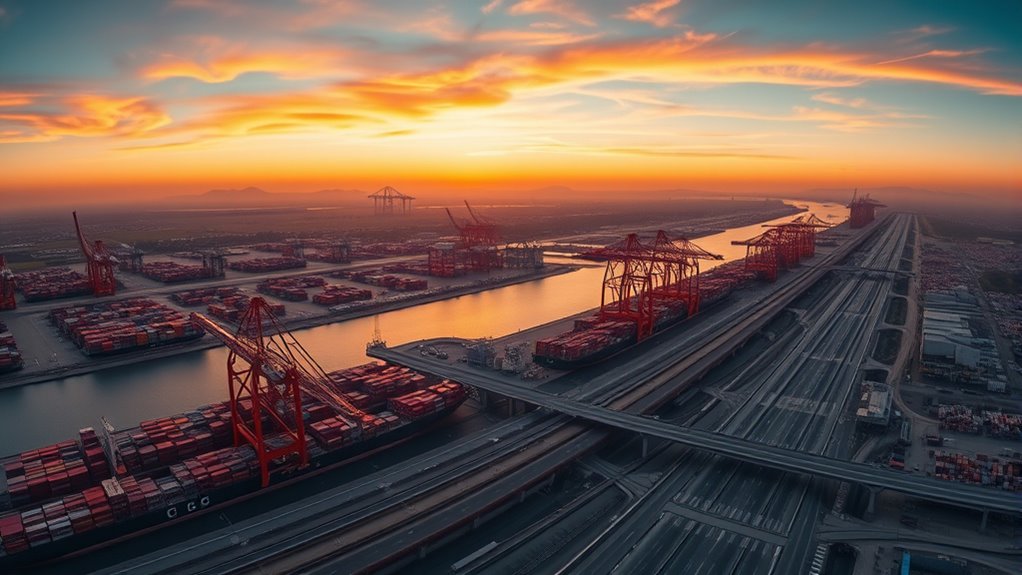
Have you ever wondered how global politics shape the flow of international trade? It’s a complex web where decisions made in one country can ripple across borders, influencing markets and supply chains worldwide. One powerful tool in this arena is trade sanctions. When a nation faces sanctions—whether for political disagreements, human rights violations, or security concerns—it restricts trade with targeted countries, effectively limiting their access to certain goods, services, or financial channels. These sanctions serve as a diplomatic weapon, signaling disapproval without military conflict, but they also create ripple effects that can disrupt global markets. Businesses must quickly adapt to these restrictions, reassessing suppliers, rerouting shipments, or finding alternative markets. Sanctions can lead to shortages, price fluctuations, and shifts in competitive advantage, forcing companies and governments alike to steer through these turbulent waters carefully.
Trade sanctions reshape markets, forcing businesses to adapt amid shortages, price shifts, and disrupted supply chains.
Diplomatic relations play an equally pivotal role in shaping trade flows. When countries maintain strong, positive diplomatic ties, they often enjoy fewer trade barriers, smoother customs procedures, and more predictable policies. Conversely, strained relations can lead to tariffs, quotas, or even outright bans, making international trade more uncertain. These diplomatic ebbs and flows influence investor confidence, supply chain stability, and market access. For instance, a diplomatic rift might prompt a country to impose additional tariffs or restrict imports from a rival nation, directly impacting global supply chains. You, as a business operator or policymaker, need to stay alert to these shifts, understanding that diplomatic gestures or disagreements can rapidly alter trade dynamics. Additionally, understanding the role of Gold IRAs can be vital for protecting assets amid geopolitical uncertainty.
The interplay of trade sanctions and diplomatic relations often creates a landscape of unpredictability. Countries may impose sanctions to pressure governments or to express disapproval, but these actions can backfire, prompting retaliatory measures that further complicate trade. As a participant in international markets, you must remain vigilant, monitoring political developments that could influence trade policies. This might mean diversifying your supply sources or adjusting your market strategies to mitigate risks associated with geopolitical tensions. Governments and companies alike must develop flexibility and resilience, understanding that geopolitics can swiftly change the rules of the game.
Ultimately, steering through this uncertain terrain requires a keen awareness of how political decisions—like sanctions and diplomatic shifts—directly impact global trade. By staying informed and adaptable, you can better manage risks and seize opportunities even amid geopolitical turbulence. Recognizing the importance of diplomatic relations and the strategic use of sanctions allows you to anticipate changes and position your interests effectively in an interconnected world that’s constantly shifting.
Frequently Asked Questions
How Do Emerging Markets Influence Global Trade Dynamics?
Emerging markets influence global trade dynamics by becoming trade powerhouses, driving demand and supply shifts worldwide. You’ll see these markets expanding exports, attracting investments, and challenging traditional economic leaders. Their rapid growth can disrupt supply chains, create new opportunities, and reshape trade agreements. As emerging markets grow more influential, your business strategies must adapt to leverage their evolving roles, ensuring competitiveness in an increasingly interconnected global economy.
What Role Do Technological Innovations Play in Geopolitics?
Technological innovations shape geopolitics by enabling digital diplomacy, allowing nations to influence global relations through digital channels. You see, innovation sovereignty becomes essential as countries endeavor to control and protect their technological advancements. These innovations also give you strategic advantages, affecting power dynamics and fostering new alliances. By leveraging digital diplomacy and safeguarding innovation sovereignty, nations can navigate geopolitical tensions more effectively, shaping the future landscape of international relations.
How Does Climate Change Impact International Trade Agreements?
Climate change markedly impacts international trade agreements by prompting nations to strengthen climate policies, which can lead to new trade restrictions or tariffs on high-emission goods. During trade negotiations, you might find climate commitments becoming central, influencing how countries cooperate or compete. You need to stay aware of evolving climate policies, as they shape the rules and opportunities within global trade, making sustainability a key factor in future agreements.
What Are the Effects of Cyber Warfare on Global Commerce?
Cyber warfare disrupts global commerce by causing cyber attacks and data breaches, which can halt supply chains and damage reputation. You might face shutdowns of critical systems, leading to financial losses and increased security costs. These threats undermine trust among international partners and create uncertainty in trade agreements. Staying vigilant and investing in cybersecurity measures helps protect your business from the damaging effects of cyber warfare on global trade.
How Do Cultural Differences Shape International Trade Policies?
You notice that cultural differences gently influence international trade policies, shaping how nations approach trade diplomacy. By embracing cultural diplomacy, you can foster mutual understanding and smoother trade negotiations. Respecting traditions and communication styles helps avoid misunderstandings, ultimately strengthening economic ties. Recognizing and valuing these cultural nuances allows you to navigate complex trade environments more effectively, turning diversity into an asset that promotes collaboration and long-term success in global commerce.
Conclusion
As you navigate the complex world of geopolitics and global trade, remember that uncertainty is always part of the journey. Will you adapt and stay resilient amid shifting alliances and policies? Embracing flexibility and understanding the broader landscape will help you thrive in this unpredictable environment. Ultimately, it’s your proactive approach that will determine whether you turn challenges into opportunities or fall behind in the global marketplace. Are you ready to face the future head-on?