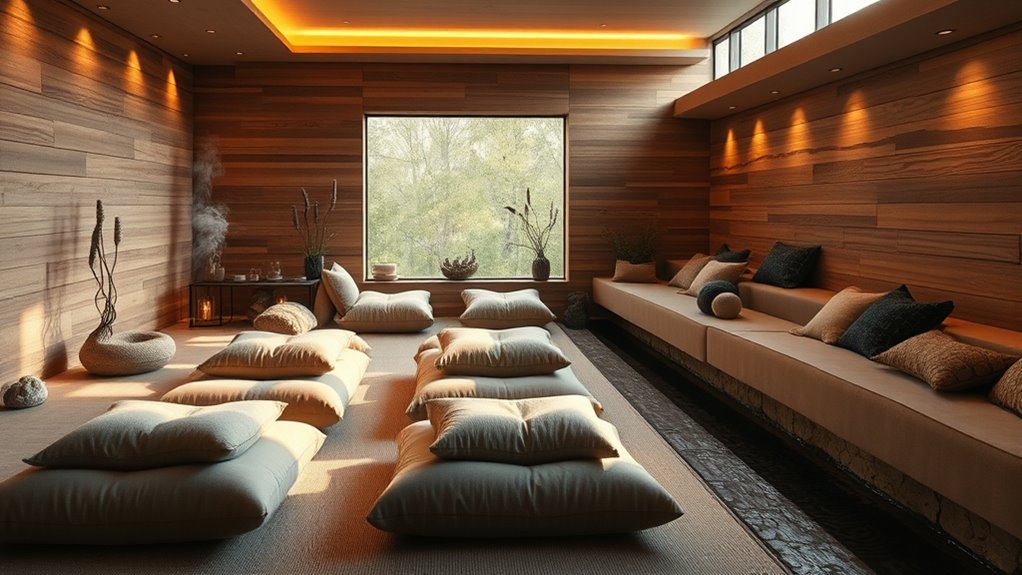

Multisensory wellness spaces use sound, scent, and environment to help you relax deeply and achieve mental clarity. By engaging multiple senses—like calming music combined with soothing aromas—you can disconnect from stress and foster a sense of calm. These environments are tailored to your needs, promoting emotional balance and reducing stress hormones over time. Keep exploring to discover how customizing these spaces can enhance your relaxation experience even further.
Key Takeaways
- Multisensory wellness spaces combine sound, scent, and other stimuli to deepen relaxation and mental clarity.
- Sound therapy uses calming sounds to promote emotional balance and reduce anxiety effectively.
- Aromatherapy enhances relaxation by activating the limbic system through essential oils like lavender and chamomile.
- Combining sound and scent creates a harmonious environment that fosters mindfulness and blocks external distractions.
- Customizable multisensory environments support long-term stress reduction, better sleep, and overall emotional well-being.
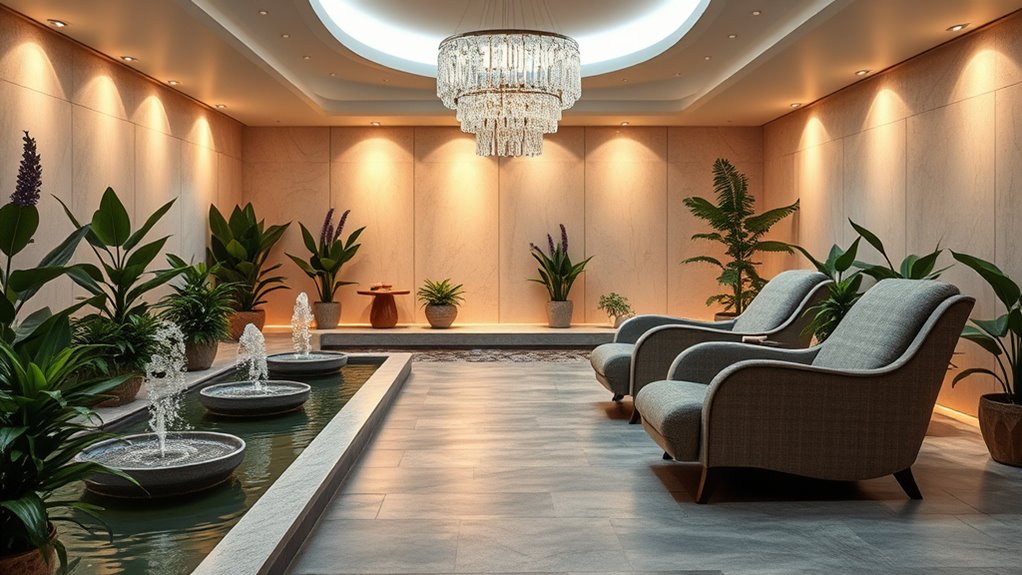
In today’s fast-paced world, multisensory wellness spaces offer a refuge where you can engage your senses to promote relaxation and mental clarity. These environments are designed to stimulate multiple senses simultaneously, helping you disconnect from daily stressors and reconnect with yourself. One of the key ways to achieve this is through sound therapy, which uses carefully curated sounds—like gentle chimes, flowing water, or calming music—to soothe your mind. As you immerse yourself in these sounds, your brain shifts into a relaxed state, reducing anxiety and promoting emotional balance. Sound therapy doesn’t just mask stress; it actively rewires your brain to recognize tranquility as a natural response, making it easier to access calmness in everyday life. Incorporating sustainable materials into the design of multisensory spaces can further enhance their calming effects while supporting environmental responsibility. Aromatherapy techniques are equally essential in multisensory spaces. When you breathe in essential oils like lavender, eucalyptus, or chamomile, you activate your olfactory system, which has a direct link to your limbic system—the part of your brain responsible for emotions and memory. This connection allows aromatherapy to quickly influence your mood, easing tension and encouraging mindfulness. In a multisensory wellness space, aromatherapy isn’t just about scent; it’s about creating an atmosphere that invites deep breathing and presence. Diffusers, scented candles, or even topical applications can enhance your experience, making relaxation feel more tangible and immediate. Combining aromatherapy with sound therapy amplifies the effects, as the scents bolster the calming influence of sound, creating a harmonious environment that supports mental clarity and emotional resilience. As you settle into these spaces, you might find that the interplay of soothing sounds and inviting aromas helps you become more aware of your body and breath. This heightened awareness fosters mindfulness, which is indispensable for stress reduction. The sensory stimuli work together to block out external distractions, grounding you in the present moment. Over time, regular exposure to these multisensory techniques can improve your overall well-being by reducing cortisol levels, enhancing sleep quality, and boosting your mood. The beauty of multisensory wellness spaces lies in their ability to tailor experiences to your needs, whether you seek a quick escape from anxiety or a deeper journey into relaxation. By engaging your senses through sound therapy and aromatherapy, you create a powerful environment that nurtures your mental and emotional health, making relaxation accessible and sustainable.

InnoGear Aromatherapy Diffuser & 10 Essential Oils Set, 400ml Diffuser Ultrasonic Diffusers for Home Cool Mist Humidifier with 4 Timers 7 Colors Light Waterless Auto Off, Dark Wood Grain
Reminder: To ensure proper mist function, please do not refill under tap (use measuring cup only to prevent…
As an affiliate, we earn on qualifying purchases.
As an affiliate, we earn on qualifying purchases.
Frequently Asked Questions
How Do Multisensory Spaces Differ From Traditional Relaxation Areas?
Multisensory spaces differ from traditional relaxation areas by actively engaging your senses through ambient lighting and aromatherapy techniques. Instead of just sitting quietly, you experience calming visuals, soothing scents, and gentle sounds that enhance relaxation. These spaces create a more immersive environment, helping you unwind faster and deeper. You’re encouraged to connect with multiple senses simultaneously, making your relaxation more effective and personalized compared to standard, less sensory-rich areas.
What Sensory Elements Are Most Effective for Stress Reduction?
You find that aromatherapy integration and soundscape optimization are the most effective sensory elements for stress reduction. Aromatherapy’s calming scents like lavender or chamomile help soothe your mind, while optimized soundscapes—gentle nature sounds or soft music—distract your thoughts and promote relaxation. Combining these elements creates a calming environment that reduces stress quickly, making your wellness space more effective in helping you unwind and recharge.
Can Multisensory Spaces Be Tailored for Individual Needs?
Imagine a space that molds itself to your needs—yes, multisensory spaces can be tailored for you. By incorporating personalized sensory elements, you create adaptable environments that respond to your preferences and stress signals. This customization guarantees you’re immersed in a calming experience designed specifically for your relaxation. With flexible features, you gain control, transforming any space into your sanctuary where your well-being takes center stage.
Are There Any Contraindications for Using Multisensory Wellness Environments?
Yes, there are health considerations to keep in mind with multisensory wellness environments. If you have sensory processing disorders, epilepsy, or certain mental health conditions, these spaces could cause sensory overload or trigger adverse reactions. Always assess your individual needs, consult a healthcare professional if unsure, and start with short sessions. Being mindful of your limits guarantees you can enjoy the benefits safely without risking discomfort or health issues.
How Often Should One Use Multisensory Spaces for Optimal Benefits?
For ideal benefits, you should use multisensory spaces according to your personalized schedules and frequency guidelines. Generally, visiting 2-3 times a week works well, but listen to your body and adjust as needed. Regular use helps maintain relaxation and stress relief. Keep track of how you feel after each session, and tailor your visits to fit your lifestyle and relaxation goals for the best results.

Soundary Ceramic Craft Bluetooth Speaker for Meditation & Yoga, Sound Therapy Machine for Stress Relief, Sleep Aid and Focus, Deep Bass, Louder Volume, Light Effect for Boxing Breathing (Purple)
[Stunning Sound Across Full Frequency Range] Equipped with a premium driver and a passive radiator, employing our patent…
As an affiliate, we earn on qualifying purchases.
As an affiliate, we earn on qualifying purchases.
Conclusion
By immersing yourself in multisensory wellness spaces, you access a world of unparalleled relaxation—so powerful, it can melt away stress faster than you ever imagined. These spaces don’t just soothe; they transform your entire experience of well-being, making serenity feel like a natural state. So, step into these extraordinary environments and discover how they can elevate your mental and physical health to levels you never thought possible. Your best relaxation awaits—are you ready to embrace it?

6 Pack Low Temperature Massage Oil Candle Set (2.35 oz Each) – Soy Wax Candles That Melt into Skin-Nourishing Body Oil, 6 Assorted Scents for Home Spa, Massage Therapy, Relaxation, Self-Care & Festive
Dual-Action 6-Piece Massage Candle Set: This set includes 6 2.35 oz massage candles in 6 soothing scents—Coconut, White…
As an affiliate, we earn on qualifying purchases.
As an affiliate, we earn on qualifying purchases.

ASAKUKI Essential Oils, Essential Oil for Diffusers for Home, Well-Being Kit Gifts for Mom- Calm Mind, Sweet Dreams, Happy, Relax, Air Freshening, Immunity for Aromatherapy, Humidifiers, 6x10ml
Essential Oil Blends: Introduce the long-lasting, pleasant, and relaxing aroma to your home with our Well-being aromatherapy diffuser…
As an affiliate, we earn on qualifying purchases.
As an affiliate, we earn on qualifying purchases.