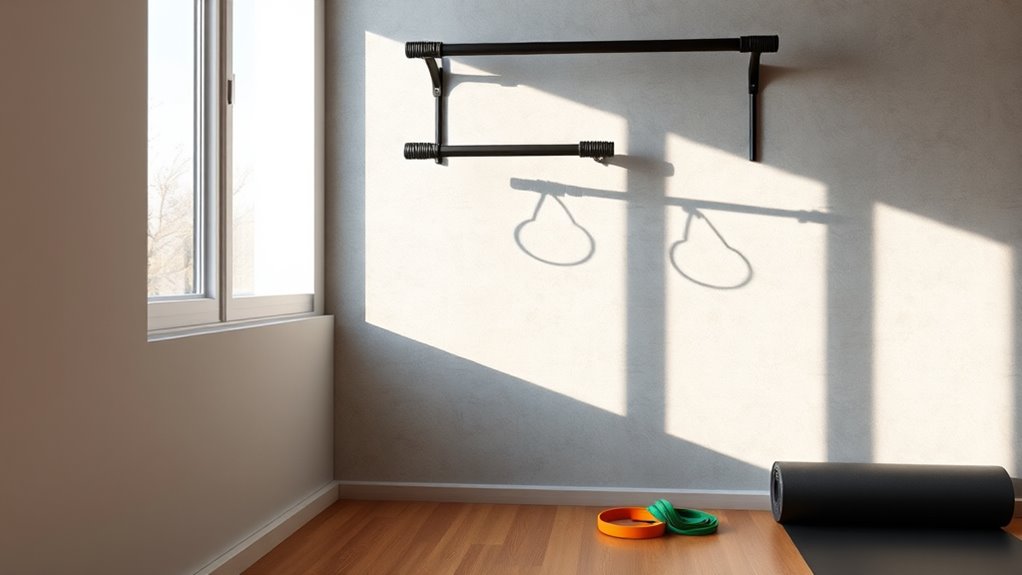

The best pull-up bar depends on your space and how permanently you want to set it up. I’d put the Sportsroyals Free-Standing Power Tower first for a versatile home workout station, while the Adjustable No-Screw Doorway Bar suits renters who want a drill-free option and the Fitarc Joist Mount fits buyers seeking a fixed installation. The main tradeoffs are stability versus portability, doorway fit versus workout versatility, and simple setup versus a more permanent mount. Check your frame or mounting surface before choosing: a bar’s stated capacity does not confirm it suits every home. Read on for the full breakdown of all 14 pull-up bars and what separates them.

Get the latest gadgets delivered free with Prime
- Fast, free delivery on millions of items
- Prime Video, Amazon Music and more included
- Member-only deals all year
Complete the kit



Key Takeaways
- Freestanding towers offer more exercise options than doorway bars, but they take up floor space and need room around the frame.
- No-drill doorway bars prioritize portability; their suitability depends on doorway dimensions, trim, and following the manufacturer’s installation instructions.
- Wall- and joist-mounted bars trade flexibility for a fixed setup, so buyers need to check the structure and hardware requirements before purchase.
- Capacity figures are not a substitute for fit checks: a bar’s published limit does not confirm compatibility with a particular doorway, wall, or ceiling joist.
- The strongest distinction among these picks is the setup style: the list spans basic doorway bars, multi-grip options, resistance-band bundles, foldable towers, and fixed mounts.
| Adjustable No-Screw Doorway Pull-Up Bar, 440 lb Capacity |  | Best Tool-Free Doorway Pick | Brand: Purrgrit | Door frame fit: 29.1–37.4 in (74–95 cm), solid and flat | Maximum weight recommendation: 200 kg (440 lbs) | VIEW ON AMAZON | See Our Full Breakdown |
| Sportsroyals Free-Standing Pull-Up Bar and Power Tower for Home Gym |  | Best for Exercise Variety | Brand: Sportsroyals | Load capacity: 360 lbs | Height adjustment: 8 levels; 57.09–83.07 in | VIEW ON AMAZON | See Our Full Breakdown |
| Ally Peaks Doorway Pull-Up Bar, 440 lb Capacity |  | Best for Narrower Doorways | Brand: Ally Peaks | Material: 1.7 mm heavy-duty steel | Maximum weight capacity: 440 lb | VIEW ON AMAZON | See Our Full Breakdown |
| RELIFE Freestanding Power Tower Pull-Up and Dip Station |  | Best Adjustable Compact Tower | Brand: RELIFE REBUILD YOUR LIFE | Material: Alloy steel | Maximum weight recommendation: 400 pounds | VIEW ON AMAZON | See Our Full Breakdown |
| SERTT Foldable Power Tower for Pull-Ups, Dips, and Push-Ups |  | Best Foldable Multi-Grip Tower | Brand: SERTT | Model: ST1206 | Maximum supported weight: 440 lbs | VIEW ON AMAZON | See Our Full Breakdown |
| Luckyone Multifunctional Wall-Mounted Pull-Up Bar |  | Best for a Permanent, Multi-Exercise Setup | Brand: Luckyone | Material: Alloy steel | Mount type: Wall mount | VIEW ON AMAZON | See Our Full Breakdown |
| Ally Peaks Doorway Pull-Up Bar with Resistance Bands |  | Best Accessory Bundle | Material: 1.7 mm heavy-duty steel | Maximum weight capacity: 440 lb | Doorway width: 24–32 in | VIEW ON AMAZON | See Our Full Breakdown |
| YYJO Foldable Power Tower Pull-Up and Dip Station |  | Best for Adjustable, Freestanding Training | Brand: YYJO | Material: Carbon steel | Weight capacity: 350 lb | VIEW ON AMAZON | See Our Full Breakdown |
| Sportneer Adjustable No-Drill Doorway Pull-Up Bar |  | Best for a Wider Doorway Fit | Brand: Sportneer | Model: Y22-82000-90 | Width range: 29.5–37 in | VIEW ON AMAZON | See Our Full Breakdown |
| KAKICLAY Multi-Grip Doorway Pull-Up Bar |  | Best Multi-Grip Doorway Bar | Brand: KAKICLAY | Mount type: Doorway mount | Material: Carbon steel | VIEW ON AMAZON | See Our Full Breakdown |
| TOPOKO Doorway Pull-Up Bar |  | Best for Comfortable No-Drill Training | Material: Steel | Bar length: 36 in | Doorway width: 23–31 in | VIEW ON AMAZON | See Our Full Breakdown |
| Z ZHICHI Pull-Up and Dip Station, 350 lb Capacity |  | Best Adjustable Freestanding Station | Model: T055CDC | Material: Carbon steel | Listed capacity: 350 lb | VIEW ON AMAZON | See Our Full Breakdown |
| Ally Peaks Adjustable Doorway Pull-Up Bar |  | Best for Wide Doorway Compatibility | Model: AL-O2 | Mount type: Doorway mount | Material: 1.7 mm chrome steel | VIEW ON AMAZON | See Our Full Breakdown |
| Fitarc Joist Mount Pull Up Bar, Wall Mount Pull Up Bar for Home Gym |  | Best Permanent Space-Saving Mount | Model number: MPUB-1 | Material: Heavy-duty steel | Maximum weight capacity: 440 lb | VIEW ON AMAZON | See Our Full Breakdown |
| pullup bar | Material | Brand |
|---|---|---|
| Adjustable No-Screw Doorway Pu | Stainless steel | Purrgrit |
| Sportsroyals Free-Standing Pul | — | Sportsroyals |
| Ally Peaks Doorway Pull-Up Bar | 1.7 mm heavy-duty steel | Ally Peaks |
| RELIFE Freestanding Power Towe | Alloy steel | RELIFE REBUILD YOUR LIFE |
| SERTT Foldable Power Tower for | — | SERTT |
| Luckyone Multifunctional Wall- | Alloy steel | Luckyone |
| Ally Peaks Doorway Pull-Up Bar | 1.7 mm heavy-duty steel | — |
| YYJO Foldable Power Tower Pull | Carbon steel | YYJO |
| Sportneer Adjustable No-Drill | Steel | Sportneer |
| KAKICLAY Multi-Grip Doorway Pu | Carbon steel | KAKICLAY |
| TOPOKO Doorway Pull-Up Bar | Steel | — |
| Z ZHICHI Pull-Up and Dip Stati | Carbon steel | — |
| Ally Peaks Adjustable Doorway | 1.7 mm chrome steel | — |
| Fitarc Joist Mount Pull Up Bar | Heavy-duty steel | — |
More Details on Our Top Picks
Adjustable No-Screw Doorway Pull-Up Bar, 440 lb Capacity
For a renter or anyone who wants a pull-up bar without drilling, this tool-free, adjustable doorway model offers a straightforward setup on compatible frames. Its 29.1–37.4-inch range is wider than the Ally Peaks Doorway Pull-Up Bar’s listed 24–32-inch range at the upper end, but it will not fit every doorway. The dual-gear lock, high-friction pads, and built-in bubble levels are intended to help with alignment and reduce slipping; they do not replace checking the frame and bar stability before each workout. Full-length foam grips also give it more hand-position flexibility than a basic straight bar. The tradeoff is fit: this option requires a solid, flat frame and is unsuitable for hollow, glass, carved, cracked, or thin wood frames. Choose it for quick removal, not for a dedicated station with broader exercise support like the Sportsroyals Power Tower.
Pros:- Tool-free setup is specified to take under 60 seconds.
- Dual-gear lock and high-friction pads help hold the bar in place.
- Full-length foam grips accommodate several hand positions and exercises.
- Built-in bubble levels aid alignment, and two spare pads are included.
Cons:- Fits only solid, flat door frames within its specified width range.
- Requires a stability check before use and is not a freestanding station for dips or rows.
Best for: Renters and home exercisers with a solid, flat doorway 29.1–37.4 inches wide who want a removable bar with no-drill setup.
Not ideal for: People with hollow, glass, carved, cracked, or thin wood frames, or doorways outside the specified width range.
- Brand:Purrgrit
- Door frame fit:29.1–37.4 in (74–95 cm), solid and flat
- Maximum weight recommendation:200 kg (440 lbs)
- Material:Stainless steel
- Mount type:Doorway mount
- Lock:360° dual-gear lock
- Setup:Tool-free; under 60 seconds
- Included:Pull-up bar and 2 spare pads
Our verdict“Pick this bar if your doorway meets its frame requirements and removable, no-drill installation matters more than station-style exercise variety.”
Sportsroyals Free-Standing Pull-Up Bar and Power Tower for Home Gym
The Sportsroyals is the clearest choice here for people who want more than a place to do pull-ups: its freestanding tower supports dips, inverted rows, leg raises, and push-ups too. Compared with the Ally Peaks doorway bar, it avoids doorway-width limits and adds padded supports and an adjustable backrest. Its eight height settings and five backrest positions offer room to adapt the station to different users and movements, while the stated 360 lb capacity is lower than the 440 lb ratings listed for the doorway bars and the SERTT tower. That broader setup brings a cost in floor space and assembly: unlike a removable doorway bar, this model needs a permanent place in the home and time to put together. The listed footprint may be inaccurate, so I would verify the dimensions before planning a tight workout area.
Pros:- Supports pull-ups, dips, inverted rows, leg raises, and push-ups.
- Eight height settings and five backrest positions allow workout adjustments.
- Padded supports and non-slip grips add contact comfort and grip security.
- Freestanding design avoids doorway fit restrictions.
Cons:- Requires assembly and dedicated floor space.
- Its stated 360 lb capacity is lower than the 440 lb ratings of several bars in this lineup.
- The listed footprint may be inaccurate, making space planning less certain.
Best for: Households that want one freestanding station for pull-ups, dips, leg raises, and other bodyweight exercises, with adjustable fit for multiple users.
Not ideal for: People with very limited floor space, those who need a ready-to-use bar without assembly, or buyers seeking a stated capacity above 360 lbs.
- Brand:Sportsroyals
- Load capacity:360 lbs
- Height adjustment:8 levels; 57.09–83.07 in
- Backrest adjustment:5 levels
- Included components:Power tower
- Part number:92-5501-001
- Warranty:2 years
Our verdict“Choose the Sportsroyals if exercise variety and adjustable padded supports matter more than compact storage or a higher stated capacity.”
Ally Peaks Doorway Pull-Up Bar, 440 lb Capacity
The Ally Peaks makes sense for buyers whose doorway is too narrow for some adjustable bars: its stated 24–32-inch fit range reaches below the Purrgrit’s 29.1-inch minimum. The leverage-mounted design needs no screws, and its silicone pads help protect the frame during installation. At 440 lb stated capacity, it matches the Purrgrit and SERTT listings, though capacity alone does not settle which bar is right: this is still a doorway bar, not a freestanding station with dip handles and adjustable supports like the RELIFE tower. It can support several upper-body and core exercises, but its fit depends on the specified doorway dimensions, and the user must check installation security before each session. Pick it for a removable, simple setup—not if your training calls for a stable, multi-station footprint.
Pros:- Fits doorways as narrow as 24 inches, below the Purrgrit bar’s minimum width.
- Leverage-mounted installation requires no screws.
- Silicone pads help protect the door frame.
- Supports pull-ups, chin-ups, push-ups, dips, and hanging crunches.
Cons:- Limited to doorways 24–32 inches wide.
- Installation security needs to be checked before use.
- Doorway-mounted design does not offer the freestanding exercise setup of a power tower.
Best for: Home exercisers with a compatible 24–32-inch doorway who want a removable, no-screw bar and silicone frame pads.
Not ideal for: People with doorways outside the stated range or anyone who wants a freestanding station for dips and other exercises without relying on a door frame.
- Brand:Ally Peaks
- Material:1.7 mm heavy-duty steel
- Maximum weight capacity:440 lb
- Doorway width:24–32 in
- Straight bar length:36.6 in
- Color:Black and silver
- Installation:Leverage-mounted; no screws required
- Model:X002PE1YG9
Our verdict“Choose this Ally Peaks bar if you need a removable pull-up option for a compatible narrower doorway and do not need a freestanding station.”
RELIFE Freestanding Power Tower Pull-Up and Dip Station
The RELIFE is a practical middle ground for buyers who want a freestanding station but do not need the Sportsroyals’ adjustable backrest. Its nine height levels and three armrest positions let users alter the setup for different exercises, while the 34 × 26.4-inch footprint gives a concrete starting point for planning a home gym. Compared with the SERTT, it lists fewer adjustment details and does not fold for storage; in return, it offers a stated 400 lb capacity and includes a safety locknut and four suction cups. The main omission is the backrest, which the Sportsroyals has and which some users may prefer for support during leg raises. This is a stronger fit for a dedicated workout corner than a doorway bar, but it still needs floor space and assembly.
Pros:- Nine height levels and three armrest positions support setup adjustments.
- Supports pull-ups, chin-ups, dips, push-ups, rows, and knee raises.
- Safety locknut and four suction cups are included.
- Specified dimensions make floor-space planning clearer than for models with uncertain footprints.
Cons:- No backrest, unlike the Sportsroyals power tower.
- Does not fold for storage like the SERTT tower.
- Requires floor space and assembly rather than fitting into a doorway.
Best for: Home exercisers with a small, dedicated workout area who want an adjustable freestanding tower for pull-ups, dips, and knee raises.
Not ideal for: Buyers who need a backrest for supported movements, a fold-flat tower for storage, or a bar that can be removed from a doorway.
- Brand:RELIFE REBUILD YOUR LIFE
- Material:Alloy steel
- Maximum weight recommendation:400 pounds
- Adjustable heights:9 levels
- Armrest adjustment:3 levels
- Dimensions:34 × 26.4 × 83 in
- Included components:Power tower
- Warranty:1 year
Our verdict“Pick the RELIFE if you want an adjustable, freestanding station with a stated 400 lb capacity and can do without a backrest or fold-flat storage.”
SERTT Foldable Power Tower for Pull-Ups, Dips, and Push-Ups
For buyers who need a full workout station that can be put away, the SERTT stands apart from the RELIFE and Sportsroyals with its foldable frame. It also offers unusually broad setup choices: ten pull-up height settings, ten dip or push-up handle positions, five pull-up grip options, and three dip-handle widths. That flexibility can help tailor movements to different users, while the 39.4-inch width leaves room to move. Its stated 440 lb capacity is higher than the Sportsroyals’ 360 lb rating and the RELIFE’s 400 lb recommendation. The tradeoff is practical rather than subtle: it needs assembly, and the listing does not provide folded dimensions, so buyers cannot confirm how neatly it will fit their storage area. Compared with a doorway bar, it offers far more exercise options but takes more setup and space.
Pros:- Folds for storage, unlike the RELIFE tower.
- Ten pull-up height settings and ten dip or push-up handle positions.
- Five pull-up grip options and three dip-handle width options.
- Stated 440 lb capacity and 39.4-inch width.
Cons:- Requires assembly, listed at about 20 minutes.
- Folded dimensions are not provided, so storage fit is hard to verify.
- Needs more floor space and setup than a removable doorway bar.
Best for: Home exercisers who want adjustable pull-up and dip stations, several grip options, and the ability to fold the tower for storage.
Not ideal for: People who need confirmed folded measurements before buying, want a no-assembly setup, or have no floor space for a freestanding tower.
- Brand:SERTT
- Model:ST1206
- Maximum supported weight:440 lbs
- Steel tubing thickness:2 mm
- Width:39.4 in
- Pull-up bar height settings:10
- Pull-up grip options:5
- Assembly time:About 20 minutes
- Warranty:24-month replacement warranty
Our verdict“Choose the SERTT if you want a foldable, highly adjustable tower and can accept assembly and uncertainty about its folded size.”
Luckyone Multifunctional Wall-Mounted Pull-Up Bar
The Luckyone is the most versatile fixed option in this group: its multiple grips and wall-mounted frame support pull-ups, chin-ups, dips, leg raises, and boxing exercises. That makes it a better fit for a dedicated training area than the Sportneer Adjustable No-Drill Doorway Pull-Up Bar, which focuses on doorway pull-ups and depends on a compatible frame. The 440-pound recommended load and alloy-steel construction suit buyers looking for a substantial installation, but that capacity is useful only when the bar is anchored into an approved solid masonry surface. It is not a flexible choice for renters or rooms with drywall or hollow brick. Installation also takes a hammer and a drill with a 12 mm bit, so the tradeoff for broader exercise options is a more demanding, permanent setup.
Pros:- Supports pull-ups, chin-ups, dips, leg raises, and boxing exercises
- Alloy-steel construction with a 440 lb maximum recommended load
- Multiple grip positions and non-slip grips
- Includes eight concrete anchors
Cons:- Must be installed on suitable solid masonry, not drywall or hollow brick
- Installation requires a hammer and a drill with a 12 mm bit
Best for: Home gym owners with a solid concrete, cement, red brick, or tile wall who want one fixed bar for pull-ups, dips, and leg raises.
Not ideal for: Renters and anyone with drywall, hollow brick, or no suitable masonry wall, since this bar requires a solid mounting surface and drilled installation.
- Brand:Luckyone
- Material:Alloy steel
- Mount type:Wall mount
- Dimensions:37.4 in W × 30.3 in H
- Weight:23 lb
- Maximum recommended load:440 lb
- Grip positions:Multiple
- Included hardware:Eight 2.75 in concrete anchors
- Wall requirements:Solid concrete, cement, red brick, or tile
Our verdict“Choose the Luckyone if you have a suitable masonry wall and want a permanent, multi-exercise station rather than a portable doorway bar.”
Ally Peaks Doorway Pull-Up Bar with Resistance Bands
The Ally Peaks Doorway Pull-Up Bar with Resistance Bands is the pick for buyers who want more than a bar in the box: it includes two resistance bands, handles, and a door anchor for adding assisted or non-bar movements to a home routine. Unlike the KAKICLAY Multi-Grip Doorway Pull-Up Bar, which adds multiple hand positions and suspension straps, this model leans on its band set for exercise variety. Its leverage-mounted design needs no screws, and silicone pads help protect the frame, though a no-screw fit still calls for checking the installation before each use. The main constraint is fit: it is designed for doorways 24–32 inches wide. Buyers outside that range, or those who want a fixed wall installation like the Luckyone, should choose another style.
Pros:- Includes two resistance bands, handles, and a door anchor
- Leverage-mounted installation requires no screws
- Silicone pads help protect the door frame
- Listed capacity is 440 lb
Cons:- Fits only doorways 24–32 in wide
- Installation security needs to be checked before use
Best for: Home exercisers with a 24–32 in doorway who want a pull-up bar bundled with resistance bands, handles, and a door anchor.
Not ideal for: Buyers with doorways outside the stated width range or anyone seeking a permanently bolted bar instead of a leverage-mounted setup.
- Material:1.7 mm heavy-duty steel
- Maximum weight capacity:440 lb
- Doorway width:24–32 in
- Straight bar length:36.6 in
- Curved bar length:4.3 in
- Installation:Leverage-mounted; no screws required
- Included accessories:Two resistance bands (30 lb and 25 lb), two handles, door anchor, removable silicone pads
Our verdict“Pick this Ally Peaks model if its doorway fit works and you value included resistance-band accessories more than multiple pull-up grip positions.”
YYJO Foldable Power Tower Pull-Up and Dip Station
Unlike the doorway-mounted bars in this lineup, the YYJO Foldable Power Tower stands on its own, so it does not rely on a door frame or masonry wall. Its 11 height settings, spanning 68.9–82.68 inches, give households more room to adjust the pull-up position than the fixed-height doorway options, while the frame also supports dips and leg raises. The 350-pound capacity is lower than the 440-pound figures listed for the Sportneer and KAKICLAY, so buyers prioritizing the highest stated load should compare those models. Folding helps with storage, but it does not make this a small object: the folded unit is still 75.2 inches long. This is a sensible compromise for people who need a freestanding station and can spare a storage spot, not for very tight rooms.
Pros:- Freestanding design avoids doorway and wall mounting requirements
- 11 height settings from 68.9 to 82.68 in
- Supports pull-ups, dips, leg raises, and other strength exercises
- Folds for storage
Cons:- 350 lb capacity is lower than the 440 lb listed for several doorway options
- Folded unit remains 75.2 in long
- Requires some assembly
Best for: Households needing a freestanding, height-adjustable station for pull-ups, dips, and leg raises without mounting anything to a wall or doorway.
Not ideal for: People with little storage space or buyers who need a listed capacity above 350 lb; its folded length remains 75.2 in.
- Brand:YYJO
- Material:Carbon steel
- Weight capacity:350 lb
- Height adjustment:11 levels, 68.9–82.68 in
- Interior width:24 in
- Folded dimensions:33.46 × 6.3 × 75.2 in
- Item dimensions:33.5 × 51.2 × 68.9 in
- Assembly:Minimal assembly required
Our verdict“Choose the YYJO if adjustable height and freedom from mounting constraints matter more than a compact footprint or a higher listed capacity.”
Sportneer Adjustable No-Drill Doorway Pull-Up Bar
The Sportneer Y22-82000-90 covers doorways 29.5–37 inches wide, a broader and wider-reaching fit than the Ally Peaks Doorway Pull-Up Bar with Resistance Bands, which is limited to 24–32 inches. Its no-drill installation, dual gear lock, and large anti-slip pads make it appealing to buyers who cannot or do not want to screw a bar into a frame. The stated 440-pound capacity needs context, though: the product notes that the maximum load may decrease at longer extensions. It is intended for solid wood door frames, not any doorway that happens to fit the width measurement, and removing it from painted or plastered surfaces may peel paint. Compared with the bundled Ally Peaks, Sportneer prioritizes adjustability and locking features over workout accessories.
Pros:- Adjusts to doorways 29.5–37 in wide
- No-drill installation
- Dual gear lock and anti-slip pads help secure the bar
- Listed maximum capacity is 440 lb
Cons:- Designed for solid wood door frames
- Removing it from painted or plastered surfaces may peel paint
- Maximum load may decrease at longer extensions
Best for: People with a solid wood door frame 29.5–37 in wide who want a no-drill bar with an adjustable fit and a dual gear lock.
Not ideal for: Buyers with hollow or unsuitable frames, painted or plastered surfaces they need to protect, or a doorway narrower than 29.5 in.
- Brand:Sportneer
- Model:Y22-82000-90
- Width range:29.5–37 in
- Maximum weight capacity:440 lb (200 kg)
- Material:Steel
- Installation:No-drill
- Door frame requirement:Solid wood
- Anti-slip pad dimensions:6.5 × 1.8 in
- Certification:ASTM, EN957, CA65
Our verdict“Choose Sportneer for a compatible solid wood frame and a wider adjustable fit, but avoid it if paint protection or maximum extension is a concern.”
KAKICLAY Multi-Grip Doorway Pull-Up Bar
The KAKICLAY is the doorway pick for people who want more hand positions without giving up storage convenience. Its multiple grips, foam padding, foldable design, and included suspension straps offer a different kind of variety from the Ally Peaks Doorway Pull-Up Bar with Resistance Bands, which supplies bands and handles instead. KAKICLAY also spans a wide stated doorway range of 21.65–36.22 inches, though the frame still needs to be sturdy and compatible, with a maximum trim height of 3.54 inches. The listed 440-pound recommendation is not a reason to overlook that fit requirement: hollow plasterboard walls are explicitly unsuitable. At 11.6 pounds, it is also a more substantial bar to move and store than a simple straight doorway bar. Choose it for grip variety, not for an incompatible frame.
Pros:- Multiple grip positions support varied pull-up hand placements
- Foldable design helps with storage
- Foam grips and silicone protectors add comfort and help protect the frame
- Includes suspension straps
Cons:- Not suitable for hollow plasterboard walls
- Requires a compatible, sturdy door frame within its fit limits
- At 11.6 lb, it is not as light as a simple bar
Best for: Home exercisers with a sturdy, compatible doorway who want several grip positions, foam grips, foldable storage, and suspension straps.
Not ideal for: People with hollow plasterboard walls or doorways outside the stated width, depth, or trim-height limits.
- Brand:KAKICLAY
- Mount type:Doorway mount
- Material:Carbon steel
- Doorway width:21.65–36.22 in
- Doorway depth:8.27 in
- Maximum trim height:3.54 in
- Maximum weight recommendation:440 lb (200 kg)
- Item weight:11.6 lb
- Included and storage features:Suspension straps; foldable design, multiple grips, foam grips, silicone door protectors
Our verdict“Choose KAKICLAY if grip variety and included suspension straps matter, provided your doorway meets its structural and dimensional requirements.”
TOPOKO Doorway Pull-Up Bar
The TOPOKO Doorway Pull-Up Bar suits buyers who want a basic doorway setup for pull-ups, chin-ups, and hanging work without drilling. Its foam-covered grips add comfort, while padded contact points help shield the frame—useful if you want a removable option rather than a permanent mount like the Fitarc Joist Mount Pull Up Bar. The fit range is narrower than the Ally Peaks Adjustable Doorway Pull-Up Bar, which spans wider doorway widths, so measure both your opening and jamb depth before choosing this one. TOPOKO’s stated 23–31-inch width and 4.7–7.5-inch depth requirements make it a straightforward fit only for compatible frames. The tradeoff is limited fit flexibility, and the product notes that features may vary by selected style. It makes most sense for renters or households with a suitable, carefully measured doorway.
Pros:- Installs without drilling, making it easier to remove than a fixed joist-mounted bar.
- Foam grips provide a more comfortable hold for pull-ups and chin-ups.
- Foam contact points help protect the doorway frame.
- Supports hanging exercises as well as standard pull-ups and chin-ups.
Cons:- Fits only doorways 23–31 inches wide with a 4.7–7.5-inch jamb depth.
- The product description says fit and features may vary by selected style.
Best for: Renters and home exercisers with a 23–31-inch doorway who want padded contact points and no-drill installation.
Not ideal for: People with wider or unusually deep door frames, or buyers who want a permanently mounted bar or a broader fit range.
- Material:Steel
- Bar length:36 in
- Doorway width:23–31 in
- Door jamb depth:4.7–7.5 in
- Installation:No drilling required; assembly tool and manual included
- Grip and contact padding:Foam-covered grips and contact points
- Intended age range:Adults and teens
Our verdict“Choose TOPOKO if your doorway matches its measurements and you want a padded, no-drill bar; choose Ally Peaks for a wider stated fit range.”
Z ZHICHI Pull-Up and Dip Station, 350 lb Capacity
Unlike doorway bars such as the TOPOKO Doorway Pull-Up Bar, the Z ZHICHI Pull-Up and Dip Station gives you a freestanding frame for pull-ups, dips, push-ups, and knee lifts. Its six height levels let users adjust the bar for different exercises, and its 9.4-square-foot footprint is relatively contained for a multi-exercise station. That versatility comes with a more involved setup and a need for dedicated floor space; it cannot be tucked into a doorway between workouts. The capacity figures also need a careful read: the listed capacity is 350 pounds, but the maximum weight recommendation is 330 pounds. Compared with a fixed wall or joist bar like the Fitarc, it avoids mounting work, but it has no warranty and may not suit taller or broader users.
Pros:- Six height settings allow adjustments across several bodyweight exercises.
- Supports pull-ups, chin-ups, dips, push-ups, knee lifts, and leg presses.
- Rubber feet are designed to protect floors while supporting the frame.
- Freestanding design avoids drilling into a doorway or joist.
Cons:- The maximum weight recommendation is 330 pounds, lower than the stated 350-pound capacity.
- Takes up a defined floor area and requires assembly.
- No warranty is listed.
Best for: Home exercisers who want pull-ups and dips in one adjustable freestanding unit and have roughly 9.4 square feet available.
Not ideal for: Users above the 330-pound maximum weight recommendation, people taller than 6 feet 3 inches or wider than 19.5 inches, and buyers who need a warranty or a compact removable bar.
- Model:T055CDC
- Material:Carbon steel
- Listed capacity:350 lb
- Maximum weight recommendation:330 lb
- Height settings:6
- Dimensions:33 × 40.1 × 78.7 in
- Footprint:9.4 sq ft
- Product weight:33 lb
- Warranty:No warranty
Our verdict“Pick Z ZHICHI if you want adjustable pull-up and dip training without wall mounting and can accommodate its footprint and user-fit limits.”
Ally Peaks Adjustable Doorway Pull-Up Bar
The Ally Peaks Adjustable Doorway Pull-Up Bar stands out in this group for its broad stated doorway-width range: 21.65–39.37 inches, wider than the TOPOKO’s 23–31-inch range. That flexibility is useful when a standard doorway bar may not span your opening, while five width levels and two thickness levels give you more adjustment than a simple fixed-length design. Silicone contact points and removable protective pads address frame protection, and the listed 500-pound maximum weight recommendation is higher than the Fitarc’s 440-pound capacity. Still, this is a doorway-mounted bar, not a freestanding station, and it requires a compatible frame within both the width and depth limits. The product advises checking that installation is secure before use, so fit and setup matter as much as the headline capacity.
Pros:- Wide stated doorway range of 21.65–39.37 inches.
- Five width settings and two thickness settings allow fit adjustments.
- Silicone contact points and removable pads help protect the frame.
- Listed maximum weight recommendation is 500 pounds.
Cons:- Requires a doorway that also meets the 4.7–8.27-inch depth range.
- The product advises checking that the bar is securely installed before use.
Best for: Buyers whose doorway width varies from standard sizes and who want an adjustable bar with frame-protection features.
Not ideal for: People without a compatible doorway, users seeking a freestanding multi-exercise station, or anyone unwilling to verify the bar’s installation before each use.
- Model:AL-O2
- Mount type:Doorway mount
- Material:1.7 mm chrome steel
- Doorway width:21.65–39.37 in
- Doorway depth:4.7–8.27 in
- Maximum weight recommendation:500 lb
- Adjustments:5 width levels and 2 thickness levels
- Item weight:2.82 kg
Our verdict“Choose Ally Peaks if its width and depth ranges match your doorway and you value adjustable fit over a freestanding station.”
Fitarc Joist Mount Pull Up Bar, Wall Mount Pull Up Bar for Home Gym
For a buyer who wants a fixed training point instead of a removable doorway bar, the Fitarc Joist Mount Pull Up Bar offers a space-saving wall or joist mount and a stated 440-pound capacity. Its thick foam handles are aimed at a comfortable, less slippery grip during pull-ups, chin-ups, and hanging leg raises. Compared with the freestanding Z ZHICHI Pull-Up and Dip Station, Fitarc keeps floor space open, but it gives up the station’s dip and push-up setup. It also demands a sturdy wooden beam or suitable wall mounting point, so it is not the easy-to-remove choice that TOPOKO is. Installation may challenge buyers without suitable tools or mounting experience. This is the more sensible pick for a dedicated home gym where a secure structural mounting point is already available.
Pros:- Space-saving wall or joist mounting keeps the floor clear.
- Heavy-duty steel construction has a stated 440-pound capacity.
- Thickened foam grips are designed for comfort and slip resistance.
- Supports pull-ups, chin-ups, hanging leg raises, and core work.
Cons:- Requires a sturdy wooden beam or suitable wall mounting point.
- Installation may be challenging for some users.
- Unlike the Z ZHICHI station, it is not freestanding and does not provide a dip station.
Best for: Home-gym owners with a suitable wooden joist or wall mounting point who want a fixed pull-up station that leaves floor space clear.
Not ideal for: Renters, people without a verified structural mounting point, or buyers who want a freestanding frame or multiple dip-station exercises.
- Model number:MPUB-1
- Material:Heavy-duty steel
- Maximum weight capacity:440 lb
- Grip type:Thickened foam, anti-slip
- Installation:Wall/joist mount
- Unit count:1
Our verdict“Choose Fitarc for a fixed, floor-saving pull-up setup only if you have a suitable structural mounting point and are comfortable with installation.”

How We Picked
I compared the 14 pull-up bars by the job each setup is designed to do: doorway training, a freestanding home station, or a fixed wall or joist installation. I weighed the stated capacity alongside the mounting method, adjustability, grip options, included accessories, and whether the design adds exercises beyond pull-ups. I also considered the likely demands on a buyer’s room, doorway, and installation skills, since those can matter more than a long feature list.
The ranking favors options with a clear fit for a common buyer need and a reasonable balance of versatility, setup demands, and space use. Freestanding stations rank well for exercise range but lose points for their larger footprint; doorway bars are easier to fit into smaller routines but depend on compatible frames and have fewer uses. Fixed mounts can make sense for dedicated training spaces, but their installation requirements narrow their audience. Product details alone cannot establish real-world fit or performance, so I call out the checks buyers should make before deciding.
Factors to Consider When Choosing Pullup Bars
Before choosing among these pull-up bars, match the mounting style to your home and training routine. I’d start with the structure and available space, then weigh grip options and extra exercises; that order helps prevent buying a feature-rich bar that cannot be installed safely where you plan to use it.
Match the mounting style to your home
A doorway bar, freestanding tower, and fixed mount place demands on different parts of your home. Measure the doorway opening and check its trim and frame before choosing a doorway model; a bar that fits the opening on paper may still be unsuitable for a particular frame. Freestanding towers avoid a doorway or wall attachment but need clear floor space and a stable surface. Wall- and joist-mounted bars call for a suitable structural surface and installation hardware compatible with it. A common mistake is treating “no drill” as “fits every doorway” or assuming a wall is ready for a workout anchor. When the surface or dimensions are uncertain, resolve that question before buying.
Read capacity claims in context
A stated weight capacity is one useful specification, not a complete measure of safety. Buyers should check which installation method the figure applies to and follow the product’s instructions for assembly, mounting, and use. Doorway construction, fastener choice, and the condition of a frame or wall can affect whether a setup is appropriate. Dynamic movement such as kipping creates different demands from controlled repetitions, so do not assume a listed limit alone settles that question. Avoid modifying a mount or substituting hardware unless the manufacturer permits it. If your planned training exceeds the product’s stated use, choose a design and installation specifically suited to that training.
Choose a bar around the exercises you will actually do
A basic doorway bar can be the straightforward choice for pull-ups and chin-ups, while multi-grip designs offer more hand positions without requiring a full tower. A freestanding station may add dips and other bodyweight exercises, which can justify its larger footprint if those movements are part of your routine. Resistance bands may help with assisted repetitions or other training, but an included accessory is useful only if it matches your goals and has clear use instructions. More attachments and grips can add complexity without improving a routine built around one movement. Pick the smallest setup that supports the exercises you expect to perform consistently.
Treat grip shape as a fit decision
Grip options affect hand position and the room needed around the bar. Multi-grip bars can let you vary your hold, but their wider or projecting handles may be awkward in a narrow doorway or close to a ceiling. A simpler straight bar may suit buyers who want a familiar grip and fewer protruding parts. Check the product’s dimensions against your shoulder width, available clearance, and the movements you plan to do. Do not assume more grip positions automatically mean better fit or comfort. If possible, compare the bar’s layout with the hand positions you already use in training.
Account for assembly, storage, and everyday access
Setup effort can shape whether a pull-up bar fits your home routine. A doorway model may be easier to put away or move than a power tower, while a freestanding station needs a lasting place on the floor even if it can be folded. Folding hardware can help reclaim space, but buyers should check how the unit locks and how much room remains when stored. Fixed mounts save floor space but are not quick to relocate. Measure not only the bar’s footprint but also clearance for swinging legs, getting on and off, and performing dips if the station supports them. A setup that blocks a doorway or needs constant rearrangement may be used less often.
Know when a more involved setup is worth it
Paying for a larger or more permanent setup makes sense when its extra function solves a real limitation. A tower can serve buyers who want several bodyweight movements in one station and can dedicate floor space to it. A wall or joist mount may suit a permanent training area where keeping the floor clear matters. If your routine centers on basic pull-ups and your doorway is compatible, a simpler bar avoids paying in space and installation effort for features you may not use. Beginners may prefer a setup with an obvious fit and modest setup demands, while still confirming its mounting instructions. Spend effort and budget on the constraint you actually have—space, exercise range, or mounting surface—not on the longest feature list.
Frequently Asked Questions
Can I use a no-drill doorway pull-up bar in any doorway?
No. Doorway width, frame shape, trim, and the bar’s installation method all affect compatibility. Measure the opening and compare it with the manufacturer’s fit range, then check whether the instructions require particular frame or trim conditions. Do not assume a bar is suitable just because it adjusts to the measured width. If the frame is damaged, unusually shaped, or outside the stated requirements, choose another mounting style.
Should I choose a doorway bar or a freestanding power tower?
Choose based on space and the movements you want to train, not just on how many features each product lists. Doorway bars are generally the more compact route for pull-ups, but they depend on a compatible frame and offer fewer exercise options. A power tower can support a broader bodyweight routine, though it occupies floor space and may need assembly and clearance around it. If your priority is a simple pull-up setup, a tower may be more than you need. If you want one station for several movements and have room, the added footprint may be worthwhile.
Is a higher weight-capacity rating enough to tell me a bar is safe?
No. A capacity rating should be read alongside the product’s installation requirements, intended use, and the condition of the surface supporting it. A high figure cannot confirm that a particular doorway, wall, or joist is compatible, nor does it replace correct assembly. Follow the manufacturer’s instructions and use only the specified mounting method and hardware. If you plan dynamic movements, check that the product is intended for them rather than relying on a capacity number alone.
Is a wall- or joist-mounted pull-up bar better than a doorway bar?
Neither mounting style is better for every home. A fixed mount can suit a dedicated workout area and keep equipment out of a doorway, but it requires an appropriate structural surface and careful installation. A doorway bar can be less permanent and may suit renters or small spaces, provided the frame matches the bar’s requirements. Think about whether you can install a fixed bar where you want to train and whether you need to move or store the equipment. If you cannot verify the mounting surface, a fixed model is not the simpler choice.
Do multi-grip handles or included resistance bands justify choosing a more complex bar?
They justify it when they support movements you will use and fit the room where the bar will sit. Multi-grip handles offer more hand positions, but can add width and reduce clearance; resistance bands can add training options but require appropriate instructions and a suitable setup. Neither feature changes whether the bar fits your doorway or whether a mount suits your home. Start with your training plan, then check the dimensions and accessories against that plan. If you expect to use only a basic grip, a simpler bar may be easier to place and live with.
Conclusion
For the broadest home-workout use, I’d choose the Sportsroyals Free-Standing Power Tower as the best overall pick, provided you have floor space for a station. For best value in a compact setup, the Adjustable No-Screw Doorway Pull-Up Bar is the straightforward choice when your doorway meets its requirements. Beginners who want a simple route into pull-ups can start with a basic doorway model such as the TOPOKO, after checking fit and installation guidance. For a best premium-style, permanent setup, I’d look to the Fitarc Joist Mount if you have a suitable joist and can install it correctly. For specific needs, choose the KAKICLAY Multi-Grip for varied hand positions, the Ally Peaks model with resistance bands for an accessory bundle, or a foldable power tower when you want more exercises and need a way to reclaim floor space. The right choice is the one that fits your mounting surface, clearance, and actual routine—not simply the one with the most features.